
The Presidential Deal

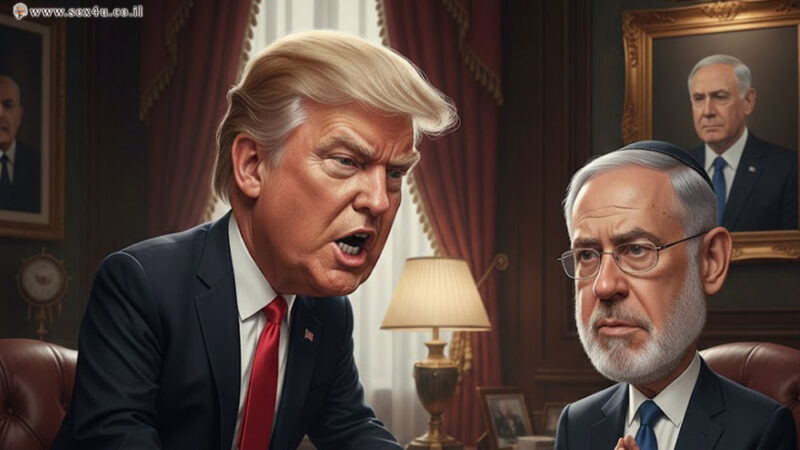
Trump, Herzog, and the Pardon That Became a Sovereignty Test
In normal times, countries conduct foreign relations. In less normal times, they manage family dynamics. And when Donald Trump decides to get involved – they produce a new season of Middle East Reality TV.


According to reports and rumors circulating through the corridors of Washington and Jerusalem like Tesla stock on a euphoric trading day, President Trump is applying pressure – direct or indirect, subtle or blunt – on Israeli President Isaac Herzog to grant a pardon to Benjamin Netanyahu.
And that is where the real drama begins. Not legal. Not even political. Psychological.
A Pardon Is Not a Pizza With Extra Olives
Let us start with basics. A presidential pardon in Israel is not a casual phone call between friends. It is a rare and delicate constitutional instrument, typically exercised after legal proceedings conclude – not in the middle of them. It is meant to be an act of state mercy, not an add-on to a diplomatic package deal.
But if there is one thing Trump has disrupted globally, it is the old separation between institutions, symbolism, and personal loyalty. From his perspective, if he issued pardons to half of Washington on his way out of the White House, why shouldn’t he – with the subtlety of an elephant in a crystal shop – suggest that Israel do the same?
Trump does not see Netanyahu merely as a former prime minister. He sees an ideological ally. The man who stood with him against Iran. The partner in embassy relocations. The leader who understood the camera angle and the headline. In Trump’s political grammar, loyalty is currency. And currency is meant to be spent.
Herzog Between the Hammer, the Anvil, and Twitter
Israel’s president is not supposed to be a partisan actor. The role is symbolic, unifying, almost monarchical in spirit. Herzog has spent years trying to embody the “father of the nation” – speaking of reconciliation while the streets simmer.
Now imagine the equation: on one side, the President of the United States – Israel’s most important ally – signaling that such a move would be welcomed. On the other, a judiciary in the middle of sensitive proceedings, a deeply polarized public, and fragile institutional trust that hardly needs foreign assistance to erode further.
A pardon at this stage would look, to some, like political rescue wrapped in constitutional packaging. To others, like belated acknowledgment that the entire process was a vendetta. For the Israeli left, it would resemble the collapse of the rule of law. For the right, the correction of a historic injustice.
For Herzog? It would feel like stepping on a mine.
Sovereignty Is Not an “Agree” Button
The deeper question is not whether Netanyahu is guilty or innocent. It is not even whether a pardon could be justified in theory. The real question is: who decides?
Is Israel a sovereign state that makes constitutional decisions based on its own internal judgment? Or a junior partner in an alliance where a heavy hint from Washington weighs more than a clause in a Basic Law?
To be fair, Trump does not apologize for viewing foreign policy as transactional. He sees the world as a negotiation table. If, in his assessment, pardoning “Bibi” stabilizes Israel’s right-wing camp, strengthens the anti-Iran axis, and restores a familiar and reliable partner – why wouldn’t he try?
Yet there is a difference between strategic cooperation and managing another country’s judicial process. And that is where this “deal” shifts from intriguing to potentially dangerous.
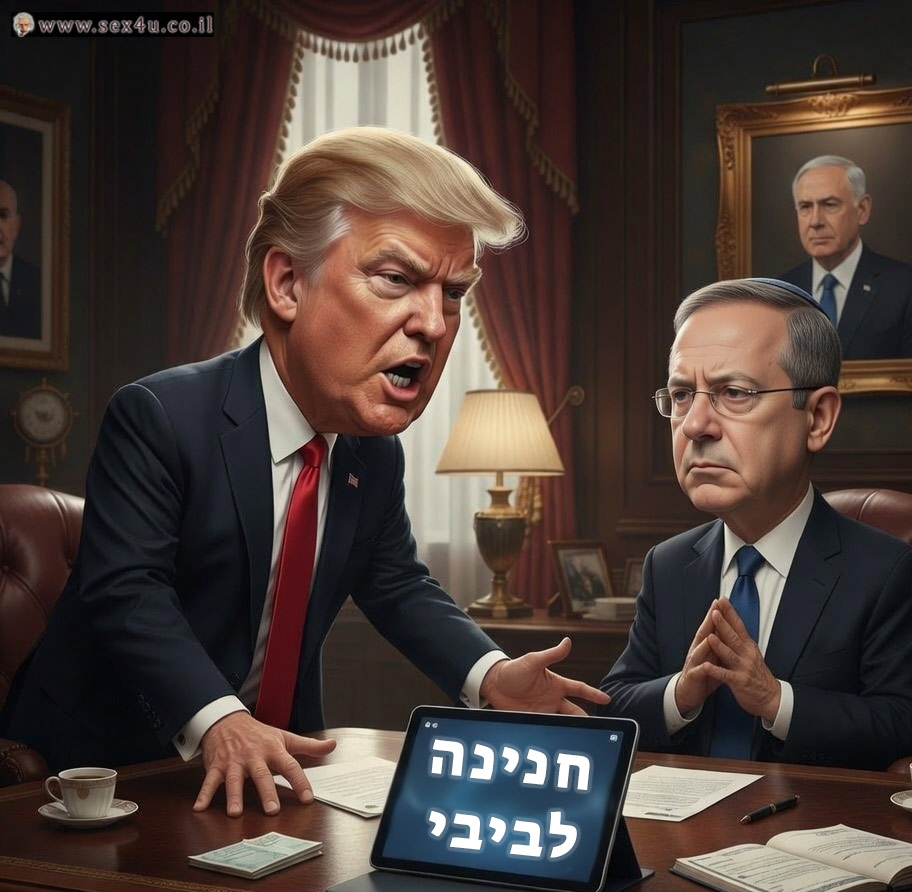
The Pardon as a Battle Over Narrative
By 2026, Netanyahu’s trial is no longer just a legal matter. It is a symbol. For his supporters, it proves that entrenched elites refuse to relinquish power. For his critics, it demonstrates that no one stands above the law.
A pardon – especially one perceived as the product of American pressure – would not end the struggle. It would reignite it. The legal question would morph into a sovereignty question. The sovereignty question into an identity crisis.
Who benefits? That depends entirely on whom you ask.
Trump and the Tribal Instinct
There is something almost tribal about the Trump–Netanyahu relationship. Two leaders who cast themselves as warriors against “the system.” Two men who claimed the media hunted them. Two politicians who understood that power is measured not only in parliaments, but in streets, feeds, and collective mood.
If pressure for a pardon does exist, it fits the pattern: restore a familiar figure, challenge the old establishment, signal to the camp that its leader is not alone.
But Israel is not a franchise of an American political movement. And Trump, charisma notwithstanding, does not appoint Israeli presidents.
The Strategic Angle: A Partner Who Is Free
There is also a less romantic, more strategic dimension.
Trump is not merely “helping a friend.” He needs a partner who is unencumbered. Free from court appearances. Free from criminal headlines. Free to reemerge as a regional actor with a full political mandate.
In his eyes, Netanyahu is not a defendant. He is an asset. A man who understands Iran intimately, speaks fluent Republican, and knows how to sell tough moves to a tough public.
If Trump is contemplating renewed pressure on Tehran, regional realignment vis-à-vis Turkey, or a bold initiative involving Saudi Arabia, he would likely prefer a seasoned political operator at his side – not a leader juggling district court schedules.
Put simply: it is hard to run global geopolitics when your key ally begins each morning by checking whether testimony has been postponed.
And What If?
What if Herzog refuses? What if he politely states that proceedings are ongoing and that Israel respects its institutions?
Would the relationship suffer? Unlikely in the long term. The alliance runs deeper than one individual – even if that individual is named Trump.
And what if he agrees? Then we would witness a historic moment – one that could reshape Israel’s internal balance of power for years.
Between Loyalty and Interest
Ultimately, this story is not about a pardon. It is about boundaries. About how far friendship permits intervention. About how personal politics cross oceans. About how much domestic cost Israel is willing to absorb in order to accommodate a powerful ally.
Trump operates on instinct: strengthen a friend, weaken an adversary, close the deal.
Herzog must operate on principle: preserve the institution, maintain balance, safeguard trust.
And in between stands an entire country searching for stability in a world where even a pardon has become a geopolitical instrument.
For now, the ball rests in Jerusalem.
As for Trump? He has probably already drafted the tweet.
הירשמו כדי לקבל את הפוסטים האחרונים אל המייל שלכם