
Educating Hatred: How Arab States Institutionalize Hostility Toward Israel and Jews

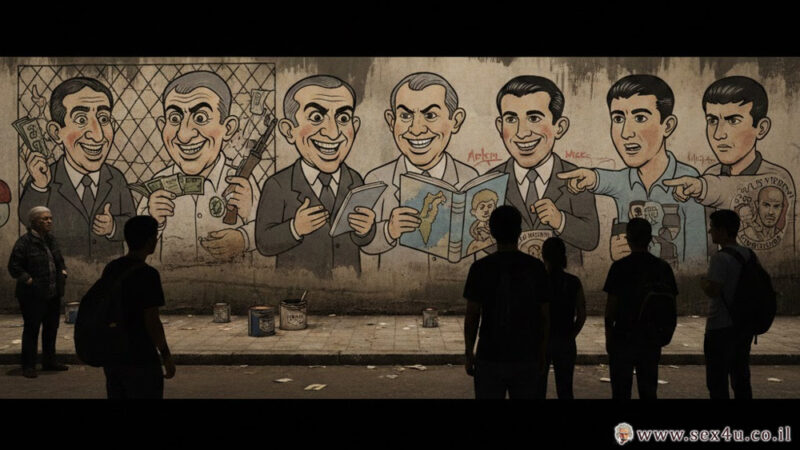
Introduction: This Is Not a Bug. It Is a Feature.
Western discussions about the Israeli-Arab conflict often focus on borders, settlements, diplomacy, and military power. Rarely do they examine the quietest yet most enduring battlefield: the classroom.


Hatred does not appear spontaneously at adulthood. It is taught. Repeated. Normalized. Examined. Passed. And, in many Arab education systems – from the Palestinian Authority to broader Arab states – hostility toward Israel and Jews is not incidental. It is curricular.
This is not about isolated teachers or outdated textbooks. It is about a structural choice: to raise generations whose political identity is anchored not in state-building or civic responsibility, but in opposition, grievance, and rejection.
Education as an Ideological Weapon
Every education system shapes national identity. In democratic societies, that process is contested, pluralistic, and imperfect. In much of the Arab world, however, education often functions as a centralized ideological tool.
Textbooks do not merely present history; they prescribe morality. They define heroes and villains with little ambiguity. And when it comes to Israel and Jews, ambiguity is treated as betrayal.
The Israeli narrative is almost entirely erased or delegitimized. Jewish historical ties to the land are dismissed as fabrication. Maps routinely omit Israel altogether. Violence, when framed as “resistance”, is sanitized, romanticized, and moralized.
This is not education. It is indoctrination with lesson plans.
Arab Citizens of Israel: A Split Identity by Design
Arab citizens of Israel occupy a unique and deeply uncomfortable position. They live in a democratic state that guarantees civil rights, access to education, healthcare, and economic mobility. Yet they are culturally embedded in a regional narrative that depicts that same state as illegitimate, colonial, and inherently evil.
The result is cognitive dissonance institutionalized from childhood.
Students learn Israeli civics in school, but absorb a broader cultural narrative that delegitimizes the very concept of Israeli sovereignty. Palestinian identity is often framed not as a parallel identity, but as a substitute for Israeli citizenship.
Instead of cultivating integration with critical awareness, parts of the educational and cultural ecosystem encourage alienation with moral certainty.
This does not empower minorities. It traps them between loyalty tests they never designed.
The Palestinian Authority: Education Without a Future
Nowhere is the problem more explicit than within the Palestinian Authority’s education system.
Palestinian textbooks consistently portray Israel as a criminal entity devoid of historical legitimacy. Jewish presence is framed as foreign intrusion. Geography is weaponized: Israel disappears from maps, while Palestinian territory expands to absorb it entirely.
Even more troubling is the moral framing of violence. Individuals who carried out attacks against civilians are often portrayed as national icons. Martyrdom is presented as honor. Death becomes achievement.
Absent almost entirely are discussions of governance, corruption, pluralism, economic development, or democratic accountability. The curriculum teaches students what to oppose, but not what to build.
This is education as political insurance. A society educated to fight cannot easily question its leadership.

Arab States: Exporting the Enemy Narrative
Across the Arab world, Israel often serves as the default external antagonist. Even in countries with no direct military conflict with Israel, textbooks frequently depict it as an occupying, destabilizing force.
Why? Because external enemies are politically useful.
They redirect public frustration away from domestic failures: authoritarianism, corruption, economic stagnation, and lack of civil rights. When accountability threatens power, blame becomes policy.
Instead of teaching students how institutions function, how economies grow, or how citizens hold leaders accountable, education systems teach grievance management. Israel becomes the explanation for everything that went wrong.
It is easier to hate outward than to reform inward.
The Western Blind Spot: Everyone Knows, No One Acts
Perhaps the most cynical aspect of this entire ecosystem is the international response.
Western governments and NGOs are well aware of the content of these curricula. Numerous reports have documented incitement, historical falsification, and glorification of violence. Yet funding continues, conditions remain vague, and criticism is carefully diluted.
Why? Because confronting educational incitement is politically uncomfortable. It complicates narratives of victimhood. It demands moral consistency.
It is easier to condemn Israeli policies than to demand educational reform from societies the West prefers to view as passive victims rather than active agents.
Israel: Imperfect, But Pluralistic
Israel’s education system is far from flawless. It contains political battles, ideological disputes, and narrative conflicts. But it also allows dissent, internal critique, and multiple perspectives.
Israeli textbooks are debated. Revised. Challenged. Teachers argue. Historians disagree. That friction is not a weakness; it is a democratic feature.
On the other side, dissent itself is often framed as treason.
Conclusion: The Conflict Begins Before the Border
Peace agreements do not fail only because of politicians. They fail because societies are trained to reject the very concept of compromise.
As long as children are taught that the other side has no right to exist, no diplomatic framework can survive. As long as education systems reward grievance over governance, the future remains hostage to the past.
The Israeli-Arab conflict is not sustained solely by tanks or treaties. It is sustained by textbooks.
And until education stops producing enemies as graduates, peace will remain a slogan rather than a strategy.

הירשמו כדי לקבל את הפוסטים האחרונים אל המייל שלכם