
Europe’s Right-Wing Renaissance, 2025: Between Border Walls and Israeli Flags

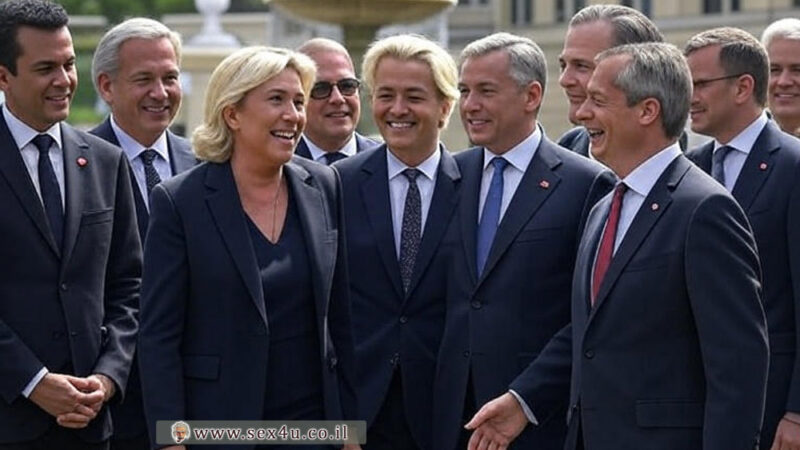
Between Viennese Waltzes and Political Whiplash
By mid-2025, Europe resembles an old concert hall whose orchestra has gone rogue halfway through the symphony. Brussels still waves its baton of climate regulations and liberal pieties, while, from the right, a new ensemble of nationalist movements belts out its own counter-melody: “Save the West, close the borders, and bring back sanity.”


Somewhere in that cacophony stands Israel—sometimes cast as the brave fortress of Western civilization, sometimes as the convenient villain of moral outrage. It’s a strange relationship, equal parts admiration, projection, and political utility.
Let’s unpack it.
The Right-Wing Map of Europe, 2025 — Who’s Who and Who’s Mad at Whom
1. Giorgia Meloni and the Brothers of Italy (Fratelli d’Italia)
Italy’s prime minister since 2022, Meloni has become the face of respectable nationalism. Less fascist nostalgia, more family values and “defend our borders.”
- On Israel: A self-declared ally. She condemned Hamas unequivocally after the 2023 war and calls Israel “the West’s shield.”
- On migration: Tough as Tuscan leather. She’s sparred with Brussels over migrant quotas and NGO rescue ships.
- On antisemitism: Publicly opposed, though her party’s post-fascist roots still make European liberals twitch.
Cynical note: Meloni sells “Christian civilization” as her brand but never misses a photo-op with Israeli leaders—it polls well in both Rome and Brussels.
-- פרסומת --
2. Marine Le Pen and the National Rally (Rassemblement National, France)
Once the enfant terrible of European politics, Le Pen has rebranded herself as the “respectable opposition” to Emmanuel Macron and is polling strong for 2027.
- On Israel: From hostility to cautious courtship. The RN now stresses its opposition to Islamic extremism rather than Jews.
- On migration: The cornerstone of her agenda—halt Muslim immigration, deport illegals, restore “French identity.”
- On antisemitism: Blames imported radicalism, claiming “Islamist influence” is the main source of hate crimes.
Cynical note: Le Pen reinvented herself as a feminist guardian of French women against “predatory migrants,” but her empathy for Jews tends to appear only near Holocaust memorials and election cycles.
3. Alternative für Deutschland (AfD, Germany)
Still the political minefield of Europe. In 2025, AfD is hovering around 20% in national polls—its best result ever—thanks to economic frustration and migration backlash.
- On Israel: Publicly supportive, portraying Israel as a model for fighting Islamist terror. Yet the party’s far-right fringes remain riddled with Holocaust relativism.
- On migration: Calls for near-total bans on Muslim immigration and repatriation programs.
- On antisemitism: Officially denies any, but recurring scandals and extremist rhetoric keep proving otherwise.
Cynical note: The AfD loves Israel’s Iron Dome, but not its Holocaust museums.
4. Viktor Orbán and Fidesz (Hungary)
Europe’s self-proclaimed “illiberal democrat” and the original architect of the anti-migrant fence.
- On Israel: Warm. Orbán calls Israel “a partner in defending Christian Europe” and boasts of Hungary’s “zero tolerance” for antisemitism.
- On migration: Legendary hardliner—his fences predate Trump’s wall.
- On antisemitism: Says Hungary is safer for Jews than Western Europe, a claim as politically useful as it is debatable.
Cynical note: Orbán likes to remind Israelis he “understands border security”—as if Budapest were Sderot.
5. The Nordic Right: Sweden and Finland
- Sweden Democrats (SD): Once pariahs with neo-Nazi roots, now coalition partners. Pro-Israel, anti-migrant, and busy sanitizing their image.
- The Finns Party (Finland): Similar DNA—populist, nationalist, skeptical of migration, politely neutral toward Israel.
Cynical note: Swedish politicians discovered their love for Israel right around the time Malmö’s Jewish community began fleeing antisemitic attacks.
6. The Low Countries: The Netherlands, Austria, and Belgium
- Geert Wilders (PVV, Netherlands): Israel’s loudest European cheerleader—admires its “courage against Islamic tyranny.”
- Freedom Party (FPÖ, Austria): Still haunted by its far-right past, attempting to balance pro-Israel statements with nostalgia-prone voters.
Cynical note: Wilders loves Israel so much he’d wall off the entire Middle East if he could.
Why Europe’s Right Suddenly Loves Israel
1. Identity and Borders
For the right, Israel is the perfect metaphor: a small, proud nation defending its identity amid hostile surroundings. To them, it’s the ultimate “sovereignty success story.”
2. Islamist Terror as a Unifying Theme
Every terror attack in Europe reinforces the narrative that “Israel’s war is our war.” From Paris to Budapest, right-wing leaders frame Israel as the front line of the same battle they claim to fight at home.
3. Antisemitism as a Mirror and a Shield
The new right insists it’s not antisemitic—it’s anti-Islamist. Yet beneath the polished rhetoric, echoes of old conspiracies persist: from “globalist elites” to “media cabals.” The vocabulary changed, the suspicion remains.
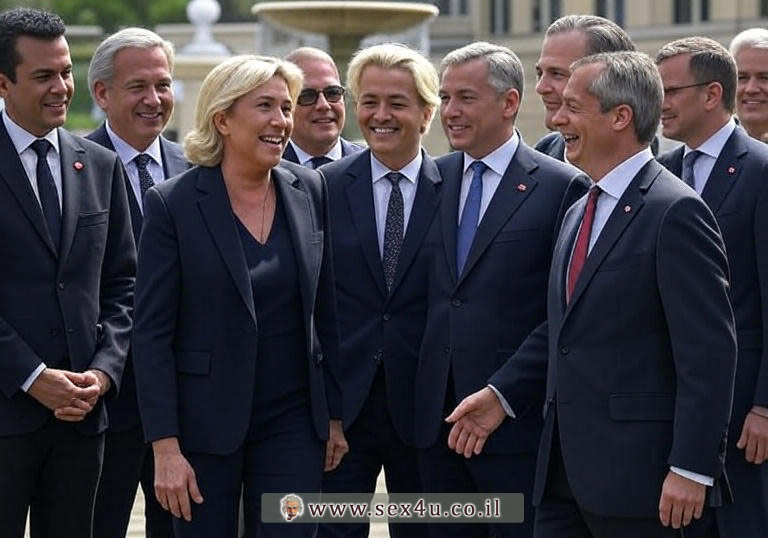
Migration, Antisemitism, and Politics — The Holy Trinity of Right-Wing Europe
1. Migrants as the Perfect Villain
Millions of migrants from the Middle East and Africa have become the all-purpose bogeymen for the right: job thieves, criminals, Islamists, and—conveniently—antisemites.
2. The Globalization of Hate
The 2023-2024 Gaza war ignited a wave of antisemitism across Western capitals. Social media amplified it, turning European Jews once again into symbols of political rage. The right saw in it proof that “multiculturalism has failed.”
3. Demographics vs. Ideology
Statistics back some of the claims: attacks on Jews in cities like Paris, Brussels, and Malmö are increasingly committed by Muslim immigrants, not native extremists. For right-wing parties, that’s rhetorical gold.
Israel’s Dilemma — Strategic Ally or Political Decoy?
Israel benefits, at least superficially: European right-wing leaders vote pro-Israel in EU forums, denounce Hamas, and defend its right to self-defense.
But there’s a catch:
- Their support is often born of Islamophobia, not philo-Semitism.
- When populism sours, Jews quickly return to being convenient scapegoats.
- And Israel’s open embrace of the nationalist camp risks alienating the liberal democracies that still bankroll much of its diplomacy and defense cooperation.
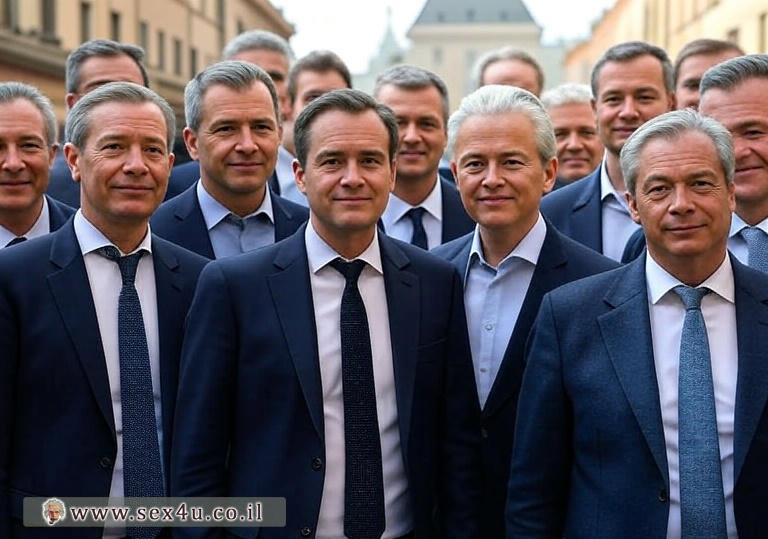
The Bottom Line: A Love Affair of Convenience
By 2025, Europe’s right-wing revolution has traded boots for blazers and hatred for hashtags. They’ve cleaned up their image, toned down the antisemitism, and wrapped themselves in the Israeli flag when it suits them.
For Israel, it’s tempting: sympathy in Brussels, friendly votes at the UN, and a common enemy called “Islamic extremism.” But like any politically convenient romance, it comes with fine print.
The European right doesn’t love Israel; it loves what Israel symbolizes—defiance, order, and the illusion of cultural purity. And Israel, pragmatic as ever, plays along because in a cynical world, even a half-honest friend is better than none.
So yes, this is a relationship—but one built on interests, not ideals.
Europe’s right-wing parties get their symbol of Western resilience.
Israel gets applause instead of condemnation.
And the rest of Europe? Still searching for its moral compass, somewhere between the refugee camps of Lampedusa and the speeches of Viktor Orbán.
In the grand theater of 2025 Europe, everyone claps for Israel—for different reasons, in different rhythms. Some out of admiration, some out of guilt, and some just to drown out the sound of history, playing its old tune again.
הירשמו כדי לקבל את הפוסטים האחרונים אל המייל שלכם