Is Haifa Turning From a “Mixed City” Into… an Arab City?

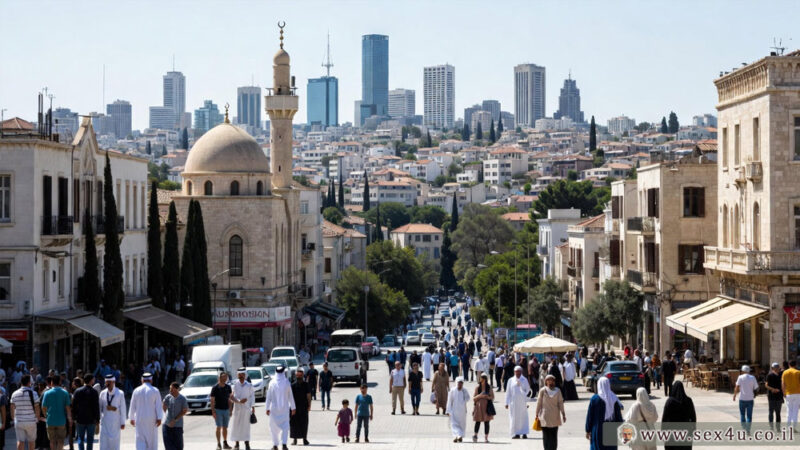
How a city built on black coffee and hummus ended up sprouting black-and-white flags with a spicy nationalist kick.


Some cities change slowly.
Some cities change fast.
And then there’s Haifa – the city that flips a U-turn on a public bus lane without signaling, then acts shocked when someone honks.
Once, Haifa was “a mosaic.”
Today it feels more like a graffiti wall after a protest:
everyone thinks they know who painted it, nobody admits anything, and the only clear truth is that something here has changed – and no, it’s not the real-estate prices (though those too should be arrested for aggravated assault).
The city that once spoke three languages now screams only one – and mostly from a balcony.
There are moments when you wake up, rub your eyes, look out the window and wonder if the clouds over the Carmel needed a permit from the Wadi Nisnas Zoning and Planning Council.
Then you go outside, drive through the Carmel Center, swing past Wadi Salib – and for the first time since the Carmel forests went up in flames, you genuinely don’t know who’s the majority, who’s the minority, and who’s still circling for parking since 1993.
Haifa 2025 – the only “mixed city” where everyone insists nothing is changing, while the sky itself whispers:
“Come on, at least make your lies convincing.”
They say “everything’s calm.”
You say, “doesn’t look like it.”
Reality says: “Guys, wake up.”
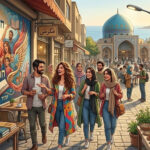
Once upon a time, Haifa was the poster-child of “natural coexistence.”
Unforced. Unfunded. Unthreatening.
No European NGO needed.
And today?
Coexistence is still around – but it’s starting to feel like a couple staying together “for the kids and the mortgage.”
There’s peace, but no passion.
There’s neighborliness, but no conversation.
There are cultural events, but you’re never entirely sure you aren’t the minority at your own event.
Demography doesn’t lie – it only whispers:
“Prepare yourselves. It’s happening.”
The Arab community is growing.
The Jewish community is relocating – to the center, to the Golan, to Modi’in, or honestly anywhere you don’t have to fight for parking with a car blasting dabke at the decibel level of Tomorrowland.
The Carmel and Carmel Center remain mostly Jewish – but only because the restaurants are too expensive.
Downtown has long become a cultural container port for those who prefer their Israel served “approximately.”
And Hadar?
Hadar is a roommate apartment where nobody knows who lives there now, but everyone is convinced the new guy is the one repainting the hallway in the wrong national colors.
Is Haifa Becoming the Palestinian Cultural Capital?
Annoying question. Disturbing answer.
Look around:
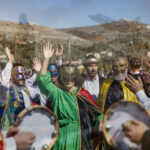
Arabic festivals.
Palestinian-identity performances wrapped in “cultural” packaging.
Street parties that start as “coexistence” and end as “Return March After-Party.”
Add to that:
– the growing crowd of “New Palestine” artists showcasing in the city;
– The polite takeover of cultural spaces where rent is paid in identity rather than shekels;
– And an atmosphere whispering:
“You’re welcome here – as long as you behave. You’re the guest.”
And suddenly – without any formal declaration –
Haifa now functions as a far more energetic, funded, and encouraged Palestinian cultural hub than Ramallah, which these days looks like a student who overslept her seminar.
The question is no longer if.
It’s how long until someone says it out loud.
And when something moves – only one side is moving.
Is This “Takeover”?
Choose your favorite polite euphemism:
Demographic shift.
Natural urban evolution.
Progressive multiculturalism.
Or the local phrasing:
“Bro, where am I and why is everyone yelling at me?”
Jews increasingly feel like guests.
Arabs increasingly feel at home.
The municipality mostly feels confused.
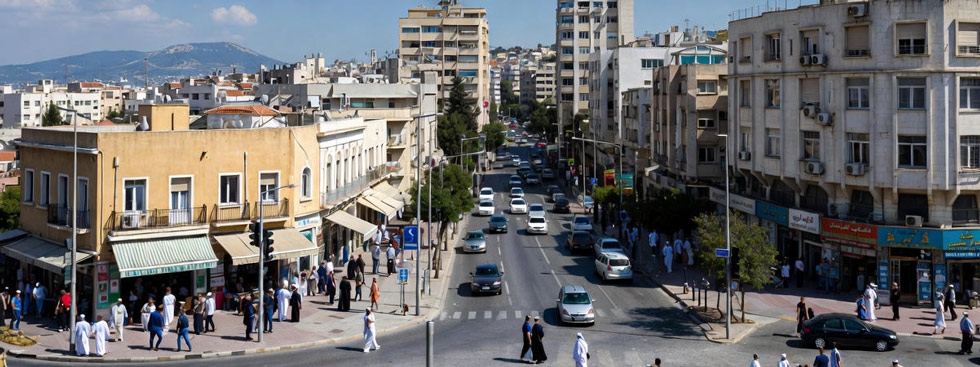
Protests, Flags, and Why Every Demonstration Looks Like Nakba Dress Rehearsal
Haifa was once “the sane mixed city.”
Apparently sanity took a sabbatical.
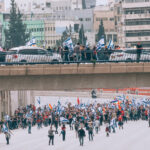
Protest about… anything? Palestinian flag.
Protest not connected in any way? Palestinian flag.
Sports event? Somehow – Palestinian flag.
Women’s rights march? Guess.
So you stand there thinking:
“Maybe I’m the one who’s wrong, and we’re all auditioning for the musical version of ‘Return.’”
Demography speaks, and what it says is:
“Buddy, things are shifting.”
The Arab community grows steadily – like a well-organized Excel sheet.
Arab neighborhoods expand.
Mixed neighborhoods reorganize.
Jewish neighborhoods?
Mostly argue about parking and election results.
And then comes the question nobody dares ask:
Is this natural change? Or engineered change?
Answer:
Depends on who you want angry at you.
Let’s Talk About Vibes
Because vibes can’t be measured – but everyone feels them.
More Arabic cultural events? Yes.
More Arab restaurants in the Carmel Center? Yes.
More Palestinian flags at protests? Of course.
More “wait, what just happened?” moments while driving? Absolutely.
Half the city says “it’s just a flag, relax.”
The other half says “it’s not a flag – it’s a declaration of ownership.”
And the third half is still looking for parking that isn’t red-and-white.
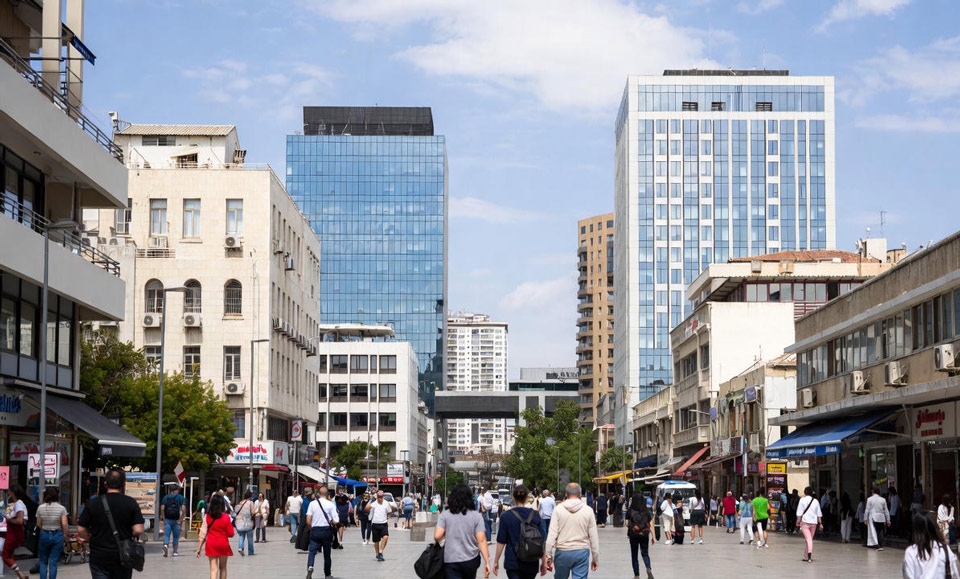
Is Haifa Still a Mixed City?
Mixed isn’t about numbers.
Mixed is about the feeling of “we’re all here together,” not “whose city is this, exactly?”
In 2025, that feeling is fading.
The Arab community is growing – naturally.
But Jews feel the city moving – just not in their direction.
No “takeover.”
No “they’re coming for us.”
Just a slow, steady shift – and in a fragile-majority city, even a small shift makes a lot of noise.
Is Haifa already an Arab city?
Depends who holds the microphone.
Officially – no.
Culturally – it’s starting to look like it.
Demographically – it’s headed that way.
Ideologically – let’s just say it isn’t moving toward the 1990s Zionist Carmel.
The city is still mixed, still free, still diverse.
But when a trend lasts long enough… it stops being a trend.
It becomes a direction.
And Haifa is moving in a direction.
Not dangerous, not violent, not revolutionary –
just not the Haifa we knew.
You hear less Hebrew at festivals.
Less on the promenade.
Less on the Louis Promenade.
Less in the Carmel Center.
More Arabic on buses.
More in supermarkets.
More in shops.
And a lot more Jews saying:
“Relax, you’re overreacting,”
because they’d rather die of acid reflux than admit something is changing.
And who remains calm?
Bat Galim, obviously.
“Bro, the water is 22 degrees and the waves are perfect.
Palestine, Israel – whatever.
Just don’t touch my surfboard.”
Sharp, National, Cynical Summary
Haifa is gorgeous – truly.
But it’s also a living demonstration of what happens when real change happens quietly:
no immigration police, no declarations, no master plan.
Just reality, slowly rearranging itself.
Haifa can still contain everyone –
those who think it’s becoming an Arab town,
and those who think it was always Amsterdam with hummus.
It isn’t an Arab city.
But it’s also no longer the mixed city we remember.
And it’s definitely starting to craft a new identity.
So here are the real questions – the ones nobody says out loud:
Are we living in a city that’s changing, or a city that changed already and we’re just pretending it didn’t?
Who are we in this city?
How long will we still be the majority?
What happens the day Haifa no longer needs us to be “Haifa”?
Is nighttime jogging on the Carmel still safe without pepper spray in the pouch?
When will Arab-sector violence reach Haifa – or did it already?
Until then –
the Carmel stays green,
the sea stays blue,
and Haifa residents stay… well, Haifa residents:
cynical, stubborn, and always saying “everything’s fine” even when it stopped being fine a long time ago.
הירשמו כדי לקבל את הפוסטים האחרונים אל המייל שלכם