
Laughing in Zion: Mark Twain’s 1867 Journey to Jerusalem

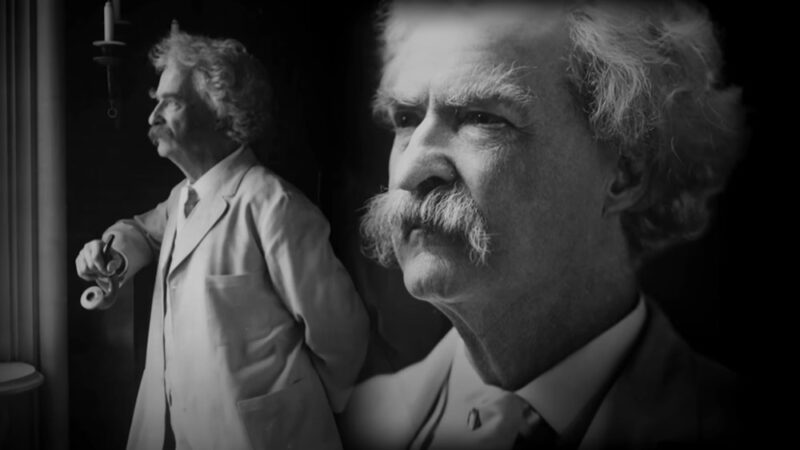
When an American writer, the Ottoman Empire, and a cranky camel converge in Jerusalem
If you think pilgrimages to holy tombs began only in the 1980s—with rabbis stroking graves and scattering dollars—you’re probably right. But long before that, in 1867, a rather different visitor arrived in Jerusalem—wearing a wide-brimmed hat, clutching a sharp pencil, and capable of portraying the Middle East in a way that might make even the Antiquities Authority sweat.


His name was Samuel Langhorne Clemens, though we all know him as… Mark Twain.
Yes, the man who chronicled the adventures of Tom Sawyer and the currents of the Mississippi River suddenly found himself wandering among the ruins of Jerusalem, kicking ancient stones and complaining about the lack of pavement.
So what did he discover in the Holy Land? Well—it wasn’t exactly holiness, and certainly not a promised land. More like sacred wasteland scented with Turkish tobacco and hampered by urban chaos.
How did he even get there?
In 1867 Twain joined a Protestant Christian expedition sponsored by the Daily Alta California—a firsthand journey of “Christian tourism” to the Holy Land. Today, we might call it an “organized trip for elderly Americans who opted out of Paris.”
Their itinerary included stops in Italy, Greece, Turkey—and eventually… the Holy Land (i.e., Ottoman Palestine, which in the 19th century was less “milk and honey” and more “mosquitos and mildew”).
Twain wasn’t pursuing Jesus. He was there to mock those who were.
Mark Twain meets Israel—and it’s not mutual
When Twain arrived in Jerusalem, he had certain expectations. Perhaps a biblical grandeur, an aura of sanctity that might stir one’s spirit. Instead, he found old goats, mouldy tombs, and a drab, dusty landscape that made him long for Kansas.
As he wrote in The Innocents Abroad:
“Jerusalem is a gloomy, cold, and rigid city… I found nothing in it but monotony and stones. If this is the home of God—He has evidently departed long ago.”
That may be the first real estate critique of Jerusalem since its re-erection in the 5th century B.C.
No water, no roads—but plenty of guides
Twain’s time in Jerusalem included wandering through the Old City, riding donkeys named “Suliman” and “Baruch,” and encountering a legion of local tour guides—each insisting their stone was holy, their site was a miracle, their bush was where something divine had happened.
He was unimpressed.
“Every stone in Jerusalem,” as the guides claimed, “was a holy site. Every single one—a place of miracle. Every bush—a penitent. And I thought to myself—if that is true, then either this land is genuinely sacred, or there are more lies here than stones.”
(Which isn’t easy, since there are many stones.)
Proto-Israelis
Although the state had yet to be founded, Twain encountered what we might now call “proto-Israelis”: residents who seemed amused to still be alive, selling water at gold-standard rates, and loudly shouting at one another in a jumble of unrecognizable languages.
He noted something interesting: despite their hardships, these people carried humor, audacity, and resourcefulness. He had no idea he was peering at raw material out of which would later emerge kibbutzim, soldiers—and even the chaos of Ben Gurion Airport taxi drivers.

What he saw—and what he didn’t
What makes Twain’s visit particularly fascinating is what he didn’t see. He saw no Palestinians, no “ancient people,” no national movement, no conflict. He saw a desolate land, largely empty.
He described small, half-ruined villages, quiet towns—and even the Jordan River as “a feeble stream, weak, flowing like a beardless old man.”
Today, when people tell us there was an “eternal people here for millennia,” it’s worth recalling that Twain—known for keen observation and a sharp tongue—saw none of it. That’s not historical proof, but it’s certainly a compelling anecdote.
And since then?
160 years have passed, and Jerusalem no longer looks like the neglected town Twain described. It’s now a complicated metropolis—brimming with traffic, diplomatic drama, muezzin calls, and ultra-Orthodox karaoke blaring from loudspeakers. A place with no moment of silence—not because of holiness, but because of light rail construction noise.
If Twain were resurrected today, he might gape at how much changed—but also crack jokes about the glaring absence of parking.
Twain was here—and he laughed first
So what can we learn from Mark Twain and his brief sojourn in Jerusalem?
- A good dose of cynicism is timeless.
- History is always more intricate than headline narratives.
- The Land of Israel has never failed to perplex even the wisest.
- And probably—even in 1867—people were already hunting pita on Saturdays and trying to sell magnets depicting Moses.
In closing: if you one day find yourself stuck in Jerusalem traffic, muttering about how this city has gone too far… remember Twain. He came, he saw, he laughed—and he left us a rare snapshot of what Israel looked like just before it was reborn.
What would he say today?
Probably something like:
“Now it’s truly a holy place—especially for conflicts. But at least there’s asphalt.”
הירשמו כדי לקבל את הפוסטים האחרונים אל המייל שלכם