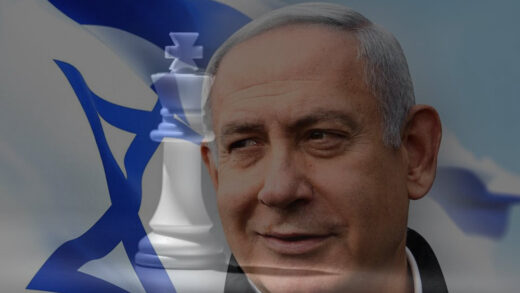
Missile Launches from Iran – The Final Episode of the Ayatollah Regime?

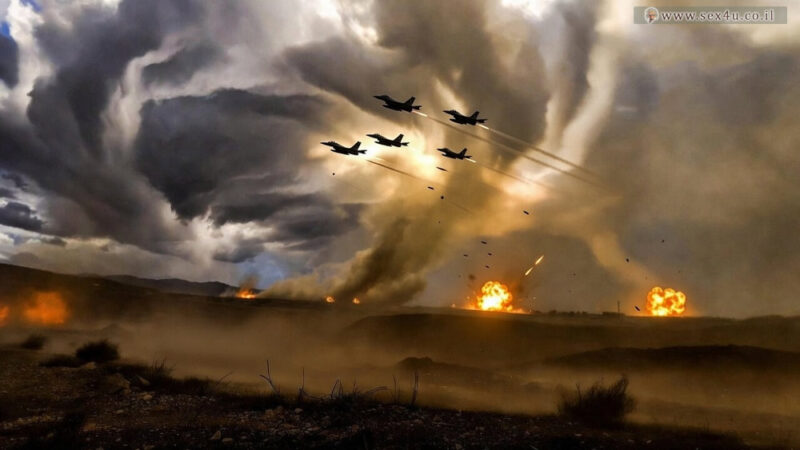
February 2026: When the Objective Is No Longer “Deterrence” – But Regime Change
Let’s drop the diplomatic euphemisms for a moment.


February 2026 does not look like another calibrated response.
It does not look like a symbolic strike.
And it certainly does not look like a limited message wrapped in military packaging.
If we read the scope and coordination correctly, the joint Israeli-American campaign is not merely about slowing uranium enrichment or degrading missile stockpiles.
It appears to be about something far more ambitious:
The systematic destabilization of the Islamic Republic’s governing structure.
So when we ask whether this is “the final episode,” we are not asking whether the regional conflict is over.
We are asking whether this could be the final chapter of the Ayatollah regime itself.
What Changed in 2026?
For over a decade, the operating model was predictable:
- Iran advanced regionally through proxies.
- Israel responded with targeted strikes.
- The United States imposed sanctions and issued warnings.
- Everyone avoided direct, overt confrontation.
It was a long game of strategic friction.
February 2026 broke that pattern.
The joint campaign displays characteristics that go beyond deterrence:
- Simultaneous multi-domain targeting
- Open coordination between Washington and Jerusalem
- Expanded operational scope
- Strikes against strategic infrastructure, not just tactical assets
This is not behavioral correction.
This resembles structural pressure.
When command networks, energy facilities, and regime-linked economic arteries are targeted together, the goal shifts from “containment” to “erosion of governing capacity.”
Why Move Toward Regime Destabilization Now?
This type of shift is not emotional. It is calculated.
1. Strategic Timing
Iran entered 2026 facing:
- Prolonged economic stagnation
- Structural inflation
- Reduced foreign investment
- Youth unrest and generational fatigue
Externally, its alliances remain transactional rather than durable.
Strategic planners may assess that Iran’s resilience threshold is lower now than in previous years.
2. Nuclear Threshold Calculus
At some point, delay strategies lose value.
If intelligence assessments suggest proximity to irreversible nuclear capability, the logic changes from “slow them down” to “remove the decision-making authority altogether.”
The objective then becomes not technological rollback, but political transformation.
3. Credibility and Deterrence Signaling
The United States faces global credibility tests beyond the Middle East.
If declared red lines are repeatedly absorbed without consequence, deterrence deteriorates elsewhere – in Asia, Europe, and maritime domains.
A joint operation at this scale signals that certain thresholds still trigger coordinated enforcement.
Missile Launches: The Regime’s Survival Tool
Missiles are not only weapons. They are governance instruments.
Each launch serves three purposes:
- External intimidation
- Internal consolidation
- Distraction from economic deterioration
For years, this model was effective. Limited escalation reinforced ideological narratives.
But if every launch now triggers systemic degradation rather than symbolic retaliation, the cost-benefit equation shifts.
The price of escalation may exceed its propaganda value.
Deterrence vs. Regime Change – Strategic Comparison
| Parameter | Deterrence Model | Regime Destabilization Model |
|---|---|---|
| Objective | Behavioral change | Leadership replacement or collapse |
| Scope | Targeted | Broad, structural |
| Escalation Risk | Controlled | High |
| Economic Impact | Contained | Systemic |
| Duration | Cyclical | Potentially decisive |
The operational patterns observed in February 2026 align more closely with the second column.
Economic Pressure as Political Weapon
Regimes do not fall solely from bombs.
They fall when:
- Economic elites lose confidence
- Security forces question continuity
- Middle classes disengage from ideological loyalty
Targeting energy infrastructure, logistics nodes, and regime-linked industries increases:
- Insurance premiums
- Trade risk exposure
- Capital flight
- Internal fiscal stress
The Islamic Republic has survived sanctions.
It may struggle more with simultaneous kinetic and economic degradation.
The Internal Iranian Variable
The regime’s strength historically rested on ideological cohesion within its security apparatus.
However:
- Younger demographics are less ideologically committed.
- Economic stagnation reduces regime patronage capacity.
- Prolonged external confrontation raises internal accountability questions.
If fractures emerge between technocratic elites and hardline factions, the tipping point may not be dramatic – but gradual.
Regimes sometimes end not with revolution, but with elite recalibration.
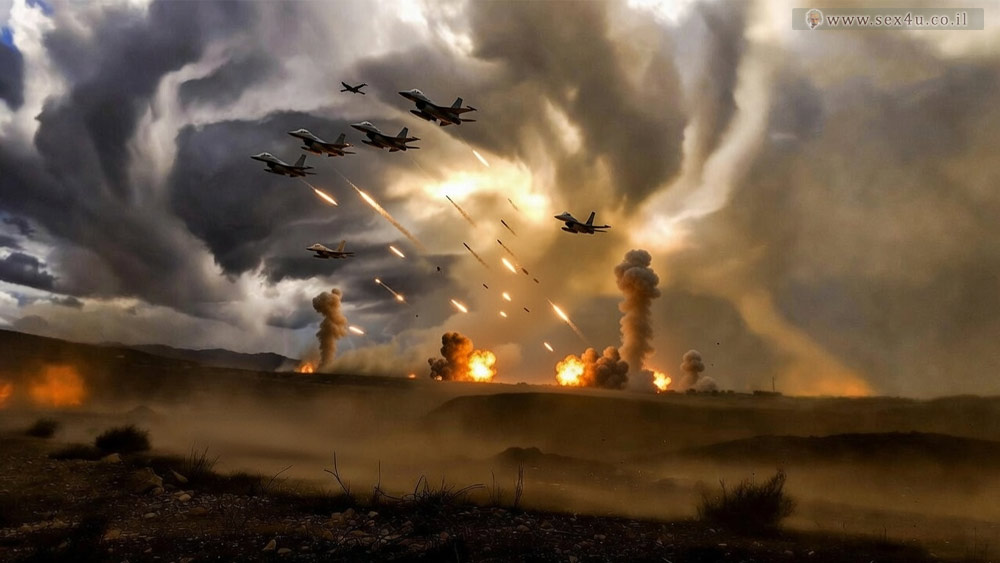
United States: Why Go This Far?
Washington does not typically pursue regime collapse lightly.
However, strategic calculus may now favor long-term structural stability over short-term risk management.
A post-Ayatollah Iran – even if not fully aligned with the West – could:
- Reduce proxy warfare intensity
- Lower regional missile proliferation
- Reshape Gulf security architecture
- Stabilize energy markets over time
The question is not whether regime destabilization carries risk.
It does.
The question is whether indefinite containment carries greater long-term risk.
Possible Scenarios
Scenario 1: Rapid Institutional Breakdown
Low probability, high impact.
Requires simultaneous internal dissent and sustained external pressure.
Scenario 2: Hardline Entrenchment
Moderate probability.
The regime consolidates power through repression and escalates regionally.
Scenario 3: Controlled Internal Transition
Higher probability.
Leadership shifts within the system under pressure, without dramatic collapse.
History suggests authoritarian systems rarely implode theatrically.
They evolve under strain.
The Strategic Irony
The Islamic Revolution of 1979 was built on resisting Western interference.
Nearly five decades later, the regime may face its most serious structural challenge from coordinated Western military pressure.
A system designed for endurance under sanctions may not be optimized for synchronized military-economic destabilization.
The irony is sharp:
A regime forged in defiance may ultimately weaken under sustained strategic exposure.
Is This Truly the Final Episode?
In the Middle East, nothing ends cleanly.
But certain moments redefine trajectories.
February 2026 may represent a shift from containment to confrontation with systemic intent.
If the joint campaign continues beyond symbolic strikes and persists in targeting regime-support infrastructure, this is not about messaging.
It is about attrition at the leadership level.
Will the Ayatollah regime collapse tomorrow?
Unlikely.
Has a process potentially begun that could mark the beginning of its end?
Possibly.
And in geopolitics, the realization that the objective has shifted is often more consequential than the first missile fired.
The final episode, if it comes, will not be cinematic.
It will be structural.
הירשמו כדי לקבל את הפוסטים האחרונים אל המייל שלכם