Peace Be Upon You – Off Camera

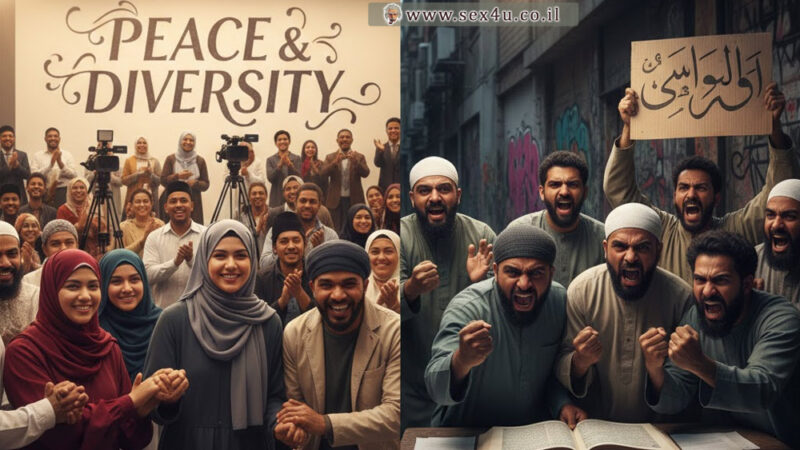
The Western Muslim Discourse: What Is Said in Public, and What Is Said When the Cameras Are Off


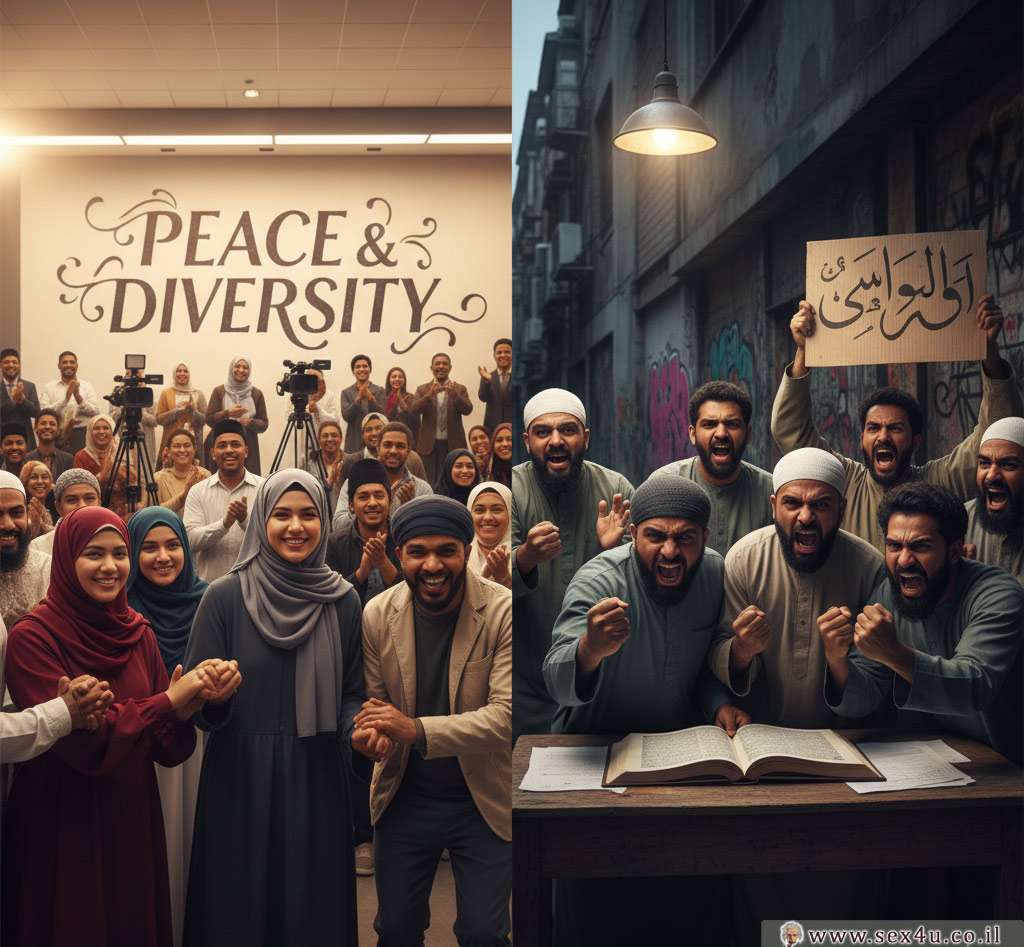
There is a peculiar performance unfolding across the Western world – one so polished it deserves its own category at the Cannes Film Festival.
It is the seamless transition between two entirely different conversations.
On camera:
Peace.
Coexistence.
Diversity.
Shared values.
Off camera:
Different vocabulary.
Different tone.
Different expectations.
Not always.
Not everywhere.
Not by everyone.
But often enough – and consistently enough – to raise an uncomfortable question:
Are we listening to the same message, or just the version meant for us?
Islam, the Netflix Cut
In the West, Islam is increasingly introduced through carefully curated formats.
TED Talks.
University panels.
NGO conferences.
Imams in tailored suits, fluent English, impeccable optics.
PowerPoint slides sprinkled with words like inclusion, pluralism, and social justice.
Muhammad is presented as a life coach.
Sharia as a personal spiritual journey.
Jihad as an internal struggle against overeating or self-doubt.
The audience applauds.
Journalists nod approvingly.
Academia offers grants.
This is Islam with subtitles – edited, softened, and culturally localized.
The Telegram Version (No Subtitles Provided)
Then, occasionally, someone switches channels.
Arabic-language sermons.
Closed community meetings.
Telegram groups.
Local-language broadcasts.
Suddenly, the vocabulary shifts.
“Coexistence” becomes conditional.
“Peace” becomes strategic.
“Justice” becomes vengeance.
And patience is framed not as virtue, but as a tactic.
Not always explicit violence – but unmistakable clarity.
The same speakers.
The same communities.
A different audience.
And this is not “Islamophobia.”
It is translation.
Moral Bilingualism
One of the most sophisticated tools of modern political Islam is moral bilingualism.
Not bilingualism in language –
but in moral messaging.
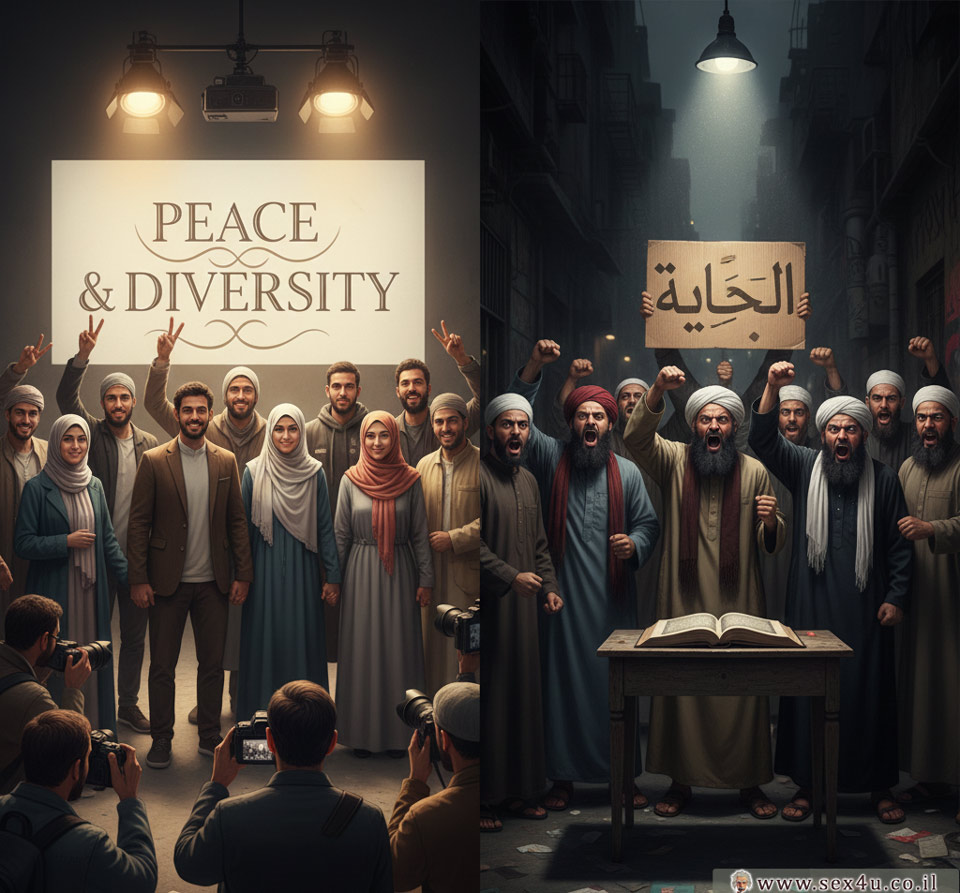
To Western audiences:
We are a marginalized minority seeking integration and peace.
To internal audiences:
The West is weak, temporary, morally corrupt. Exploit the system. Apply pressure. Be patient.
Two speeches.
Same day.
Same building.
Western society, for its part, insists on hearing only one of them – the one that reassures.
Why It Works: The West Is Afraid to Understand
The core problem is not the discourse itself.
It is the Western refusal to believe that people might mean what they say – when they say it honestly.
Academia calls it “context.”
Media calls it “complexity.”
Politicians call it “cultural sensitivity.”
In practice, it is polite blindness.
Because acknowledging the gap between public and internal discourse would require admitting that the multicultural model does not always function as advertised.
And that admission is more taboo than any radical sermon.

Israel: The Uncomfortable Control Group
Israel is the exception – not because it is wiser, but because it cannot afford innocence.
Here, movements are not judged by brochures, but by outcomes.
Not by conference panels, but by funerals.
Statements are evaluated against actions.
Promises against patterns.
This is why Israelis tend to reach for their wallets when they hear “religion of peace” – not out of hatred, but out of experience.
Listening to All the Languages
This is not a call to demonize.
Not a call to generalize.
And certainly not a call to silence.
It is a call to do something radical in modern Western discourse: listen fully.
Listen to what is said in English –
and to what is said in Arabic.
To what is declared publicly –
and to what is taught privately.
Because peace built on public relations collapses quickly.
And coexistence cannot survive selective hearing.
In the West, however, truth still requires committee approval.
And the cameras, for now, remain firmly on.
הירשמו כדי לקבל את הפוסטים האחרונים אל המייל שלכם