Prayer Rugs and Red Lights

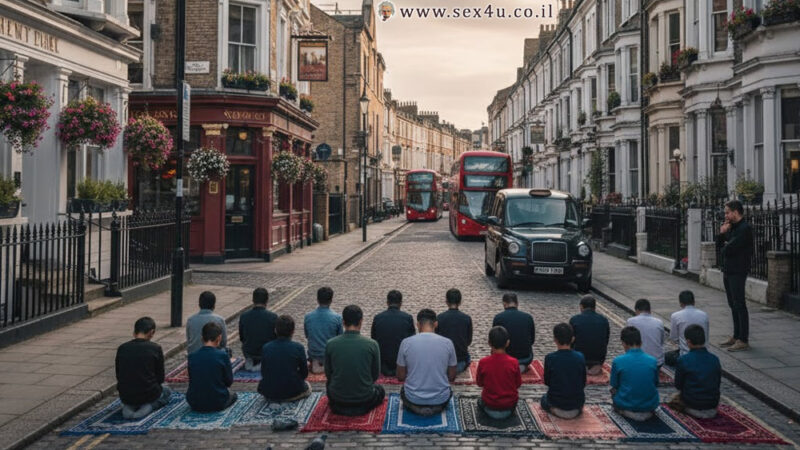
Mosques Aren’t Missing in Europe – Western Courage Is
Europe has everything.


Hundreds of thousands of churches – mostly empty.
Thousands of synagogues – heavily guarded.
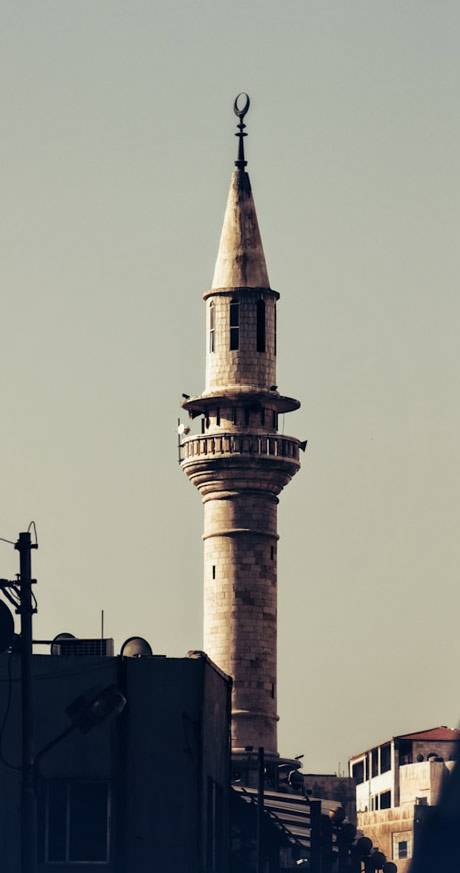
And hundreds of mosques – some more luxurious than city halls.
And yet, again and again, the same scene repeats itself:
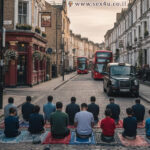
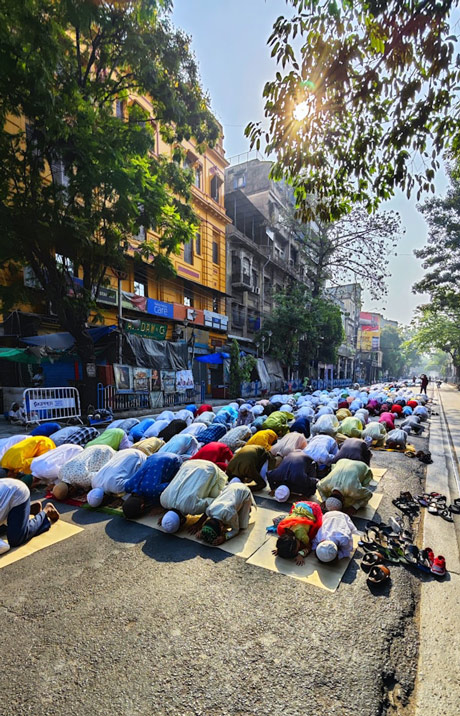
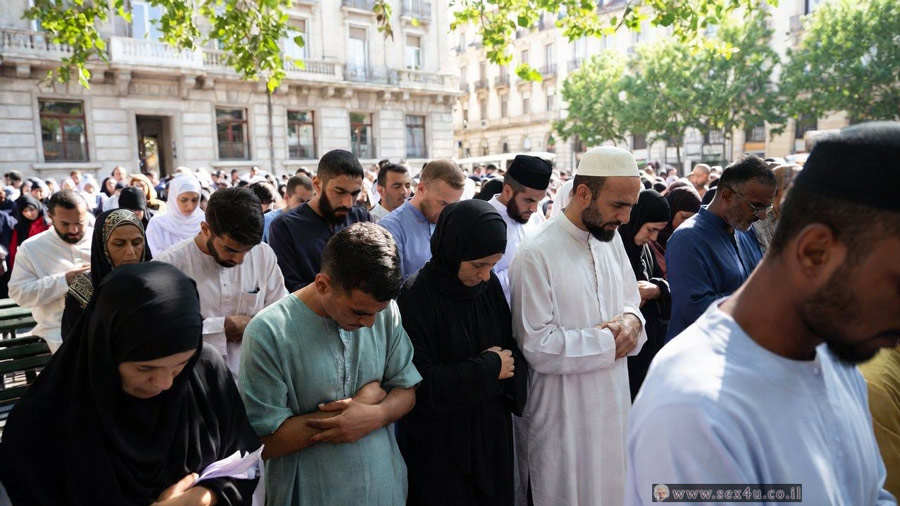
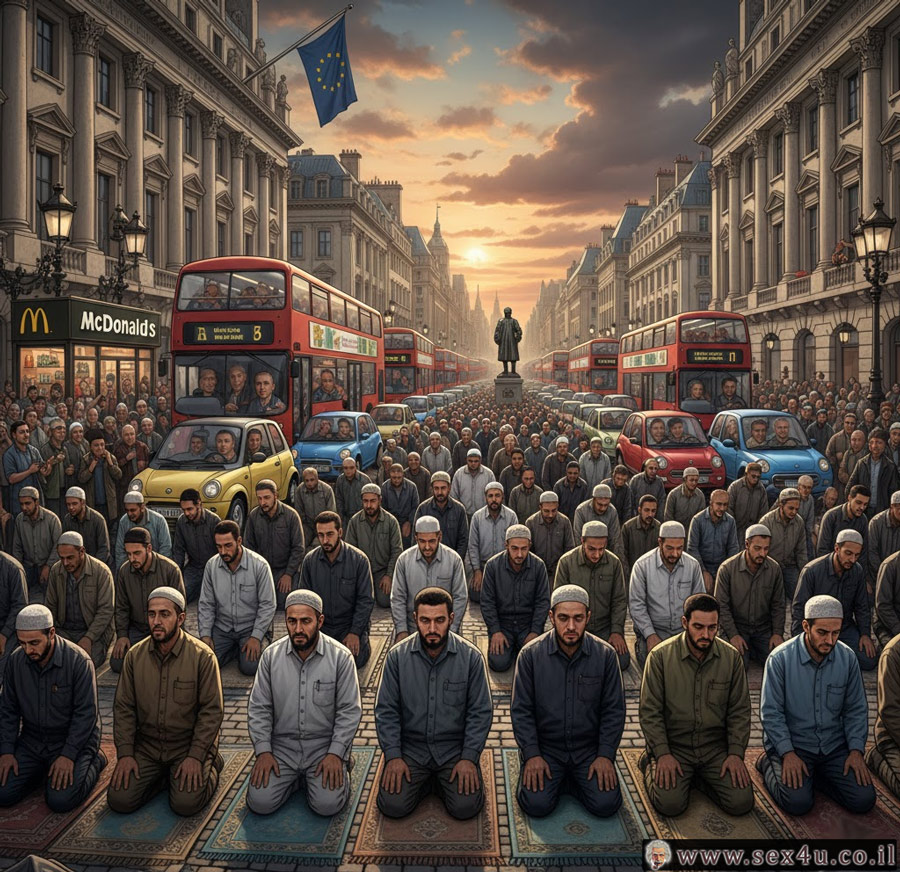
Dozens, sometimes hundreds, of Muslim men unrolling prayer rugs and praying in the middle of the street.
Not in a courtyard.
Not inside a mosque.
Not in a designated square.
On the road.
Next to a bus stop.
Across from a café.
And then comes the obvious question – the one Europe is terrified to ask out loud:
If there are so many mosques, why the street?
Street Prayers as a Power Exercise – and Europe as a Captive Audience with Guilt Issues
Let’s start with a simple truth, one the West works very hard not to articulate:
If mosques were lacking, we would see a fight to build mosques.
That is not what is happening.
There are mosques.
There is funding.
There are permits.
There are prayer rugs.
And still – the street is chosen.
Not by accident.
Not out of necessity.
But out of a clear understanding of one basic rule:
In the West, whoever dominates public space wins.
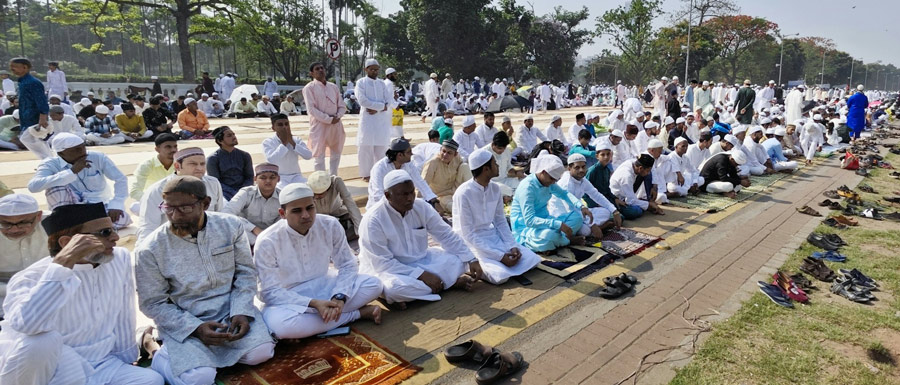
This Is Not Prayer – It’s a Statement
Street prayer is not an innocent religious act.
It is a political gesture disguised as spirituality.
When dozens of men block a central road, roll out prayer rugs, and pray in front of traffic, shops, and bus stations –
they are not speaking to God.
They are speaking to the society around them.
And the message is unmistakable:
“We are here.
We are visible.
You will adapt.”
No violence.
No terrorism.
Just the normalization of dominance.
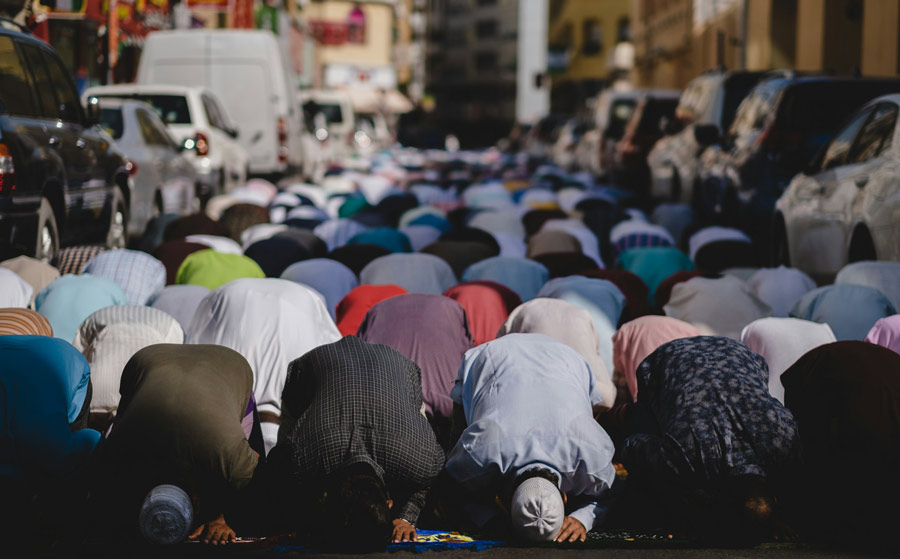
Why Europe?
Try to imagine large-scale street prayers:
In Saudi Arabia – in front of a shopping mall.
In Iran – outside a theater.
In Turkey – blocking a secular government building.
The odds are roughly the same as opening a gay nightclub in Mecca.
But in Europe?
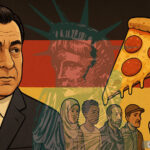
Europe is the perfect testing ground.
Why?
- Colonial guilt
- A paralyzing fear of being labeled racist
- An obsession with “freedom of expression” without cultural boundaries
- Weak authorities that no longer believe in themselves
Europe doesn’t ask, “Why is this happening?”
It asks, “How do we avoid offending anyone?”
Why Not Morocco? Turkey? Jordan?
An uncomfortable question – and therefore a forbidden one:
If street prayers are a legitimate expression of faith,
why are they almost nonexistent in Muslim-majority countries?
Why don’t we see:
- Christians praying in the middle of Riyadh?
- Jews spreading prayer shawls in Cairo’s main square?
- Secular activists shutting down a mosque in Tehran to make a values statement?
Because there are boundaries there.
Clear ones.
Firm ones.
Unapologetic ones.
In Europe?
The only boundary is: Don’t hurt feelings.
And those who understand power know exactly how to exploit that.
Political Islam Doesn’t Need Terror – It Needs Quiet
 The West is still stuck in an outdated equation:
Threat = violence.
But 21st-century political Islam has learned something crucial:
Terror provokes resistance.
Quiet presence exhausts societies.
You don’t need an attack.
You need:
- Prayer
- Patience
- And a European bureaucrat with a trembling conscience
That’s how cultural power is built today –
not through fear,
but through Western fatigue.
The European Establishment Knows – and Cooperates
Don’t be mistaken:
The authorities know this isn’t “just religion.”
But they fear one thing more than the loss of sovereignty:
Accusation.
No mayor wants to be:
- “The one who banned prayer”
- “The one who caused riots”
- “The one praised by the right-wing”
So they let it happen.
Again.
And again.
And a new reality is created – without legislation, without a vote, without a public debate.
Freedom of Religion Is Not Freedom of Takeover
Here lies the core lie:
Freedom of religion = everything is allowed.
No.
Freedom of religion is the right to believe –
not the right to reshape public space according to your religious rules.
The moment one religion:
- Dictates presence
- Blocks movement
- Silences criticism
It is no longer freedom.
It is soft coercion.
And the West, as usual, calls it “multiculturalism.”
What About the “Silent Majority”?
Of course it exists.
A quiet Muslim majority – working, living, wanting normal lives.
But history is not written by silent majorities.
It is written by active minorities, especially when no one resists them.
And when every criticism is labeled racism,
when every question is treated as incitement –
that minority is given open terrain.
This Is Not Islamophobia – It’s an Understanding of Power
Anyone who thinks street prayers in Europe are “nothing”
is either naïve
or lying to themselves.
This is not conquest with swords.
It is conquest through Western silence,
through guilt,
through an ideology convinced it has no right to defend itself.
The real question is not:
“Why are they praying in the street?”
But:
Why is no one any longer willing to say: No?
So Yes – Is This a Path to Establishing Islam?
The honest answer is simple:
Yes.
Not jihad.
Not a secret plot.
But a familiar cultural process:
Presence → Normalization → Demands → Political Power
This is how it works everywhere.
This is how ideologies operate.
This is how collective identities are built.
And the West, which refuses to recognize processes until they explode,
will wake up – as usual – too late.
The Problem Isn’t Prayer – It’s the Fear of Talking About It
No one should fear prayer.
But a society that fears talking about prayer
is a society afraid of itself.
The European street is not a mosque.
It is a civic, secular, shared space.
The moment it becomes a stage for unilateral religious assertion,
this is no longer a matter of faith.
It is a question of identity, sovereignty, and the future.
And the West, being the West,
prefers to look away,
lower its gaze,
and hope the prayer rug folds itself.
הירשמו כדי לקבל את הפוסטים האחרונים אל המייל שלכם