
Rebuilding Gaza – will it happen, how long will it take, and who should even live there?

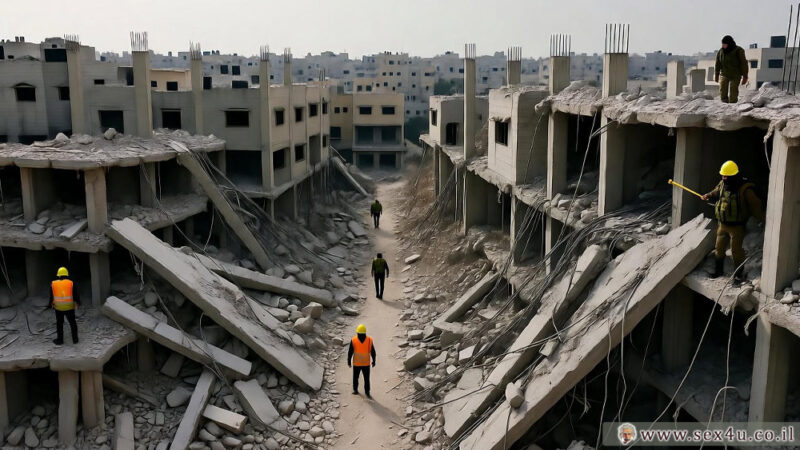
Gaza, the “Before and After” Version
Television renovation shows show houses in the “before and after” of the show – taking an old house, renovating it, adding a flower pot and a fake smile from a TV host.
And then there’s Gaza.
There, the “after” always looks exactly like the “before” – only without the infrastructure, with more ruined buildings, less electricity and more UN personnel in white helmets looking for CNN cameras.


In October 2025, with the signing of the agreement to end the war, one thing is clear: Gaza does not need “renovation”. It needs a reboot.
With it, only questions remained open – Why, in the name of common sense, would anyone want to rehabilitate Gaza, how long is it supposed to take, and most importantly – who the hell is supposed to live there afterwards?
Should Gaza be rehabilitated at all – or simply left in the state of an “abandoned factory”?
There is a school of thought that believes that we should “repair the damage.” And there is another school of thought – Israeli, practical, sweaty – that says:
If something breaks over and over again, maybe it wasn’t meant to be repaired.
After all, every time we rehabilitated Gaza – it ended in rockets.
1994 – Oslo Accords, international investment of billions, reconstruction.
2005 – Disengagement, Israel leaves, the world pays, the Palestinians get the chance of a lifetime – and throw it away along with sewage pipes that have become missiles.
2021 – Qatar pours money into suitcases, Hamas buys iron and cement. Instead of building schools – they built tunnels and dozens of hospitals that served as terrorist headquarters.
And now, after 2023-2025, the big question is not how to rehabilitate, but why rehabilitate at all.
If you give a person a knife – don’t be surprised when you find yourself in the emergency room again.
Israel, after all the suffering and blood, should not be “the rehabilitation contractor of its enemies.”
After all, any rehabilitation that cultivates a kindergarten there – will one day wake up and discover that a new missile launch site has been dug under the swing facility.
 How long is it expected to take and what are the stages for this (estimates)
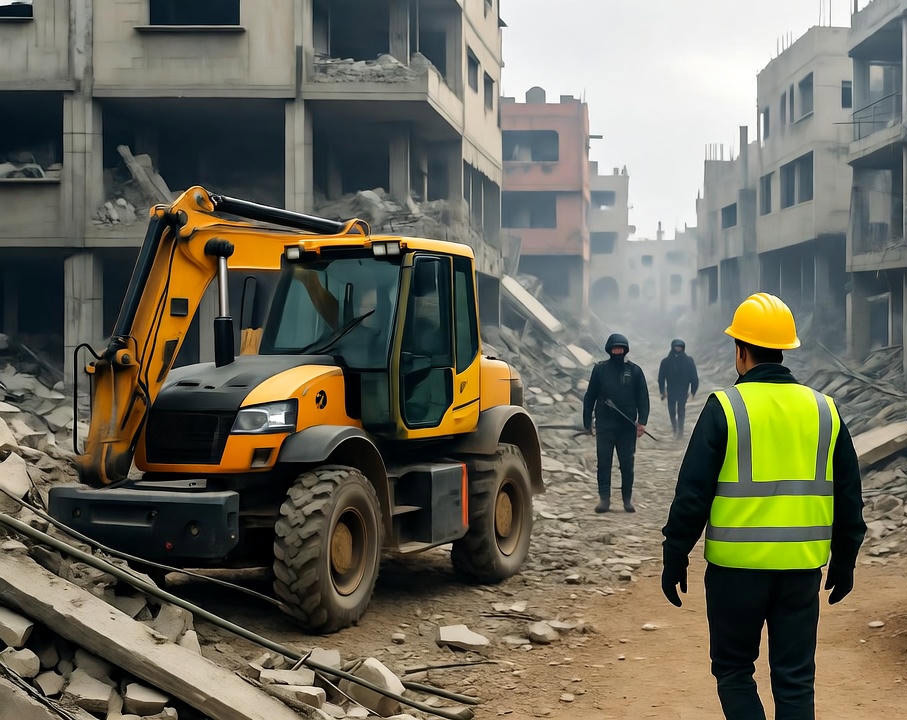
- What needs to be done immediately: Immediately after the opening of a humanitarian window, it is possible to bring in shipments of food, medicine and medical equipment, establish temporary power and water stations, and open access routes
This is the rescue phase aimed at preventing medical collapse and immediate mortality. This phase can occur within months (3-12) if free access and adequate resources are provided. - The critical and dangerous phase: Clearance of unexploded ordnance and explosives (UXO): Tens of thousands of mines, unexploded ordnance, and other war relics are scattered among the rubble;
UN bomb disposal experts and Mine Action have estimated that full safe rehabilitation from UXO could take years to decades – expert reports indicate estimates of ~14 years for a thorough clearance under ideal conditions.
This time estimate makes most construction and housing work temporary until the area has been inspected and declared safe. - Early rehabilitation (6-36 months): After inspections and local clearance of UXO in priority areas, rehabilitation of major hospitals, quality temporary housing, repair of water/electricity lines, and provision of basic public services can begin.
This is a phase of “infrastructural revitalization” — not a complete renovation of cities, but the creation of minimal living conditions under security control and mechanisms for overseeing the distribution of aid. - Long-term reconstruction (3-10+ years, up to decades in difficult scenarios): Clearing 30-40+ million tons of rubble, rebuilding neighborhoods and heavy infrastructure (ports, roads, waste disposal) and establishing a reconstruction economy will require many years;
UN and development agency estimates speak of 10-15 years or even more until significant reconstruction — and of course, costs in the billions of dollars. This pace is entirely dependent on continued security, a multinational oversight mechanism, and the availability of waste and paving areas. - Summary conclusion and key risk point: In practice — the humanitarian crisis can be addressed within months, early rehabilitation can be carried out within a few years, but comprehensive and safe infrastructure rehabilitation may take decades;
The greatest risk is the UXO and rubble that limit the pace and turn any investment into a safety risk and potential for military exploitation if strict oversight mechanisms are not in place.
Without demilitarization, oversight, and ongoing international cooperation, any “reconstruction” could turn out to be a re-investment for dangerous elements.
So how long will it really take – a short answer, a real answer, and a cynical answer
Short answer: About two to three decades.
Real answer: Never.
Cynical answer: Until the Palestinians stop choosing who shoots them in the foot.
A normal reconstruction process for a destroyed city can take 5-10 years. But Gaza? There, every crane needs a security guard, every worker needs a security background check, and every brick requires a double clearance: “Don’t turn it into a machine gun.”
Even if we assume that the international community pours trillions and brings in all the experts in modular construction – the reconstruction will be finished exactly on the day the next organization (let’s call it “Reformist Jihad”) decides to shoot at Sderot again.
And in between, we will see dozens of more articles on the screens “Who built the new hospital in Gaza?” with credit to the EU and the photographer who came from Jordan.
In other words: Gaza Reconstruction is not an engineering project – it is a psychiatric project.
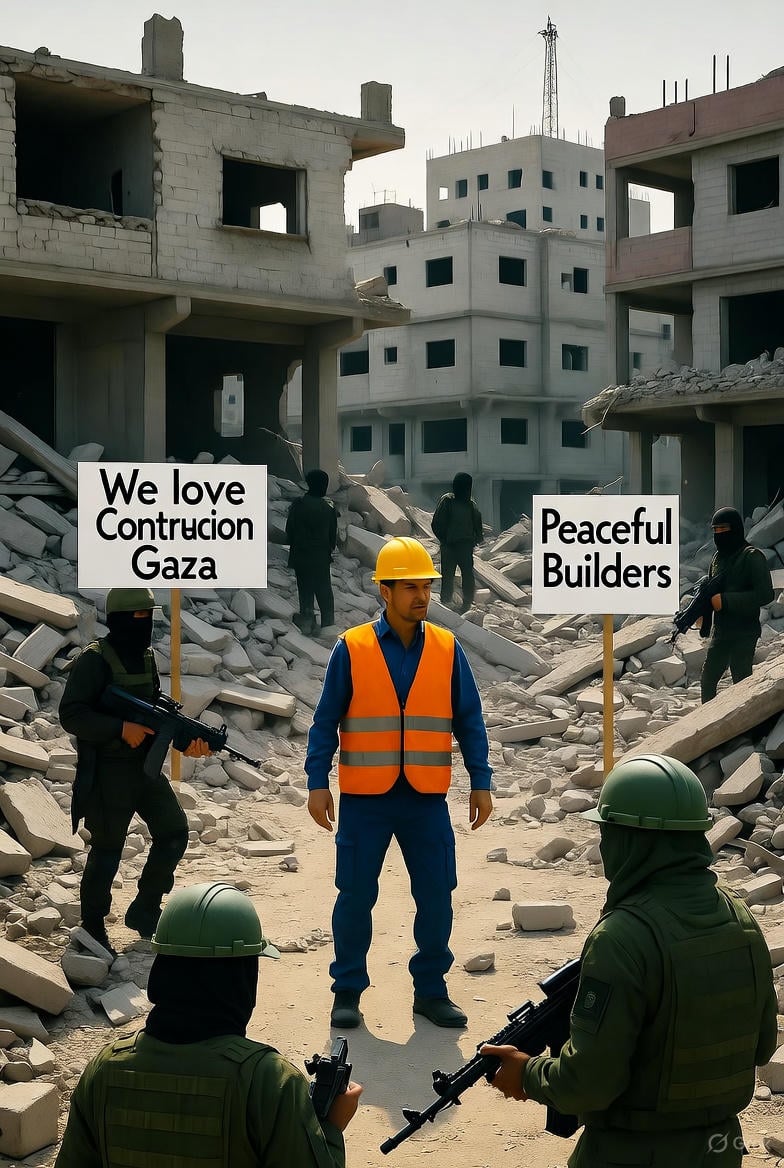
Who will pay – and who will pay again
Qatar will pay – but film it
Qatar would be happy to spend a few more billions, just to make sure that every child in Gaza learns to say “Al Jazeera” before “Shalom.”
They will not rebuild Gaza to make it a normal city, but to make it a museum of Muslim victims.
The UN will pay – that is, we will pay
Every shekel the UN “donates” – comes from the wallets of taxpayers in the free world. That is, us again.
And as always, they will do it with a commission of inquiry into “Israeli crimes” in the process.
Israel?
Israel will rebuild or agree to rebuild – not of its own free will, but because as soon as cries of “humanitarian crisis” are heard, the global chorus of pressure will begin:
“Give electricity to Gaza, give water to Gaza, give life to Gaza!”
(They just forget to mention who stole the electricity, the water, and the lives – the very people they want us to kiss their homes.)
Who will inhabit the rebuilt Gaza?
Now we get to the real point.
Suppose that one day Gaza is truly rebuilt – neat streets, new buildings, shopping malls.
Who will live there?
- The same people who raised their children to hate Israel?
The ones who shouted “Liberate Palestine” and beat up soldiers at the border?
It’s like returning a stolen car to a thief and asking him to keep it. - Maybe the Palestinian refugees from Lebanon or Syria?
Sounds logical on paper – until you realize that the word “refugee” for them is a profession, not a status.
They will return – with tales of revenge, not dreams of construction. - Maybe a whole new population?
Yes, this is where it starts to get interesting:
There is talk (unofficially, of course) about a “new model” – the Gaza Strip as an international zone, with Egyptian-Israeli supervision, and housing for a moderate civilian population, perhaps even Arab Israeli residents who would like to return to building a future with peace.
A bold idea? Yes. Realistic? Sort of like “eternal peace in the Middle East.” - Last option – Gaza as a temporary depopulated space
That is: not to populate, not to build, but to turn the area into a sterile security zone, where only temporary international aid stations operate.
Such a situation may not be photogenic, but it is the most realistic – especially if Israel wants a quiet border.
The big danger – “Reconstruction for PR purposes”
The Western world loves projects that look good in pictures:
Children with balloons, a colorful wall, and a “Thank you UNDP” sign.
But underneath – the same Hamas, the same ideology, the same hatred.
Then, six months after the fundraising videos, a new headline will appear:
“Israel attacks Gaza again – Hamas launches rockets from the renovated school.”
And that’s how it always is – we build, they destroy, and the BBC blames us.
A right-wing Zionist proposal (and a little sting at the end)
Instead of talking about “rebuilding Gaza,” maybe it’s time to talk about rebuilding the entire region – without Gaza being Gaza.
- Transfer a significant portion of the population to Egypt/other Arab countries (with economic incentives).
- Turn the Strip into a controlled area with an international port under civilian-international control.
- And most importantly – stop being afraid of the word “depopulation.”
This is not about expulsion, but about a voluntary relocation plan that will allow residents to start over without Hamas breathing down their necks.
Because the truth is simple: You can’t rebuild a place that still dreams of destroying you.
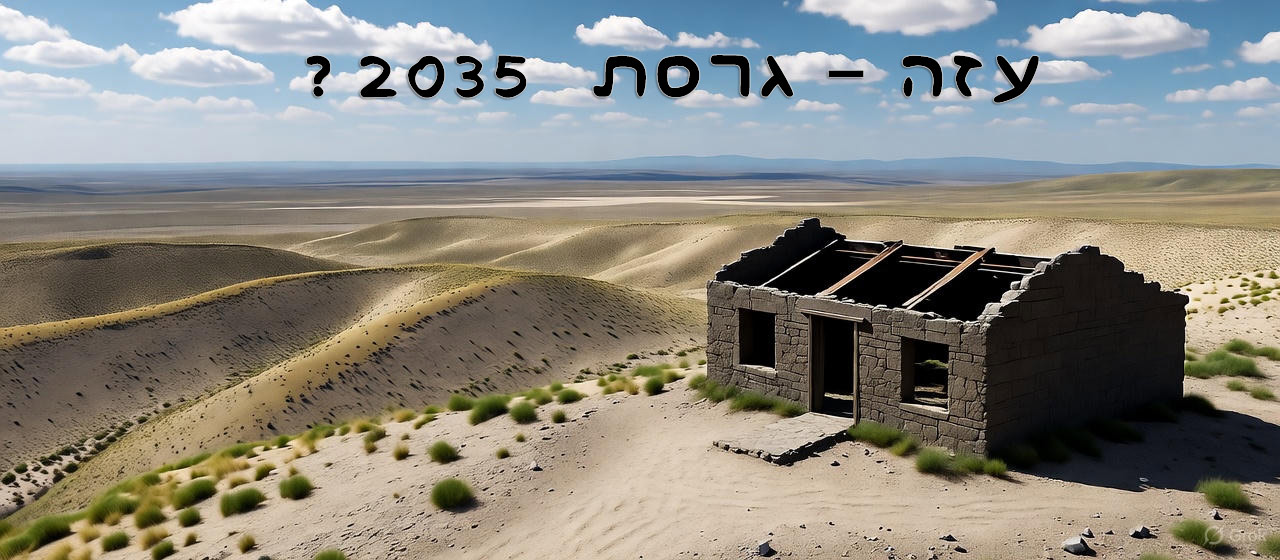
Gaza – Version 2035
If we were truly honest with ourselves, we would admit that it’s not a question of “how long will it take,” but of “how long will we pretend it’s possible.”
The reconstruction of Gaza will not be measured by the number of houses built – but by the number of rockets not fired.
And this, as of now, is the most difficult statistic for reconstruction.
So who should live in a reconstructed Gaza?
Only those who choose life over hatred.
But in the meantime – we will be content with keeping the fence closed, our heads on our shoulders, and our humor, because without this – we have no chance in this Middle East.
הירשמו כדי לקבל את הפוסטים האחרונים אל המייל שלכם