Robot Vacuums: The Beginning of a Revolution (or the End of Humanity)

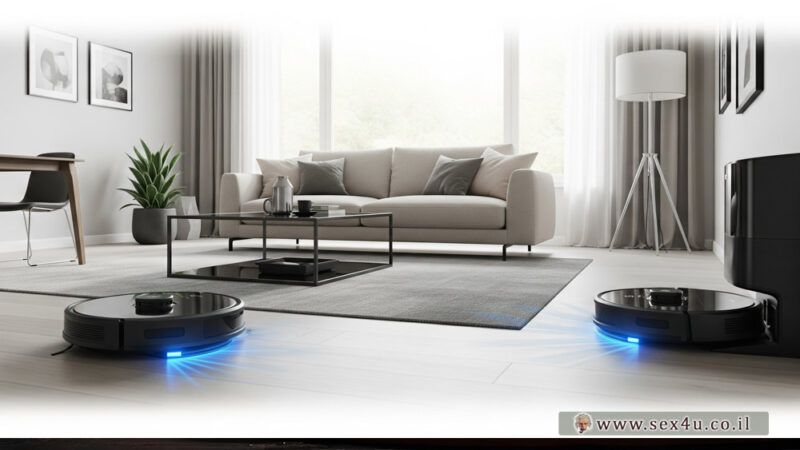
If someone had told us twenty years ago that one day we’d have vacuum cleaners that talk, navigate, sneak under the bed, and take revenge when you forget to charge them—we would’ve laughed.
Today, we laugh less. Mostly when the robot crashes into the closet again. Or worse—into the electrical panel.


But let’s start from the beginning.
The Robot That Wanted to Be a Polish Housekeeper
The robotic vacuum cleaner was born out of two ancient human desires:
to clean without moving, and to make sure the neighbors never find out your house is dirty.
Thus emerged the most awkward creature in the modern home—not a dog, not a cat, not a cleaning lady—but a smart disc rolling around the living room, making suspicious noises, and stopping exactly when you start being impressed by it.
Friend or Intruder?
In commercials, the robotic vacuum is always portrayed as the family’s best friend. Smiling (despite lacking a mouth), shiny, loyal.
In reality? It crashes into corners, eats your kids’ toys, strangles itself in shoelaces, and lives for the dramatic escape under the couch—where it’ll remain in exile until discovered days later, traumatized but intact.
News headline material: “Robot Vacuum Missing for 5 Days—Found Safe but Emotionally Unstable.”
A Machine with Personality
Major tech companies now design vacuums with “personalities.”
Some are aggressive (charging at walls like they’re storming Gaza), others timid (hesitating nervously around rugs), and a few just make pointless noise—like a sofa collapsing in the middle of a Biden speech.
Don’t be fooled: most aren’t truly “smart.” Their complex algorithms are basically:
“I’m stuck—maybe I’ll turn left?” or “I cleaned here before, but why not again?”
Still, at least they don’t silently judge you like your old human housekeeper did.
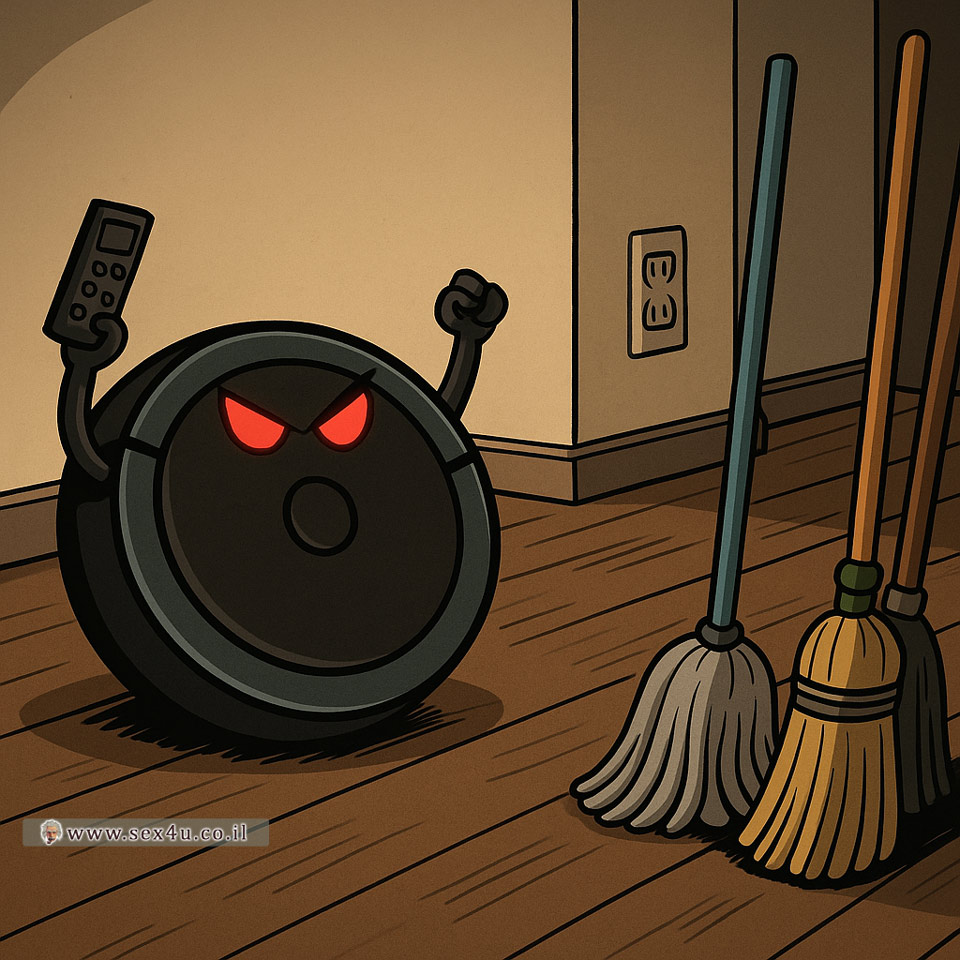
The Robot Uprising? It Starts with Dust
Ask any cat or dog—the robotic vacuum is the new home invader.
It’s noisy, persistent, and creepily obsessed with tails. Sometimes it even chases them until the kids cry.
And then there’s the curse of the poop incident—that tragic day when your robot fails to detect a “surprise” on the floor.
You come home from work to find your living room redecorated in an avant-garde pattern of brown streaks.
Modern art, courtesy of AI.
Vacuum or Watchdog?
Make no mistake—the robot vacuum doesn’t just collect dust. It collects data.
Some models map your home, build a 3D model of your apartment, and send the data “to improve performance.”
Others just follow you around creepily, waiting for you to enter the shower.
Once upon a time, we worried that our TV remote might be listening in.
Now, your vacuum knows exactly which corner you sneak food in—and that’s terrifying.
So What’s the Verdict?
On one hand, it vacuums, it’s cute, and it keeps your place respectably clean between Passover and your mother’s next visit.
On the other hand, it’s like that annoying cousin—doesn’t do much, constantly needs attention, and might steal your charger while you sleep.
And when the robot apocalypse finally comes, it won’t start with killer drones or AI generals.
It’ll start the moment a vacuum decides it no longer wants to clean—only to follow.
At least then, we won’t have to sweep.
הירשמו כדי לקבל את הפוסטים האחרונים אל המייל שלכם