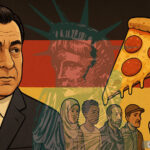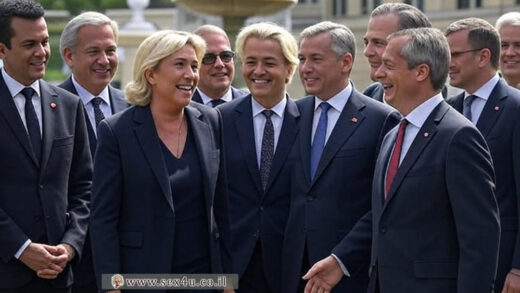
From Coffee Counter to Hasbara Superstar: How Netanyahu’s Barista Became Israel’s Most Unexpected PR Asset

Sometimes foreign policy is shaped in war rooms.
Sometimes it is shaped in ministries and diplomatic summits.


And sometimes – in the age of the internet – it is shaped next to an espresso machine.
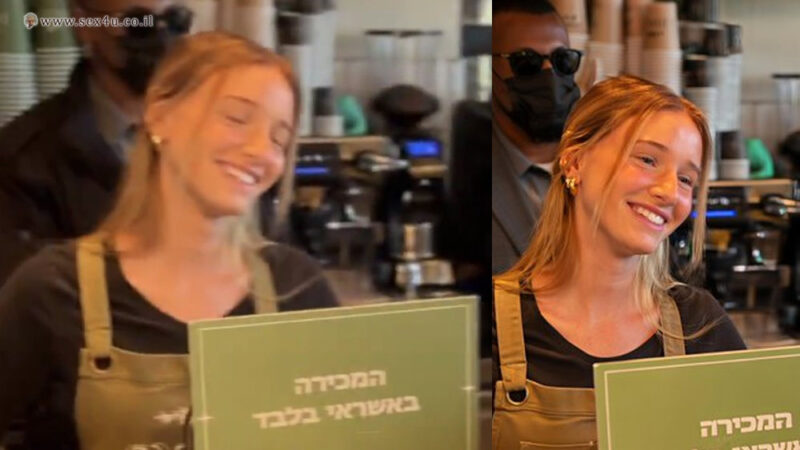
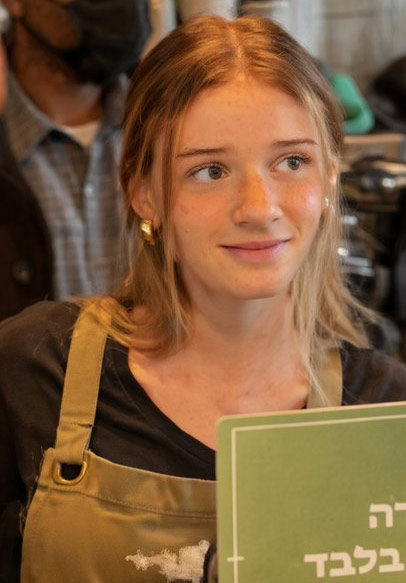
That unlikely moment arrived when a short video featuring Benjamin Netanyahu began circulating online. In the clip, Netanyahu casually chats with a young barista serving coffee. Nothing dramatic happens. No major policy announcement. No fiery speech.
Just a friendly exchange, a smile, and a cup of coffee.
But the internet, as we know, rarely leaves anything alone.
Within hours the barista became an unexpected online sensation.
Within days she had turned into something far stranger: one of Israel’s most effective unofficial ambassadors.
Not because anyone planned it.
Not because a communications team designed it.
But because the internet decided so.
The Birth of a Viral Moment
Social media has a peculiar sense of humor.
Important speeches about geopolitics sometimes gather a few thousand views. Meanwhile, a video of a cat slipping off a chair reaches ten million overnight.
The Netanyahu-barista clip landed somewhere in between politics and pop culture – exactly the kind of territory where virality thrives.
At first, people shared the video because it felt light and human. A small, almost cinematic scene: a prime minister ordering coffee from a cheerful young woman.
But then something more interesting began to happen.
The memes started.
Users across platforms like X, Instagram and TikTok began remixing the clip.
The comments were often half-joking, half-admiring:
- “Israel’s secret weapon: friendly baristas.”
- “New Israeli PR strategy: good coffee and good vibes.”
- “How does a country in constant headlines still look like a café commercial?”
The algorithms noticed the engagement.
And when algorithms notice engagement, they do what algorithms do best: amplify.
Soon the clip had morphed into a wave of memes.
Memes, Beauty, and the War of Images
Then the phenomenon took another turn.
The memes stopped being only about coffee.
They became about Israelis themselves.
Images of Israeli women – soldiers, students, travelers, café workers – began circulating online, often paired with sarcastic captions like:
- “Israeli propaganda: just show normal life.”
- “Breaking news: Israelis appear to be human.”
- “The most effective PR campaign is reality.”
Naturally, the internet being what it is, the meme wave also produced edgier comparisons and sarcastic commentary about the stark contrast between different social images emerging from the region.
And this is where the deeper story begins.
Because what we were witnessing wasn’t really about a barista.
It was about visual narratives.
In the Social Media Age, Images Beat Arguments
Traditional public diplomacy works like this:
- Something happens.
- Officials explain it.
- Audiences evaluate the explanation.
But in the age of algorithms – largely dominated by platforms run by companies like Meta Platforms – the order has flipped.
Now it works like this:
- An image appears.
- People react emotionally.
- Only later do explanations arrive.
In other words, aesthetic impressions often precede political understanding.
When millions of viewers see Israelis drinking coffee, laughing with friends, or casually interacting with their prime minister, the message is powerful without saying a word:
This is a normal society.
That visual narrative can quietly compete with the dominant perception of a region defined only by conflict.
Why the Barista Worked So Well
There’s a reason the barista became the symbol of the moment.
She wasn’t a politician.
She wasn’t a government spokesperson.
She certainly wasn’t part of a carefully designed media campaign.
She simply looked like what she was: a regular young woman living an ordinary life.
And that is exactly why it resonated.
When a government spokesperson speaks, audiences instinctively hear propaganda.
When an ordinary person appears on camera, audiences see authenticity.
Ironically, the barista accomplished something that expensive state communication campaigns often struggle to achieve:
She made Israel look human.
The Algorithm Loves Contrast
Another reason the memes spread so quickly lies in a simple rule of online culture: contrast drives engagement.
Content that juxtaposes two very different images tends to grab attention.
In this case, the contrast was obvious:
- On one side: Israeli cafés, young people, urban life.
- On the other: the region’s constant imagery of protests, slogans, and political rage.
The internet thrives on visual tension.
And when that tension is packaged as humor, it spreads even faster.
Israeli Beauty as an Unofficial Brand
There’s also a cultural layer to the story.
Like it or not, Israeli beauty has long functioned as a kind of informal global brand.
This isn’t new.
International figures such as Bar Refaeli and Gal Gadot have helped shape the global perception of Israeli charisma and style.
But social media has dramatically amplified that image.
Today, a single viral post can do what marketing campaigns once required millions of dollars to achieve.
The barista moment simply tapped into an existing cultural current.
What Governments Still Don’t Understand
There is a certain irony here.
For decades, governments have poured enormous resources into official public diplomacy:
- Strategic messaging
- International media campaigns
- Diplomatic briefings
Yet again and again, the most powerful narratives emerge from completely spontaneous moments.
Not from conferences.
Not from official statements.
But from everyday life.
A coffee shop.
A smile.
A brief, unscripted interaction.
Common Mistakes in Digital Public Diplomacy
The episode also highlights several misunderstandings about how influence works online.
Trying to control the message
Once content becomes a meme, it belongs to the internet.
Being too serious
Highly polished official messaging rarely goes viral.
Ignoring humor
The internet runs on sarcasm, irony, and absurdity.
Memes often communicate faster than formal arguments ever could.
Who Should Pay Attention to This
Policymakers
The battlefield of global perception has moved to social media.
Journalists
Narratives today are increasingly shaped by viral imagery.
Ordinary citizens
In a networked world, anyone can become an accidental ambassador.
And Who Probably Won’t
Those who still believe public diplomacy happens primarily through speeches, press releases, and official interviews.
The digital reality has moved on.
Conclusion: Espresso Machines vs. Foreign Ministries
The story of Netanyahu’s barista is a small anecdote that reveals a much larger truth.
In the social media era, the struggle for public perception is no longer fought only between governments.
It is fought between images.
Sometimes those images come from carefully crafted campaigns.
And sometimes they come from something far simpler.
A coffee counter.
A brief smile.
An unscripted moment that feels real.
The cynical but unavoidable conclusion is this:
In a world ruled by algorithms, the most effective diplomatic asset a country might have isn’t always a policy document, a spokesperson, or a summit meeting.
Sometimes it’s just
a barista with a good espresso and perfect timing. ☕
A bit of the madness on the internet
אומרים שאני מה? צפו >> pic.twitter.com/ijHPkM3ZHZ
— Benjamin Netanyahu – בנימין נתניהו (@netanyahu) March 15, 2026
הבחירה קשה pic.twitter.com/ZQ6lelvTdH
— Jack Russell 🐶 (@JackRussell2022) March 16, 2026
An ordinary Israeli woman VS
Hollywood Snow White pic.twitter.com/5B4Af5LKJN— Rond (@RonT96492718174) March 16, 2026
היא עשתה יותר למען ההסברה הישראלית מאשר כל אחד מאיתנו. 😂 https://t.co/Iigkgy92Xu pic.twitter.com/b1R62IXuyZ
— B.X (@Brxrp) March 15, 2026
התמונה של הבחורה הזו מהסרטון של נתניהו בבית קפה היום שוברת בשעות האחרונות את הרשתות החברתיות בכל העולם. מליוני צפיות ועשרות אלפי שיתופים, ממ״ים ואפילו תמונות מעודכנות ב-AI, של אמריקאים ואירופאים שטוענים שעכשיו הם אוהבים את מדינת ישראל כי גילו שיש בה נשים יפות. אירוע בלתי נתפס.… pic.twitter.com/h2cMN5wpjR
— ברל’ה קרומבי🇮🇱 (@berale_crombie) March 15, 2026
VOGUE model vs random Israeli barista pic.twitter.com/rineTscceW
— voló (@lowcortisol) March 15, 2026
הירשמו כדי לקבל את הפוסטים האחרונים אל המייל שלכם