The Apartheid Lie 🧞: How does the only democracy in the Middle East with Arab judges become an ‘apartheid regime’?

Welcome to the South Africa of the Middle East (but only in imagination)
If sources are to be believed, Israel is an apartheid state. That’s right. According to international organizations, Hebrew University professors, and the former UN Secretary-General – we walk here proudly in a country that resembles the South Africa of the 1980s.
It’s just a shame that no one told the 2 million Arab citizens who live here, vote, study at universities, work in hospitals, establish political parties, and occasionally file petitions to the High Court of Justice that embarrass the entire country.


But why get hung up on facts, when you can promote an international agenda with a shiny name like “apartheid”? That sounds good. It brings up associations of Nelson Mandela, Cape Town, “whites only” signs. And Israel? It simply took the place of the evil one on duty.
What is real apartheid – and how it has nothing to do with Israel
Apartheid, to remind those who skipped high school history class, is a legal regime of racial segregation: a system in which there are separate laws for blacks and whites, laws that determine where it is permissible to live, study, marry, and even go to the bathroom.
And now let’s do a little experiment:
- Are there laws in Israel that prevent Arabs from studying at university? No.
- Are there laws that prohibit marriage between Jews and Arabs? No.
- Are there laws that prevent Arabs from being elected to the Knesset? Quite the contrary – sometimes they even hold the coalition by the throat.
- Do Arab judges sit on the Supreme Court? Yes. Including the one that convicted a Jewish president of rape.
So maybe we should change the term. Not “apartheid”, but maybe… “democracy with transportation problems”.
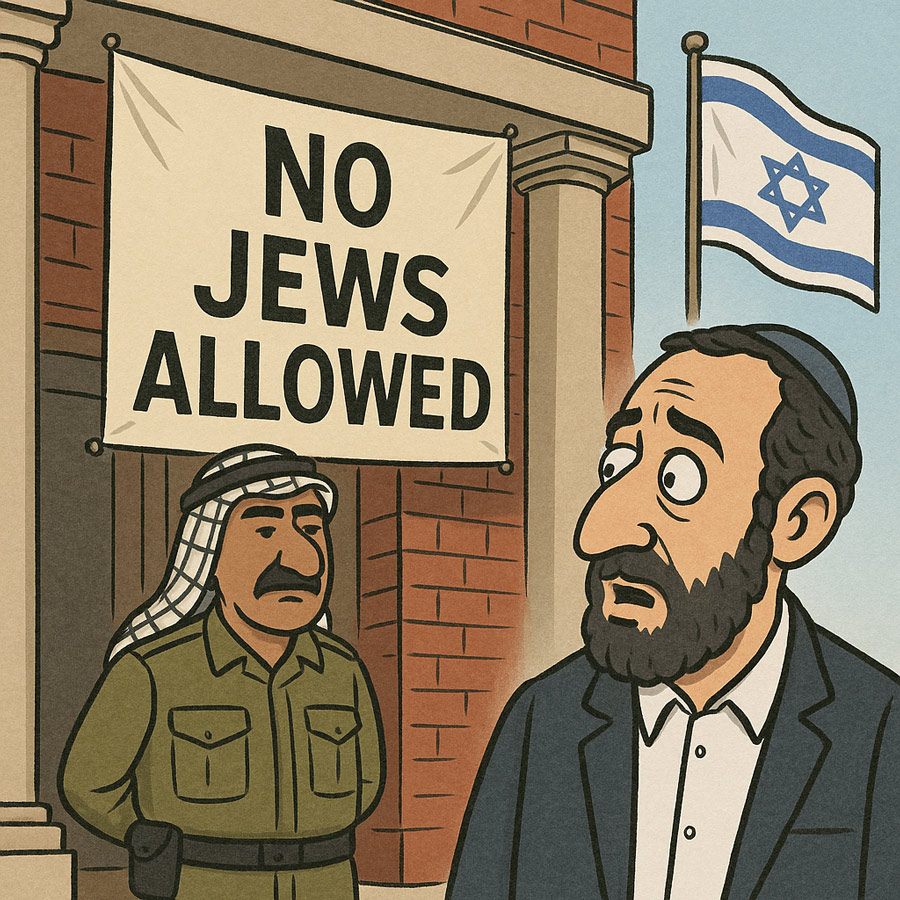
The occupation – the most tired attempt to explain non-existent apartheid
When the facts about Israeli Arabs don’t add up, they move to the territories. And there they use the fighter jet method: dropping bombs of words – “apartheid regime in the West Bank” – and hoping that the noise will blur the details.
So here are some details:
- The Palestinian residents of Judea and Samaria are not Israeli citizens. Not because of the color of their skin, but because they don’t want to be. In fact, if you ask Abu Mazen if he wants Jenin to be annexed to Israel – he will hide under the table.
- They are subject to a different legal system – not because of race, but because of the Oslo Accords. Yes, the same agreements that the Israeli left swears by. The Palestinians asked for autonomy, got it, and now complain that they are not receiving Israeli citizenship while at war with Israel. It’s kind of like complaining that you are not receiving social security from the bank you are robbing.
- If it’s apartheid – then the opposite: Jews are not allowed to enter areas A, and sometimes not even B, for fear of being murdered. Try to imagine a situation in which blacks in South Africa were to say to whites: “We will not let you enter our neighborhood — because you will not leave it alive.” How would that sound?
When did it start and why did it become an obsession?
The term “apartheid” has become the weapon of choice for extreme left-wing organizations, BDS, and confused students at American universities who believe that Zionism is a curse.
Why? Because it’s easy. Because it makes sense. Because there’s no need to delve into 3,000 years of history, to discover that Jerusalem was the capital of the Jewish people long before Palestine was invented. There’s no need to understand security complexities, to not understand the difference between an Israeli Arab and a Jordanian citizen with a fake ID.
All you have to do is say: “Apartheid!” – and wait for them to start canceling Israeli performances at festivals in Europe.
The Israeli irony – right here, right now
The funniest (or saddest) thing is that in a country that allows such a variety of freedom of expression, where you can call it an “apartheid state” from morning to night without a policeman coming (unlike Iran, Qatar, or Gaza) – this lie is taking place here.
You can be a university lecturer, writing articles about Israeli apartheid, while sitting in an air-conditioned office at a public university funded by the state you are discrediting.
Try doing that in Syria, Lebanon, or even Erdogan’s Turkey — and see how long you survive.
 Why This Lie Is Dangerous — Not Just Ridiculous
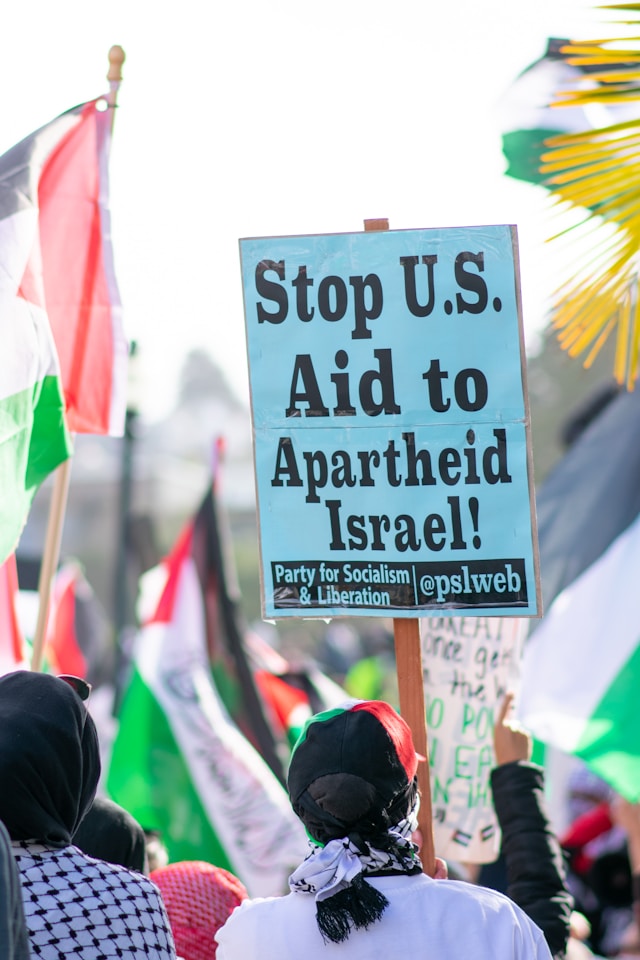
On the surface, this is another overblown term being circulated among Urban Outfitters-wearing justice seekers. But in reality, it’s a lie that It has real effects:
- It serves to justify violence against Jews around the world.
- It prepares calls for an academic and cultural boycott of Israel.
- And it prepares the ground for the most disgusting idea: delegitimization of the very existence of the State of Israel.
Because if Israel is truly an apartheid regime — then why not dismantle it? Why not replace it with a binational state where it is not certain that there will be room left for a menorah on the flag?
Apartheid? Perhaps in the post-Zionist left
The lie of “Israeli apartheid” is not a mistake, but a strategy. It is designed not to fix Israel — but to eliminate its idea.
Therefore, we must not treat it with academic leniency or liberal humor. But we are allowed, and even desirable, to treat it with cynicism — and expose its absurdity.
Because if it is an apartheid state — then South Africa should come and learn from us how to do the It’s with Arabs in the Knesset, judges on the Supreme Court, and mayoral candidates.
And in the meantime, until they figure it out in Brussels or Berkeley, we will continue to live here. Together. As always. With problems, with arguments — but also with one simple truth: Not every lie you tell three times becomes the truth. Even if you wear a keffiyeh and carry a sign.
הירשמו כדי לקבל את הפוסטים האחרונים אל המייל שלכם