The Culture of Negation of the Other: The Dark Side of the Western Left

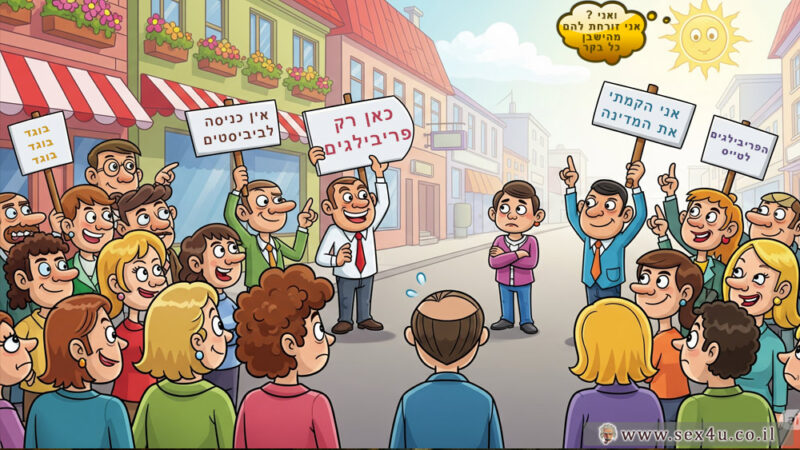
The Age of Virtuous Hypocrisy
A Cynical Right-Wing Look at the West’s “Cancel Culture” Obsession
Introduction: The Rise of the Righteous Mob


In recent years, the Western world has become a cultural battlefield—one where the left, under the noble banner of “social justice,” has birthed a new and troubling phenomenon: Cancel Culture.
This isn’t a passing fad; it’s practically a new religion. Its believers—armed with slogans like “justice,” “equality,” and “sensitivity”—are ready to sacrifice anyone who dares deviate from the accepted ideological line.
From a right-wing, cynical perspective, the whole thing is a tragic farce: a mix of moral arrogance, intolerance dressed as compassion, and a stunning lack of self-awareness.
In this article, we’ll dive deep into the roots, mechanisms, and consequences of this new secular faith—without illusions, and certainly without apologies.
Origins: Where the Monster Came From
Cancel Culture didn’t emerge in a vacuum. It’s the natural offspring of decades of ideological evolution within the Western left—ideas that began as noble struggles for minority rights and equality, but slowly mutated into a bureaucratic monster of moral puritanism.
In the 1960s and ’70s, progressive movements fought for freedom of speech and individual rights. Somewhere along the way, that ideal of freedom was replaced by collective dogma. Terms like “social justice” and “political correctness” became rigid codes, and the conversation turned into a zero-sum game: you’re either with us or you’re evil.
Academia—now the temple of progressive orthodoxy—played a central role. Theories like Intersectionality and White Privilege became ideological filters for labeling people as oppressor or oppressed. Instead of open debate, universities turned into sanctuaries of conformity, where deviation is treated as sin. The result? A generation of young people raised to believe that opposing opinions aren’t just wrong—they’re immoral.
The Mechanism: How the Cancel Machine Works
Cancel Culture operates like a modern-day Salem witch trial—with Twitter replacing the torches.
Here’s the pattern:
Someone posts something “problematic”—a tweet, a joke, a quote from a decade ago—and the digital mob descends. Context doesn’t matter. Intent doesn’t matter. Facts don’t matter. The “sin” is defined by how someone feels about it, and the punishment is swift and merciless.
The tools of the trade: public shaming, deplatforming (removing people from YouTube, Twitter, etc.), and coordinated demands for firings or boycotts. The goal isn’t discussion or growth—it’s social annihilation.
Examples abound: J.K. Rowling, once a feminist icon, excommunicated for her views on gender. Dave Chappelle, attacked for jokes that weren’t “inclusive” enough.
The irony? The same people preaching “tolerance” are the first to execute ideological heretics.
Social media supercharges the process. Algorithms amplify outrage, and clicks on controversial content translate directly into profit. Outrage has become a currency, and moral fury—a business model.
Consequences: A World Without Dialogue
The damage is immense.
First, freedom of speech is suffocating. People are afraid to speak, write, or even joke—worried that one misplaced word could destroy their lives. Self-censorship becomes the norm, and everyone walks on eggshells to avoid “offending” someone.
Second, public discourse collapses. Instead of dialogue, we have mobs. Instead of ideas, we have hashtags.
Third, alienation grows. People no longer feel they can be authentic. Every opinion is a potential liability.
From a right-wing viewpoint, the irony couldn’t be sharper:
The left, which claims to defend the weak, has become a machine of oppression targeting anyone who dares to think differently.
And the hypocrisy? Those same “justice warriors” who fight for “marginalized minorities” often silence other minorities—conservatives, religious believers, or working-class citizens—if they don’t fit the progressive mold.
The Right-Wing View: Virtue, Vanity, and Control
From the right’s perspective, Cancel Culture is a cocktail of hypocrisy and moral vanity.
The left acts as if it holds a monopoly on morality—as if only it knows what’s right and good. But in practice, it exercises power just like the institutions it once claimed to resist. The only difference is that its authority hides behind words like “inclusion” and “justice.”
The real goal isn’t equality—it’s control. Control of language, of culture, of thought itself. Because whoever controls the conversation controls the mind.
And perhaps the most revealing trait of all: the left’s complete intolerance for disagreement. The right, for all its flaws, at least admits it might be wrong. The left, however, has turned its ideology into a religion—with priests, sinners, and ritual purges. Disagree, and you’re damned.
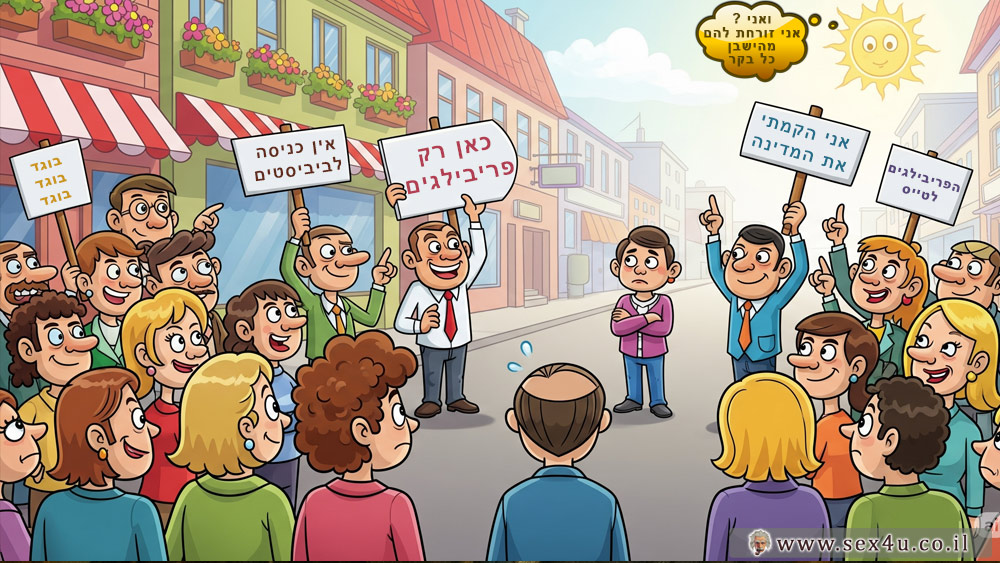
Conclusion: Where Do We Go From Here?
Cancel Culture is a symptom of something deeper—a collapse of trust in dialogue, and a collective fear of disagreement. It reflects a left that’s lost its way, forgetting the values of liberty and openness it once championed.
From a right-wing perspective, the solution isn’t to fight censorship with counter-censorship. It’s to revive a culture of open debate—where ideas stand or fall on the strength of argument, not the volume of outrage.
But let’s be honest: as long as social media profits from rage, and universities keep producing new generations of unquestioning justice warriors, Cancel Culture isn’t going anywhere.
So what’s left for us?
To laugh at the absurdity.
To keep speaking freely.
And to hope that, someday, common sense makes a comeback.
In the meantime—at least we’ll have some great memes.
הירשמו כדי לקבל את הפוסטים האחרונים אל המייל שלכם