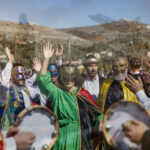
✯ The Druze of Israel: More Zionist Than the Jews, Yet Forgotten in the Planning Committee

The Druze—one of Israel’s most loyal, transparent, and misunderstood communities.
“Wait, Are They Muslim?” – A Quick Guide to National Confusion


Let’s start with this: the Druze are not Muslims.
Not Christians.
Not Jews.
In fact, if you corner a Druze and ask, “So… what are you exactly?” he’ll smile and say,
“Druze.”
You press on:
– “Okay, but what do you believe in?”
He’ll shrug, smile again, and say,
“That’s a secret.”
And that’s where Israelis start losing their minds.
Because there’s one thing we can’t stand—it’s people who know something we don’t.
Still, the Druze live among us. They serve in the army, fight, work, study, build, shout “Yalla Maccabi!” and vote in elections.
And yet, somehow, every time Israel discusses “minorities,” they always end up last in line.
The Patriotic Infantry – How the Druze Became the Forgotten Symbol of Loyalty
There are about 150,000 Druze in Israel—roughly a quarter of Noa Kirel’s Instagram followers.
But despite their small numbers, they contribute disproportionately—especially to the IDF.
From the very founding of the state, and even before, the Druze never demanded exemptions or protested military service. Quite the opposite: they wanted to serve. To fight. To belong.
So you end up with a Druze soldier commanding a platoon in Golani,
while the brother of some elite Tel Aviv leftist refuses to serve because “my ideology won’t allow me to occupy a hill near Beit Jiptlik.”
But when the Druze ask for, say, fair employment in the public sector, reasonable zoning permits, or even a paved road to their village—they’re told:
“We deeply appreciate your service, but right now the budget is tied up in funding a new task force to document right-wing violations in Judea and Samaria. Try again in June.”
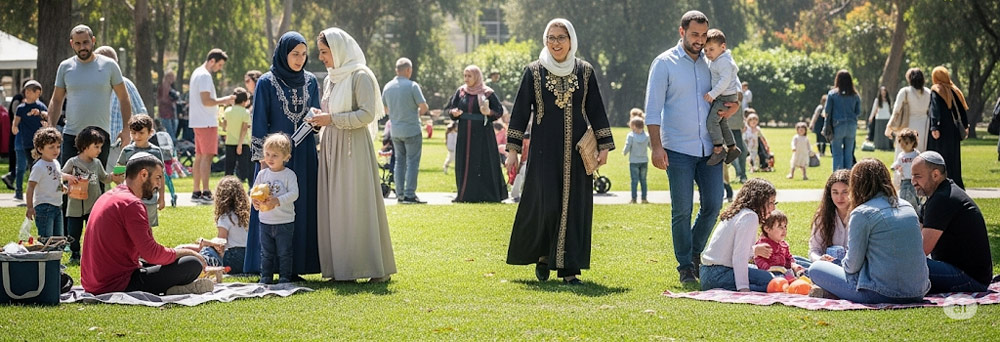
The Nation-State Law – A Door Slammed in the Hallway of Friendship ?
Then came the Nation-State Law.
Not a terrible law. Not a racist one. Just… very Jewish.
But the Druze stood quietly aside and asked:
“Wait, aren’t you forgetting something?”
And the state replied:
“No, no – ‘full equality for all citizens’ is in here somewhere. Maybe in the fine print. Or the preamble. Or… the next reincarnation.”
That was a rare moment of awakening.
A community that for decades hadn’t protested, hadn’t burned flags, hadn’t cried victim—simply said, “This doesn’t sit right.”
Try explaining to them that the law was meant to clarify to Supreme Court judges that in “a Jewish and democratic state,” the Jewish part comes first—not in a religious sense, but in a national one.
Suddenly, everyone panicked.
“The Druze are upset?! But they were the good kid in the family!”
“What do we do? Maybe we’ll call it the ‘Nation-State Law Plus.’ Add a Druze clause on the side?”
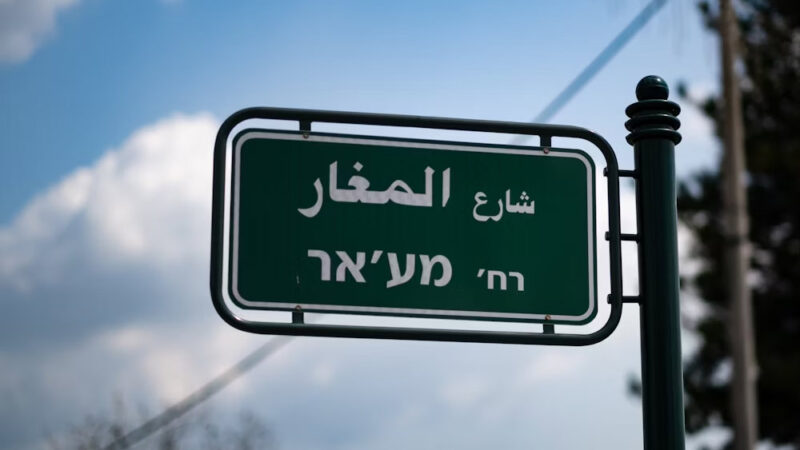
Fouad, Amal, a Senior Officer, and… the Village of Maghar
You can’t talk about the Druze without facing their paradoxical image.
On one hand—national heroes, intelligence officers, judges, doctors.
On the other—“the Druze guy at the checkpoint,” “the one selling falafel in Acre,” or “the guy who always has connections in security.”
To the average Israeli, the Druze man is either a retired Shin Bet chief or a hummus vendor with a gun license.
Because, truthfully, we don’t know what box to put them in.
They’re Arabs—but Zionists.
Religious—but not pushy.
Non-Jews—but will tell you, “Don’t talk like that near the flag.”
It confuses us—
because in a country obsessed with labels, the Druze simply don’t fit any.
And maybe that’s their greatest blessing.
Why Are the Druze the Most Israeli of All?
There’s something beautiful about it.
While everyone else in Israel argues about who’s more Zionist, more oppressed, or more moral—the Druze just live here.
They raise children, build homes, serve in the army, and occasionally cook stuffed grape leaves that taste like heaven and mujaddara that smells like the end of a combat march.
They don’t need a PR campaign, a hashtag, or a TikTok influencer called “Funny Druze Speaks Hebrew.”
They’re simply Israeli—no quotation marks, no parentheses, no apologies.
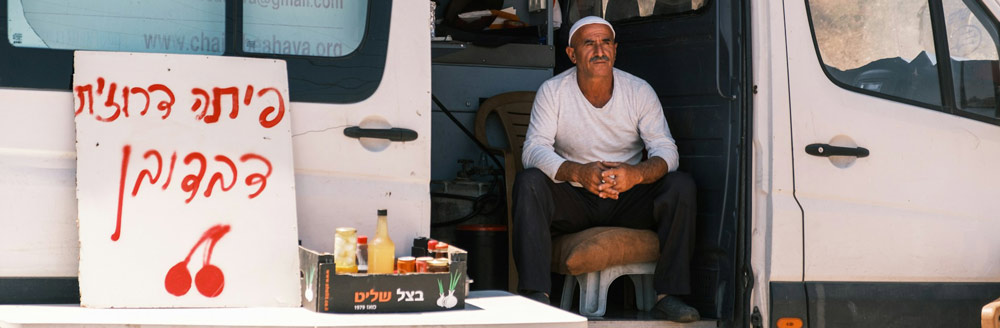
A Medal for Quiet (and Maybe Some Seniority Credit)
So maybe it’s time we acknowledge this:
The Druze don’t need our applause only on Memorial Day or when a Druze officer falls in battle.
They deserve recognition every day—
when there are no cameras,
when it’s inconvenient,
and yes, even in the National Planning Committee.
Because the Druze aren’t just a “high-quality minority.”
They’re a minority without which Israel would be far less quality, period.
And if we’re already being cynical,
let’s at least use that cynicism to laugh at ourselves, not at them.
They’ve already done more than enough to earn that right.
So here’s the bottom line:
The Druze of Israel stand at a crossroads—
not just waving flags, but demanding rights.
Now it’s up to the state to decide:
Will it finally let them cross—
not only on the fast lane of sacrifice,
but also on the road to recognition?
הירשמו כדי לקבל את הפוסטים האחרונים אל המייל שלכם