
Hatikvah: The Only National Anthem That Still Believes in Something

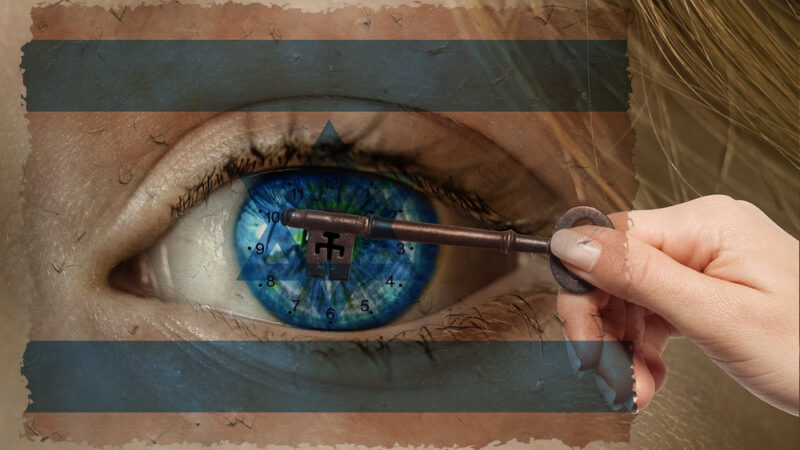
How a 19th-century poem, a stubborn people, and a melody that refuses to apologize still manage to piss off progressives and make Israelis cry
 Because your faithful servant always stands during the anthem, even alone in the car.


There’s that moment — the crowd hushes, the flags rise, someone slightly off-key starts:
“As long as in the heart within…”
And for a split second, it hits you. Goosebumps. Pride. Maybe even a tear.
Then — boom.
Twitter explodes: “Exclusionary!” “Nationalist!” “Not inclusive enough!” “Why only ‘Jewish soul’? What about Arab, vegan, nonbinary souls?”
And you realize — maybe our hope hasn’t been lost yet, but it’s definitely been summoned for questioning at the Ministry of Progressive Sensitivities.
🎵 The Soundtrack of a People Who Refused to Vanish
Before there was Israel, before there was Netflix, even before Herzl had the beard, there was Naftali Herz Imber — a wandering poet with a flask, a dream, and no brand deal.
He wrote Hatikvah (“The Hope”) not as an anthem but as a love letter to a land he had never seen — a bit like modern Israelis who write emotional Facebook posts about Italy.
And somehow, miraculously, it stuck.
The song became the pulse of a people. A prayer without a synagogue. A national anthem without a nation.
It’s simple, raw, and painfully honest — and that’s exactly why it survived everything from exile to Eurovision.
🧠 Why Progressives Hate It (and That’s Why It’s Beautiful)
Ask the cultural elite in Tel Aviv or the gender-studies crowd in Manhattan what’s wrong with Hatikvah, and they’ll say: “It’s too Jewish.”
Yes. You heard that right — the national anthem of the Jewish state is too Jewish.
They want a new version. Something like:
“As long as in the collective heart within,
A diverse and intersectional soul is free to spin…”
Because heaven forbid an anthem would express the specific dream of a people — not a vague “all lives matter” mush.
But Hatikvah isn’t about everyone. It’s about us — the one people on Earth who had the nerve to come back home after 2,000 years and still get criticized for it.
🇮🇱 The Last Anthem That Doesn’t Apologize
Look around: France hides its nationalism behind croissants.
Germany rewrites its lyrics every time it feels guilty (which is… always).
Britain keeps changing its pronouns depending on who’s sitting on the throne.
And then there’s us.
 Tiny, loud, impossible Israel — still singing about “Zion” and “our land of fathers” like it’s 1882, because we actually mean it.
Hatikvah doesn’t want to unite the world. It wants to remind the Jews who they are.
It doesn’t try to erase borders or genders. It just says: we’re home, we’ve earned it, and we’re not leaving.
⚽ From Stadiums to Courtrooms to Twitter
Watch a football game in Israel and you’ll see Hatikvah at its best — sweaty men from every background standing together, trying not to cry or yawn.
In the Supreme Court, though, it sounds like background irony — “A free people in our land,” while the system debates whether we even deserve one.
And online? Hatikvah is a minefield.
Post a clip of the anthem and within five minutes someone will comment, “Doesn’t represent me.”
But that’s the thing: it does.
Even the ones who hate it still know every word. That’s national unity, Israeli-style — dysfunctional, noisy, but real.
❤️ The Joke That Still Makes Us Cry
Only Israelis could create an anthem that’s both deadly serious and slightly absurd.
We roll our eyes when it plays, complain about the tempo, and still — something stirs.
The same people who can’t agree on hummus brands suddenly stand still, hearts open, pretending not to feel.
That’s Hatikvah: part eye-roll, part lump-in-throat.
It’s the only anthem where irony and faith sing in harmony.

⚡ What’s Left of the Hope?
Everything.
She’s a little tired, a little dusty, but still humming in the background — between court rulings, missile sirens, and family WhatsApp wars.
Because Hatikvah isn’t just a song.
It’s the heartbeat of a nation that refuses to stop believing — not in utopia, but in survival.
And as long as there’s still a pulse — still that stubborn, beating “Jewish soul” — hope isn’t lost.
It’s just catching its breath between battles.
Final verse:
As long as in the heart within — even if it’s a messy, impatient, overcaffeinated Israeli heart — the hope remains.
To be a free people in our land isn’t easy.
But hell, it’s the best song we’ve got.
הירשמו כדי לקבל את הפוסטים האחרונים אל המייל שלכם