The Protests in Iran: The Violence of Deafening Silence

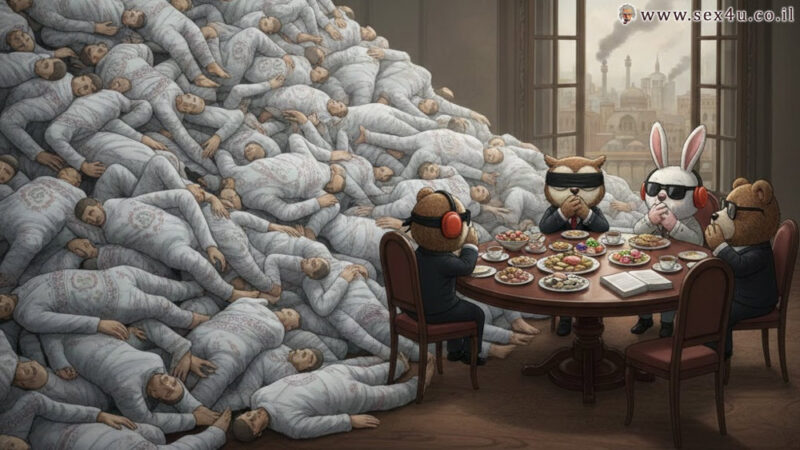
Deafening Silence: When 12,000 Iranians Die – and the Human Rights Industry Looks Away
Apparently, some blood doesn’t photograph well.


According to persistent rumors, underground reports, and testimonies smuggled out of Iran, the death toll from the protests has already crossed 12,000.
Not a hundred.
Not “dozens.”
Thousands.
Women.
Young people.
Students.
Workers.
Ordinary citizens who did not demand territorial sovereignty or geopolitical leverage – only one thing:
to stop living inside a violent religious cage.
And yet – silence.
Not the silence of battle.
The silence of institutions.
The silence of the UN.
The silence of human rights organizations.
The silence of women’s rights groups.
And most of all – the silence of those bodies that usually need no excuse to scream “war crimes” or “genocide” when Israel is involved.
The United Nations: When the Moral Compass Requires Budget Approval
The UN knows how to speak.
It speaks fluently.
Endlessly.
But it only speaks when it is safe, when it is profitable, and above all – when it is cost-free.
Iran is not Israel.
Iran does not apologize.
Iran does not invite investigative committees.
Iran does not cooperate.
And most importantly – Iran holds economic, geopolitical, and energy hostages.
So the UN does what it does best:
It issues soft, balanced, sterile statements – statements that offend no one and save no one.
When 12,000 people are dead and the UN is still “monitoring the situation with concern,” this is not a moral failure.
It is policy.

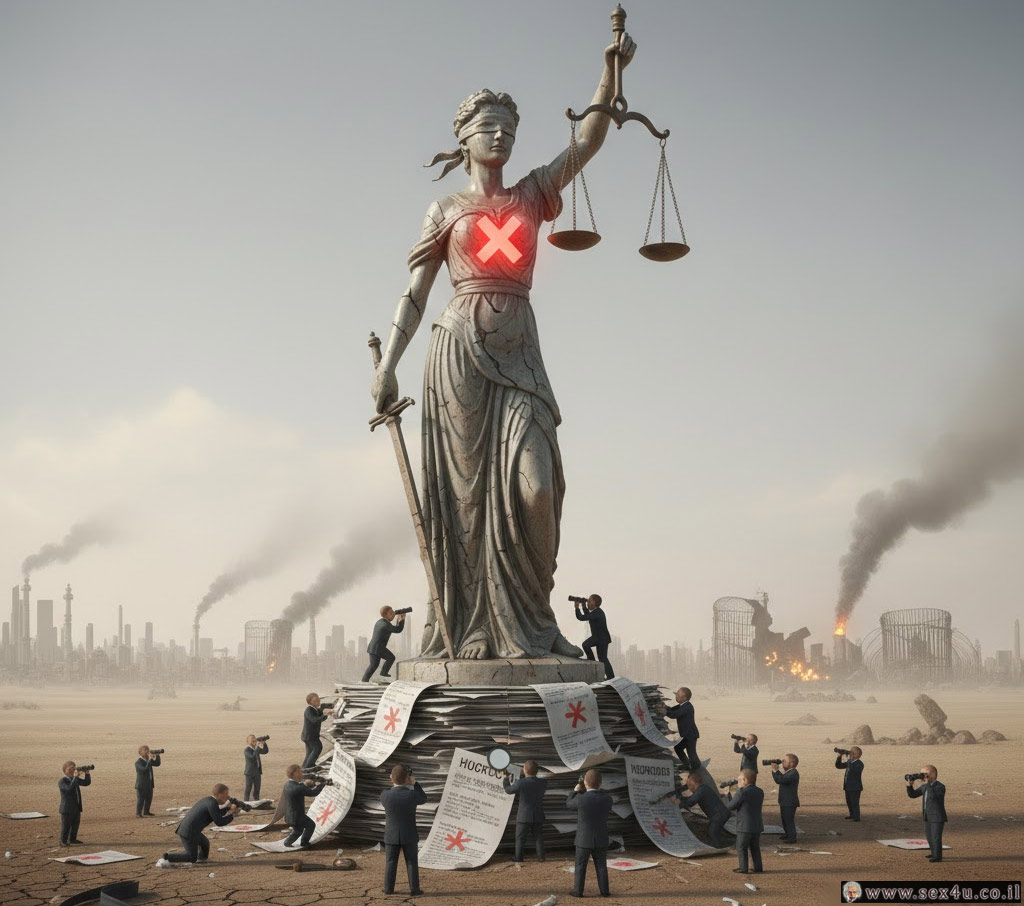
Human Rights Organizations: Morality With an Asterisk
Human Rights Watch.
Amnesty International.
Big names.
Clean logos.
A reputation as the guardians of humanity.
And yet, it turns out that human rights come with exceptions.
If the victim lives in a Western country – rights are absolute.
If the victim lives under a violent Islamist regime – rights are “context-dependent.”
Because the Iranian uprising is not a convenient narrative.
There is no polished English spokesperson.
No open parliament.
No supreme court to petition.
There is a regime that shoots, hangs, punishes families, and erases people – and the world doesn’t know how to process it, so it prefers to do nothing.
The same organizations that know every stone in Judea and Samaria, every checkpoint, every soldier’s helmet –
suddenly struggle to “verify data” when bodies pile up in Tehran.
This is not a lack of information.
It is a lack of will.
Women’s Organizations: Feminism With Geographic Limits
If there was ever a moment that demanded outrage – this was it.
Women are being murdered.
Women are raped in prisons.
Women are hanged.
Women are punished for showing their hair.
And yet – silence.
Why?
Because the Iranian woman does not fit the template.
She is not fighting Western patriarchy.
She is fighting political Islam.
And that is a much more uncomfortable story.
She is not asking for equal pay.
She is asking to stay alive.
And that struggle threatens one of the West’s sacred cows:
the idea that all cultures are morally equivalent – even when they strangle women in the name of God.
So the discourse retreats into language, cultural sensitivity, and “context.”
Meanwhile, women are burned, hanged, and buried.
This is not feminism.
It is ideological cowardice.
The Great Hypocrisy: When Israel Is Easier to Hate
And here comes the part everyone knows but pretends not to say.
Israel is a convenient target.
Israel responds.
Israel defends itself.
Israel absorbs pressure.
You can shout at it without fear.
Accuse it without consequence.
Demand investigations, sanctions, boycotts.
Iran?
Iran does not play by the rules.
Iran punishes.
Iran does not care.
So the human rights establishment makes a cold calculation:
Where can we earn moral points without paying a real price?
The answer is obvious.
This is not merely ideological anti-Israel bias.
It is moral convenience.
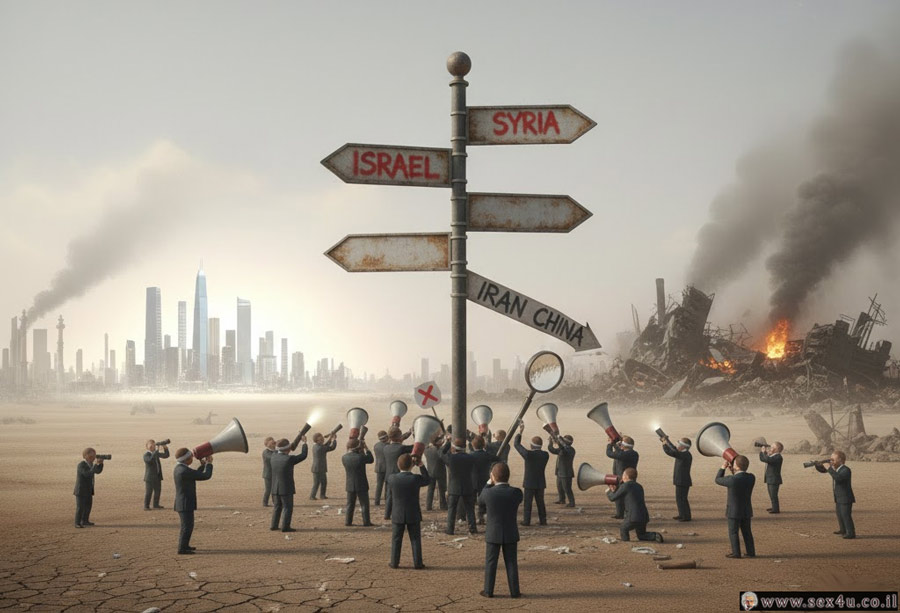
Silence Is a Choice
Let’s say this plainly, without euphemisms:
When thousands are killed and the world remains silent – that silence is not neutral.
It is a position.
A position that says:
- “It’s too complicated.”
- “It’s not the right time.”
- “It’s outside our mandate.”
And ultimately:
“It’s not worth it.”
The World Didn’t Lose Its Morality – It Monetized It
The problem is not that the world doesn’t know what’s happening in Iran.
The problem is that it knows – and chose not to get involved.
The UN, human rights organizations, and women’s groups did not fail their mission.
They executed it according to market logic, not moral logic.
And when 12,000 people die for wanting freedom,
and the international system responds with PR language –
it must be said without fear:
This is not embarrassing silence.
It is a historical disgrace.
It’s Time to Talk About Punishment, Not “Reform”
There are moments when reform is not a solution – it is an excuse.
When international bodies function not as technical failures but as structural problems, the conversation must shift from process improvement to dismantling power.
The UN and the human rights industry did not “lose their way.”
They became the way – a system that rewards silence, balances murderer and victim, and punishes only those willing to play by the rules.
In a sane system, an institution that repeatedly proves itself toothless against dictatorships does not receive more funding, more prestige, or more platforms.
It receives cuts, neutralization, and institutional humiliation.
Revoking the Mandate: Human Rights Is Not a Brand
If a human rights organization does not defend human rights when it is costly –
it is not “complex.”
It is irrelevant.
There is no justification for organizations obsessed with Israel and allergic to Iran continuing to enjoy moral authority.
The first step must be the revocation of public legitimacy:
- Ending state funding
- Removing advisory status in international forums
- Severing ties with academic and governmental institutions
Those who choose selective morality should finance themselves.
The UN: A Talking Club Without Accountability
The UN has transformed from a framework meant to prevent atrocities
into a club designed to protect itself.
Murderous states sit on human rights councils.
Dark regimes write reports.
And the West pays the bill, stays quiet, and calls it “multilateralism.”
Perhaps it’s time to say the forbidden sentence:
If an international body cannot distinguish between a democratic state defending itself
and a regime hanging women in the streets –
it has lost the right to exist in its current form.
Not reform.
Not “reassessment.”
Dismantle, rebuild – or shut it down.
Reputational Sanctions: Turning Silence Into a Stain
If prosecution is impossible – shame is not.
The democratic world must begin ranking international organizations not by statements,
but by courage in the face of evil.
An organization that remained silent while 12,000 people were killed:
- Should not be invited to conferences
- Should not be cited by media
- Should not be treated as a moral authority
- And should not be handed a microphone
Silence is a position.
And that position must carry a heavy reputational cost.
Morality That Refuses Risk Is Not Morality
International institutions did not fail because they are weak.
They failed because they chose comfort.
And in a world where comfort precedes truth,
reports precede lives,
and wording matters more than bodies –
there is no reason to preserve the illusion.
Those who cannot stand against regimes of oppression
should not lead the human rights discourse.
And those unwilling to pay a price for morality
should stop selling it to others.
הירשמו כדי לקבל את הפוסטים האחרונים אל המייל שלכם