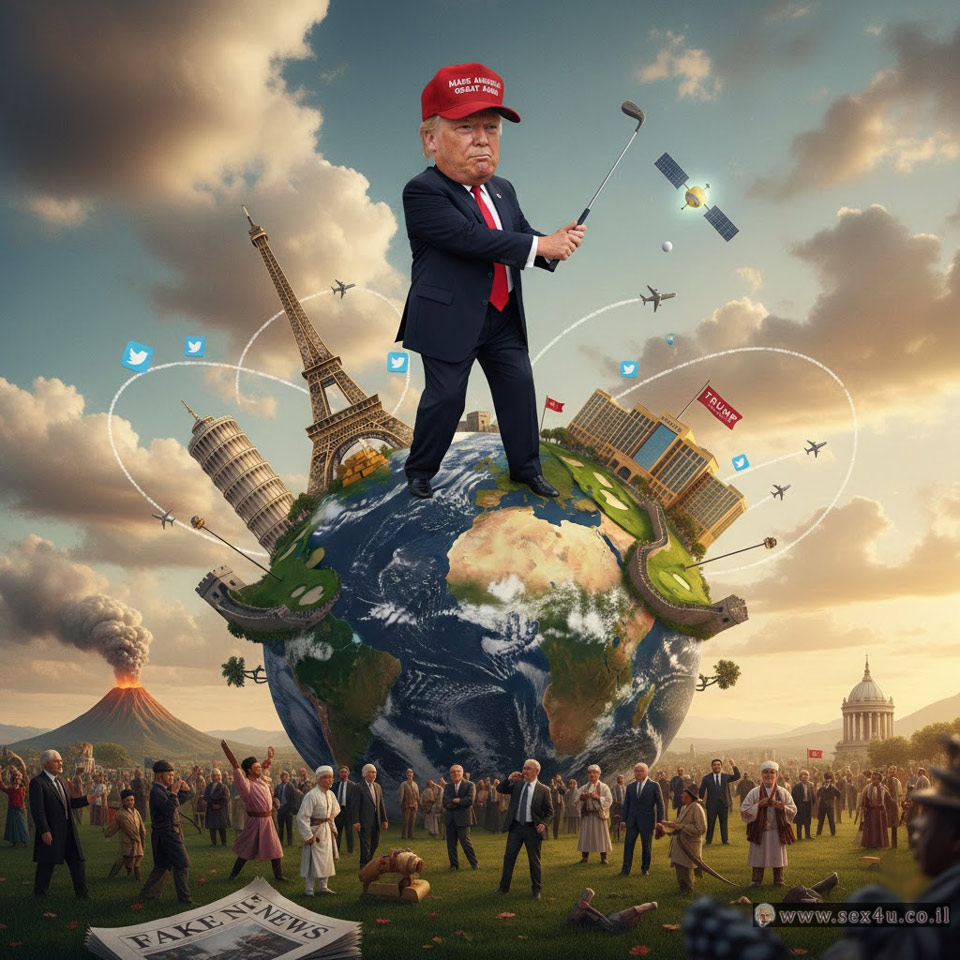
Trump’s Global Adventures

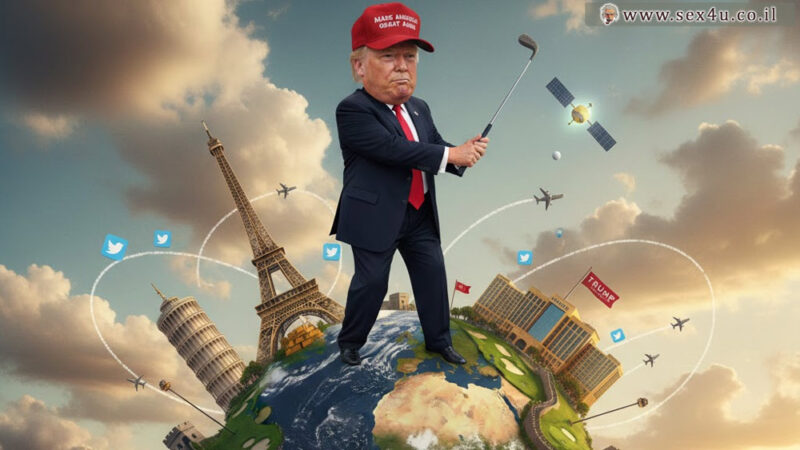
How Donald Trump Shattered Diplomatic Illusions and Exposed Who Actually Runs the World
Donald Trump did not change the world because he was unusually brilliant, moral, or visionary.
He changed it because he refused to pretend.


For decades, the Western-led international order survived on a shared lie:
everyone understood how power actually worked, but no one was supposed to say it out loud.
Trump said it out loud. Loudly. Repeatedly. With zero shame.
Not ideology – instinct.
Not values – leverage.
Not speeches – transactions.
And that alone was enough to destabilize an entire system built on polite deception.
The End of Diplomatic Hypocrisy
Before Trump, foreign policy operated in two languages:
- One for the public: values, democracy, human rights
- One for private rooms: interests, control, money, power
Trump eliminated the first language entirely.
When he asked,
“Why are we paying for everyone else’s security?”
he didn’t violate a rule –
he exposed one.
The outrage wasn’t about substance.
It was about tone.
The global elite didn’t hate Trump because he was wrong.
They hated him because he stopped lying.
Greenland: The Joke That Revealed an Empire Still Alive
When Trump floated the idea of buying Greenland, Europe laughed.
Editorials mocked him.
Politicians clutched pearls.
But Greenland isn’t a joke – it’s a strategic prize:
- Control of Arctic shipping routes
- Military positioning against Russia
- Rare earth minerals
- Post-Atlantic power projection
Trump didn’t invent imperial logic.
He simply applied it openly in a world pretending empire is dead.
Europe’s offense wasn’t moral – it was aesthetic.
Empires are fine, as long as they don’t talk like empires.
Venezuela: Killing the Romance of Socialism
For years, Venezuela served as a fantasy project for Western progressives:
oil-funded utopia, social justice slogans, revolutionary chic.
Trump treated it as what it was:
- A failed state
- A narco-regime
- A Russian-Chinese proxy
- A regional destabilizer
No poetry. No nuance seminars.
Just sanctions, pressure, isolation, and the implicit threat of force.
Did it fix Venezuela? No.
But it ended the lie.
America would no longer subsidize ideological experiments that implode and export chaos.
Colombia: Power Without Apologies
Colombia never made headlines under Trump – which is precisely the point.
His administration focused on:
- Crushing cartels
- Reinforcing pro-U.S. governments
- Blocking Chinese and Venezuelan influence
- Maintaining regional order
No grand narratives.
No social engineering fantasies.
Just the uncomfortable truth:
weak states don’t collapse into dialogue – they collapse into violence.
Trump understood something the West forgot:
stability is not created by intentions, but by force.
Iran: Ending the Myth of Containment
The Iran nuclear deal was an elite project – built on the belief that:
If we engage, integrate, respect, and normalize,
a revolutionary Islamist regime will become rational.
Trump torched that illusion.
Not because he had a perfect alternative,
but because he grasped the reality:
Iran doesn’t want legitimacy.
It wants time.
Sanctions, economic pressure, the killing of Qassem Soleimani –
none brought peace.
But they shattered the regime’s sense of immunity.
Since then, Iran hasn’t fallen –
but it has cracked.
And cracks matter.
NATO, the UN, and the Collapse of the “Adults in the Room”
Trump exposed a brutal truth:
the international system isn’t run by wise guardians.
It’s run by:
- Exhausted bureaucracies
- Conflicting interests
- Fear of decisive action
When Trump challenged NATO, trade agreements, and multilateral institutions,
he didn’t destroy stability –
he revealed how hollow it already was.
The institutions survived,
but the illusion of moral authority didn’t.
The World After Trump: The Damage Is Permanent
Even if Trump disappears tomorrow,
Trumpism won’t.
The lesson has been learned:
- Not every conflict is solved through diplomacy
- Not every value is universal
- Not every alliance is moral – some are simply profitable
Leaders worldwide are adjusting accordingly.
Less virtue-signaling.
More raw interest.
Less rhetoric.
More power.
Conclusion: Trump Was Not an Accident – He Was a Diagnosis
Trump didn’t bring chaos.
He revealed it.
He didn’t destroy an order.
He exposed how fake it already was.
He wasn’t the architect of a new system –
he was the wrecking ball that proved the old one was made of cardboard.
And that’s the part no one wants to admit:
After Trump,
the world can no longer lie to itself with the same confidence.
הירשמו כדי לקבל את הפוסטים האחרונים אל המייל שלכם