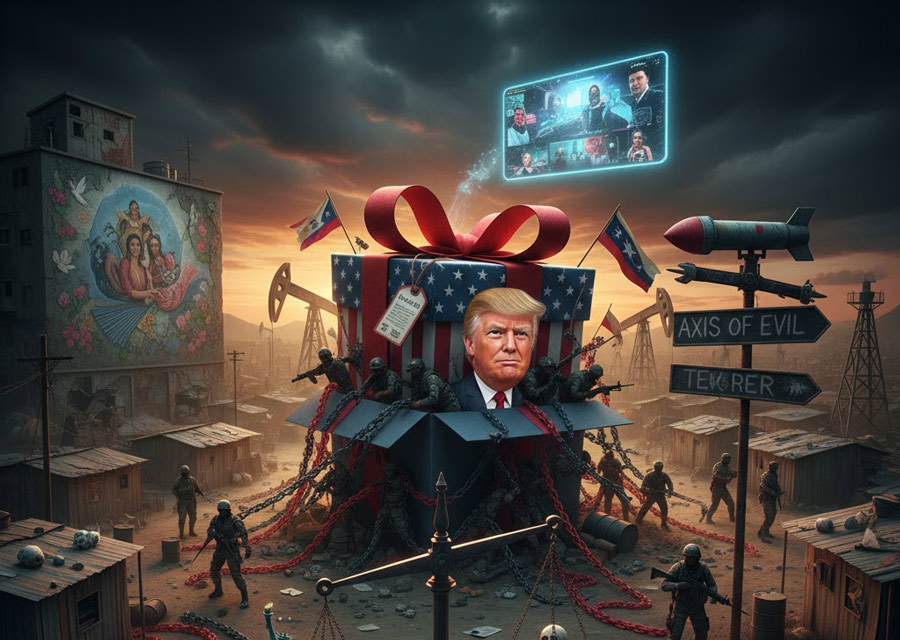
Trump’s New Year’s “Gift” to Venezuela

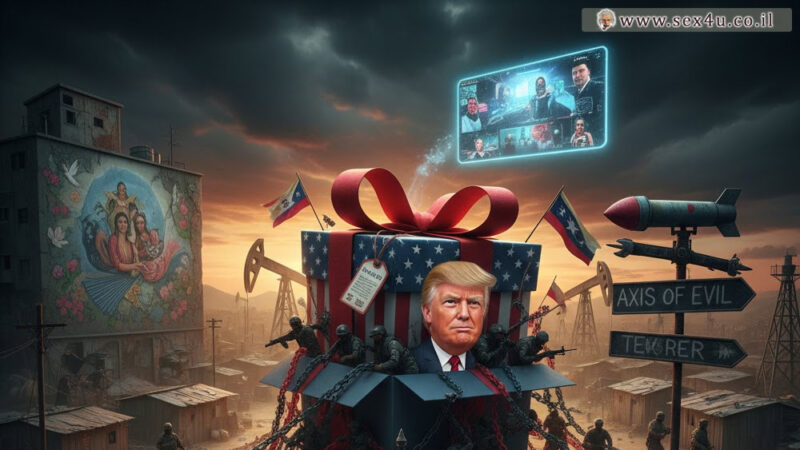
Not a Democratic Fairy Tale, but a Reckoning Over Drugs, Terror, and the Axis of Evil
There are many ways to start a new year.
Some people open champagne.
Some make resolutions they won’t keep.


Donald Trump, true to form, chose a different tradition: removing a foreign president from power and calling it a strategic necessity.
The fall of Nicolás Maduro was not born out of sudden American affection for democracy, human rights, or the Venezuelan people. Those words came later – polished, rehearsed, and delivered for public consumption. The real motivations were far less poetic and far more concrete: drug trafficking, terror networks, and Venezuela’s growing role as a regional outpost for America’s enemies.
This wasn’t a revolution.
It was an invoice.
Venezuela: From Failed State to Strategic Liability
For years, Venezuela was treated as a tragic case study: a nation rich in oil, poor in governance, collapsing under socialism, corruption, and spectacular mismanagement. The world watched, shook its head, and moved on.
But beneath the shortages, inflation, and political theater, Venezuela quietly transformed into something more dangerous:
- A major transit hub for cocaine heading toward North America
- A safe haven for cartels, guerrilla groups, and terror operatives
- A willing partner for Iran, Hezbollah, and Russia in sanctions evasion and regional destabilization
At that point, Venezuela stopped being a humanitarian concern – and became a national security problem.
Drugs: America’s Real Red Line
Washington can tolerate many things.
Anti-American rhetoric.
Rigged elections.
Authoritarian theatrics.
What it does not tolerate is industrial-scale narcotics trafficking linked directly to a sitting government.
For years, U.S. intelligence agencies accused Maduro’s regime of operating as a narco-state, where senior officials, military commanders, and political elites were not fighting drug cartels – they were part of them. Cocaine routes ran through Venezuelan airspace, ports, and protected corridors, feeding America’s opioid and drug crisis.
For Trump, this wasn’t ideological.
It was personal, domestic, and political.
Drugs crossing borders don’t stay foreign policy problems for long.
Terror Networks: When Hezbollah Speaks Spanish
This is where the story stops being cynical and starts being alarming.
Venezuela has long provided logistical support, legal documentation, and financial cover for Hezbollah operatives operating in Latin America. This isn’t speculation – it’s been documented by intelligence agencies across the Western Hemisphere.
The connection is simple and effective:
- Drug money moves through cartels
- Cartels cooperate with terror financiers
- Terror groups gain funding, passports, and reach
In short: criminal infrastructure meets ideological violence.
From Washington’s perspective, this meant one thing: hostile actors were embedding themselves in America’s backyard, not across oceans, not in abstract “faraway conflicts.”
And that is traditionally when America stops issuing warnings – and starts issuing ultimatums.
Iran in Caracas: Not Cultural Exchange
If anyone believes Iran’s interest in Venezuela was about solidarity, anti-imperial poetry, or shared love of revolutionary slogans – they’re not paying attention.
Venezuela offered Tehran:
- A foothold in Latin America
- Sanctions-bypassing trade channels
- Financial laundering mechanisms
- Diplomatic cover and physical presence
In other words: strategic depth, thousands of miles away from the Middle East.
For Trump, whose Iran policy was blunt to the point of brutality, this was unacceptable. You don’t counter Iran in the Gulf while letting it build influence in the Americas.
If Iran settles in – someone else has to leave.
Why Now?
Because all thresholds were crossed:
- Drug trafficking became systemic
- Terror links became operational
- Iranian involvement became overt
- Venezuela ceased to be “just unstable”
And Trump does what he’s always done best:
turn quiet processes into loud decisions.
No endless diplomacy.
No multilateral hesitation.
No carefully worded UN statements.
Action.
The Cynicism Is Part of the Deal
Yes, democracy was mentioned.
Yes, freedom was invoked.
Yes, the language sounded noble.
But this wasn’t a moral crusade.
It was a strategic cleanup operation.
Maduro wasn’t removed because he was cruel – the world tolerates cruelty every day.
He was removed because his regime became useful to the wrong people, in the wrong place, at the wrong time.
Bottom Line
This wasn’t a New Year’s gift.
It was a bill coming due.
A bill for years of hosting cartels, enabling terror networks, and inviting the Axis of Evil into Latin America – while assuming Washington would keep looking away.
Trump didn’t bring flowers.
He brought a message.
And in global politics, as in life, anyone running a criminal casino eventually learns one rule:
The house always wins.
It just isn’t always your house.
הירשמו כדי לקבל את הפוסטים האחרונים אל המייל שלכם