
Two years after the October 7 massacre: What have we learned since then?

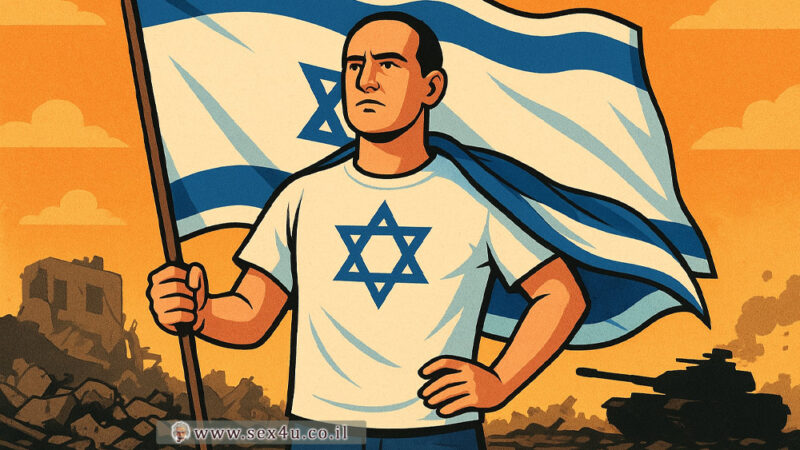


Among the ruins surrounding the world that continued as usual
Two years have passed since the Black Sabbath of October 7, 2023, and the memory still burns – not only in those who stood on the rooftops of boulevards with guns in trembling hands or in the families whose homes the gates of hell were broken into. This burning also exists in the hearts of Israelis who live far from the border but understand that this was an event that changed the country forever.
In the world, however, everything seems to have returned to normal the very next day: Paris is once again hosting chocolate festivals, London is once again filled with demonstrations in favor of “Palestinian rights,” and the UN is once again proposing to condemn Israel for daring to defend itself. If we didn’t know history, we would think this was just another local episode. But after two years, it’s clear to us that this was more than just a terrorist attack; it was a test case for Israel’s resilience in the face of enemies from outside and within, and its ability to survive in a century where anti-Semitism is once again celebrated, only with better graphics on Twitter.
Lesson One: We are alone – and still here
If there was any doubt before October 7, it was completely removed after: Jews can rely mainly on themselves. The illusion that the West would stand by us in the moment of truth crashed along with the fences in the envelope. The Americans sent moral support and weapons planes late, the Europeans sent crocodile tears and condemnations “to both sides,” and the UN sent a commission of inquiry.
Perhaps the most important lesson of the past two years is that Israel cannot afford to be dependent on the mercy of others – not on weapons, not on intelligence information, and certainly not on the understanding of those who think that Gaza is just a resort town suffering from a shortage of vegan ice cream.
The second lesson: National resilience is not just tanks – it is also a moral backbone
The Israeli public proved in the first weeks after the massacre that civil society here was stronger than any bureaucratic system: volunteers poured into the encirclement, reservists returned from Bangkok and Berlin, and doctors worked around the clock. At the time, it was hard to ignore the fact that the political and security system had failed at the moment of truth.
Two years later, Israel is still debating how to restore trust between the public, the government, and the army. Because an army with tanks and citizens without trust is like putting a Ferrari engine in a Dan bus: impressive in theory, faltering in the field.
Lesson Three: The Real Enemy Doesn’t Go Away – He Changes T-Shirts
Hamas may have suffered severe blows, tunnels collapsed, headquarters destroyed – but the ideology was not killed. Radical Islam continues to flourish on the streets of Gaza, in Western European capitals and on the TikTok accounts of teenagers in Brussels.
The massacre of 7.10 showed that the problem is not only in Gaza – it is in the idea behind Gaza: the desire to wipe Israel off the map in the name of religion or “national liberation.” And when this idea finds a Western audience willing to buy any blood libel wrapped in woke slogans, Israel must understand that the war is not only on the southern border but also on the battlefield of consciousness.
Lesson Four: Anti-Semitism Has Not Gone Away – It Has Changed Its Mask
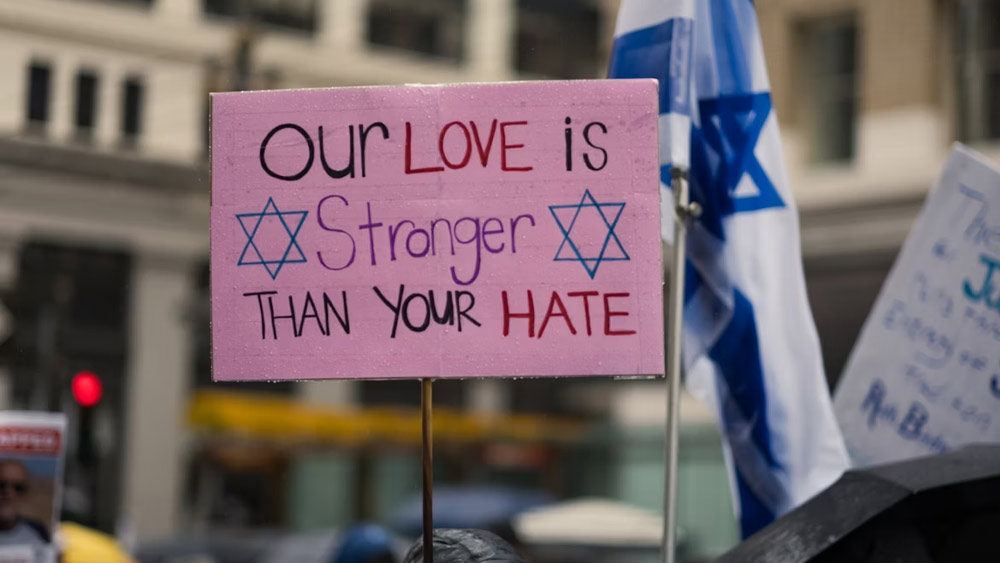 Anyone who needed proof that the world had not changed since the days of the Inquisition and the pogroms got it in the weeks after 10/7. Less than 24 hours later, pro-Hamas demonstrations broke out in New York, London, and Paris. American students had not yet had time to read the names of those murdered in the Nirim – and were already making signs with “From the river to the sea.”
The lesson is clear: 21st-century anti-Semitism doesn’t need dark churches and crusades; it comes with flashy hashtags and Instagram stories. And what’s even scarier is that much of it comes from the very places that once championed human rights and tolerance.
The Fifth Lesson: Jewish-Zionist Consciousness Is Not a Luxury – It Is a Defensive Wall
One of the bitter insights of the last two years is that the strength of the State of Israel depends not only on the Iron Dome but also on the Dome of Identity. A young generation that does not know why there is a Jewish state has difficulty understanding why it should be fought for. 7.10 brought the Zionist discourse back to center stage – suddenly we notice that without Zionism and without a sense of national belonging, Israel is just a geographical spot on the Middle Eastern map.
Lesson Six: Petty Politics in the Face of an Existential Threat
The massacre exposed not only the system’s helplessness but also its pettiness. While the enemy slaughtered babies, Israeli politicians clung to microphones to slander each other. Two years later, it is clear that if Israel does not learn to put aside its internal battles in moments of crisis – it will pay for it again in the future.
 Looking ahead: stronger, more cynical, much more sober
Perhaps the most important lesson we have learned in the two years since is that naivety is a luxury of other countries. Israel must be strong, even when it is not “photogenic” in the eyes of the world. It must hold on to Zionism as it did in the 1960s – both in the face of rockets from Gaza and anti-Semitic cartoons in the Guardian.
In an era when anti-Semitism is wrapped in the banner of human rights and the UN insists on measuring us by standards it does not have the courage to demand of Syria or North Korea, Israel needs to remember that the world may not love us – but it also cannot afford for us to disappear.
So in conclusion: What have we learned? Forgetting is forbidden, trusting is forbidden, losing is impossible.
Two years after October 7, the clear lesson is that the Jewish people must not be confused: not to believe any promise of “world peace,” not to forget the price of complacency, and not to assume that the Western world will protect us.
Israelis have always known how to laugh out of pain, but now they have also become more cynical – rightly so. And perhaps this is the greatest victory of the eternal people: to continue laughing, to continue fighting, and to continue proving that in every generation – we are here, and not going anywhere.
7.10 taught us that Israel’s true strength does not depend on the formalities of international diplomacy – but rather on faith in the righteousness of the path and our ability to stand tall even when the world turns its back.
הירשמו כדי לקבל את הפוסטים האחרונים אל המייל שלכם