War on Tracks: The Bulldozer That Became a Hero in Gaza

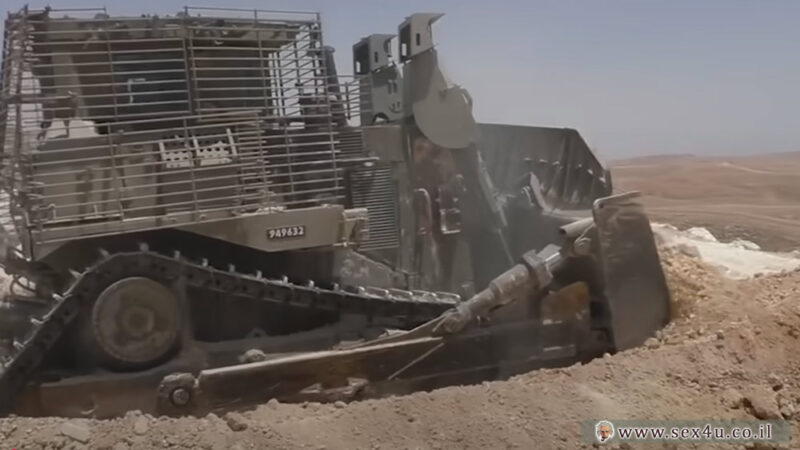
There are weapons you expect to see in war: tanks, fighter jets, smart missiles, drones.
And then there’s the Caterpillar D9 — a massive, yellow, lumbering creature that looks more at home on a construction site in Ashdod than on a battlefield.
But in the Middle East, as always, things have their own logic: sometimes the one who breaks through the frontlines doesn’t do it with tank treads — but with a giant steel blade and 710 horsepower under the hood.
From Humble Beginnings to Battlefield Legend


Originally, the D9 was born to move earth, pave roads, and build homes.
The IDF began using it in the 1970s for military engineering tasks — digging positions, clearing paths, building access roads.
But when Gaza entered the picture — with its tunnels, militants, narrow alleys, and weapon-filled homes — it quickly became clear that Israel needed a machine capable of both moving mountains and knocking down walls without asking permission.
By the early 2000s, during the Second Intifada, the D9 had earned its unofficial military nickname: “The Beast.”
From that moment on, it was no longer seen as a piece of construction equipment — but as a weapon of war.
More Than Dirt: The Bulldozer as Psychological Warfare
In Gaza, the D9 does much more than push sand. It clears paths for infantry in dense urban areas, demolishes terror infrastructure, neutralizes underground explosives — and sometimes serves as a tool of psychological warfare.
Few things strike fear into Hamas fighters like the sight of a 50-ton “Beast” crawling slowly toward them, unstoppable and indifferent to gunfire.
For many Gazans, the rumble of a D9 is a sign that the operation has reached a new phase — one that doesn’t just play war, but reshapes the terrain itself, literally and figuratively.
Armor, Steel, and a Love-Hate Symbol
Once the IDF realized the D9 would be in the line of fire, it was reinforced with heavy armor — thick plating, steel cages for its cables, bulletproof glass, and advanced defense systems.
The result: an engineering vehicle capable of taking small arms fire, roadside bombs, even RPG hits — and still keep advancing.
In Israel, the D9 became a symbol of ingenuity and courage.
Combat engineers posed proudly beside the yellow giant; the public saw it as part of Israel’s technological edge in fighting urban terror.
Abroad, however, the D9 has been portrayed as a symbol of brutality — yet another representation of Israel’s might against a civilian population.
In other words, even a bulldozer can’t escape UN criticism.
D9 vs. The Tunnels: The Battle Underground
If there’s one enemy the D9 was born to fight, it’s the tunnel.
One of its primary missions in Gaza is to expose, crush, and collapse Hamas’s vast underground network — an infrastructure worth billions, dug over decades.
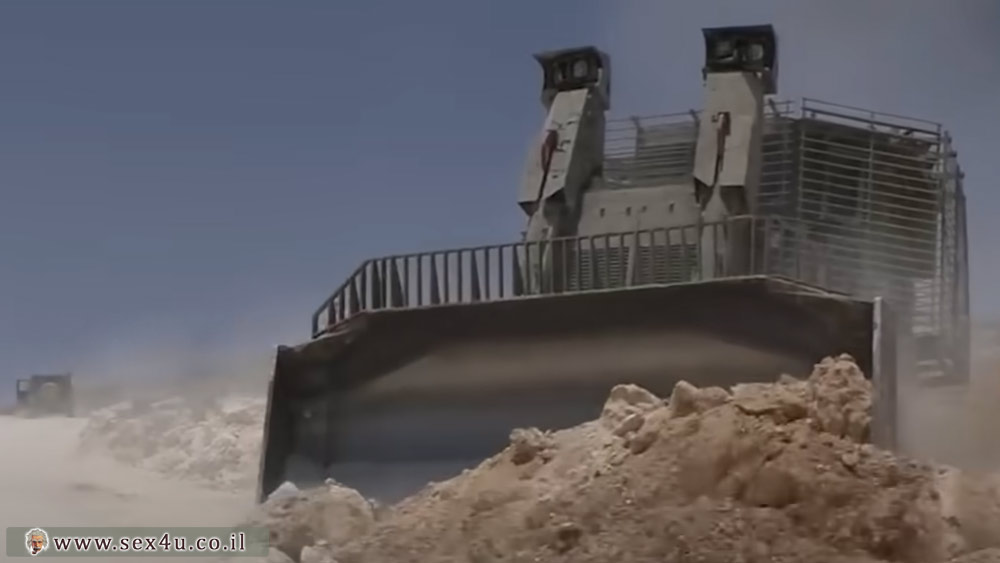
Like a heavily armored vacuum cleaner, the D9 digs, lifts, and levels everything hiding below the surface.
While the world marvels at drones and precision-guided missiles, deep in Gaza’s twisting tunnels, the most effective weapon often remains a giant steel shovel on tracks.
The Psychology of Warfare — When the Earth Itself Trembles
Hamas fighters may not flinch at the sight of tanks or drones, but there’s something about a massive machine that makes the ground shake beneath their feet — a primal fear of a mechanical predator slowly closing in.
History shows that wars aren’t won by firepower alone — but by breaking the enemy’s spirit.
And in that regard, the D9 has become as much a psychological weapon as it is an engineering one.
The Battle of Narratives — Even a Bulldozer Needs PR
In October 2025, during Israel’s latest Gaza operations, the D9 once again became a flashpoint in international media: images of destroyed homes in Rafah and Shuja’iyya, headlines about “a yellow monster flattening neighborhoods,” and waves of condemnation from European capitals.
Israel, for its part, emphasized the measured use of the machine — and the fact that every building demolished was either a weapons cache, a tunnel entrance, or a command center.
It’s the familiar dynamic: on the battlefield, the D9 saves soldiers’ lives; in the UN corridors, it’s cast as a giant of destruction.
Israeli Mythology — From Workhorse to War Hero
The D9 has long transcended its mechanical origins to become part of Israeli pop culture.
It appears in soldier songs, in stickers saying “Don’t stop — keep going with the D9,” and in internet memes.
When the IDF unveiled its upgraded models, Israelis reacted as if a new iPhone had dropped — admiring the design, the armor, the new capabilities.
It might sound absurd, but in the Middle East, even a piece of heavy machinery can become a patriotic icon.
The Unavoidable Irony — When a Bulldozer Deserves a Medal
In Israel, people half-jokingly suggest that the D9 deserves a medal of valor — or at least a national holiday.
After all, not every day does a construction tool become a front-line hero in the fight against terror.
Maybe that’s also the lesson for the rest of the world: sometimes you don’t need advanced AI or laser weapons to change the course of a battle — just a massive engine, a brave operator, and a bit of Zionist stubbornness.
Conclusion — War with a Blade and a Heart of Steel
The D9 proves that even in the 21st century — an age of drones, satellites, and smart warfare — victory still depends on machines that can reshape the ground itself.
It’s a reminder that true power doesn’t always come from algorithms or digital screens, but from a steel blade carving a path for soldiers through chaos.
In Gaza, 2025, the D9 is no longer just a bulldozer.
It’s a symbol of strength, resilience, and contradiction — admired by some, condemned by others, yet impossible to ignore.
And perhaps there’s no better metaphor for the Israeli-Palestinian reality itself: relentless digging through layers of conflict — with plenty of noise, dust, and a touch of dark humor.
הירשמו כדי לקבל את הפוסטים האחרונים אל המייל שלכם