What comes to mind when you hear “from the river to the sea”?


There are sentences in life that are like a flashing warning light. You don’t have to hear the whole thing to understand that something here is going to end badly.
For example:
- “Don’t worry, I know what I’m doing” — just before the car gets stuck in a dune.
- “I’m not against Israel, just against Zionism” — just before you hear an explanation of why you’re actually a colonialist.
- And “From the river to the sea, Palestine will be free” — just before they tell you that it’s just a cute call for liberation, as if it’s a butterfly journey from the vegetable patch to the sea.


But let’s talk about it, Dougry: Every Israeli who hears this sentence — if they’re not currently in the Faculty of Illusionary Sciences — knows exactly what it means. “From the river to the sea” is not a children’s song, it’s not a slogan for the Ministry of Tourism, and it’s certainly not a suggestion for a travel itinerary. It is a declaration of erasure — geographically, historically, and physically — of everything we call home.
A pastoral image… for people without maps
This sentence is sold around the world, especially on the progressive left, as if it describes some fantasy of inter-ethnic brotherhood: from the Jordan to the sea, everyone will live in peace, share hummus, and teach each other folk dances. It’s a nice idea — kind of like thinking that if you opened all the cages on a safari, the lions, zebras, and giraffes would cook together over a fire.
But there’s a small problem: What actually happens when you say “free” is not “free to live,” but “free from Jews.” It’s not a painting of coexistence — it’s a spray-paint scheme. And the people who sell it as a “message of liberation” know it very well.
The problem is not geography — but intention
Think for a moment: if they said in Europe, “From the English Channel to the Pyrenees, France will be free,” while the French already live there — everyone would understand that this is a war. So why is it suddenly a “legitimate discourse” here? Because it’s easy to sell a dream to someone who doesn’t know what’s going on here, and it’s hard to admit that this dream includes the transfer of 7 million people.
 Cynicism at its simplest
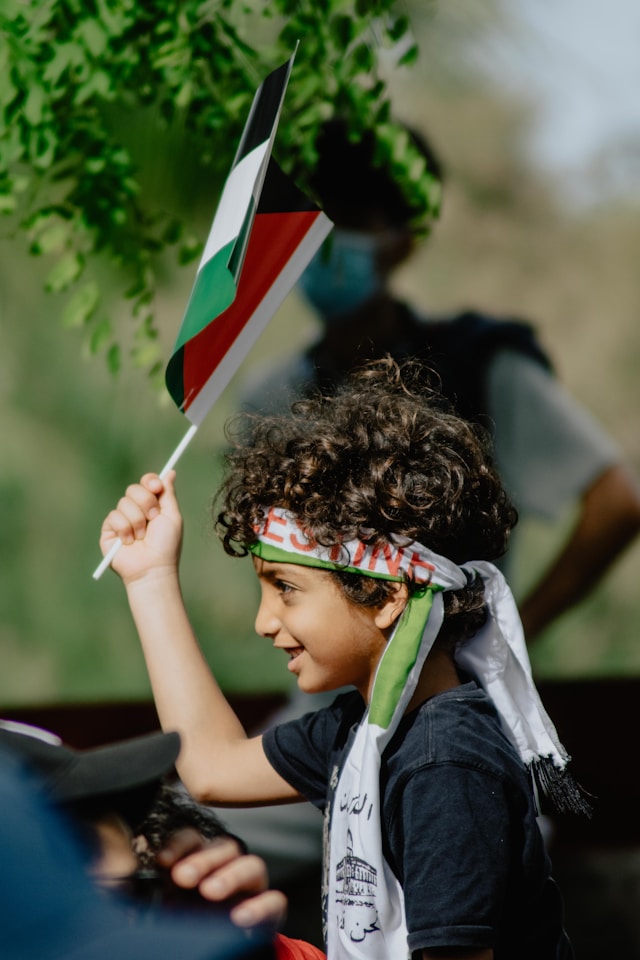
The truth? This sentence is so direct that even cynicism has trouble keeping up. There are no hidden messages here. It’s not a code like “the two-state solution” or “returning refugees.” It’s simple: From the river to the sea — everything is ours, and you’re not here.
And yet, some people will try to explain to you that it’s a “call for freedom.” Just like someone might tell you that “chocolate cake” is a code name for staying fit.
What does this do to our heads?
For the average Israeli, especially one with a right-wing nationalist bent, this sentence evokes three emotions at once:
- Defensive reflex — because you understand that this is a direct threat to your existence.
- Distrust — how can intelligent people in the world buy this nonsense?
- A bitter joke — because if we’re already handing out deletion slogans, maybe we’ll start too: “From the Euphrates to the Nile, Israel will be free.” We’ll see if it’s received openly at the UN.
Black humor as medicine
The truth is, if we don’t laugh about it, we’ll have to cry. Because “from the river to the sea” is not just a sentence. It’s the essence of a narrative — a narrative that says that the Jews are here on a condition, and that the condition has expired. The only difference is that we don’t really buy it. And if anyone thinks that in 2025 it’s possible to “close the corner” with an entire people with a “Free Palestine” sign, then they live in a parallel world — one where history, reality, and statistics are mere recommendations.
In conclusion
When I hear “from the river to the sea,” I don’t think of a landscape. I don’t think of a trip. I don’t think of peace. I hear, simply, “We want you to disappear.” The only difference between us and someone shouting it on the street in London or New York is that we know it won’t happen — not because we believe in fairies, but because we know Swim in the river, and protect the sea.
הירשמו כדי לקבל את הפוסטים האחרונים אל המייל שלכם