
What’s going on in Sweden lately 🫎 ?

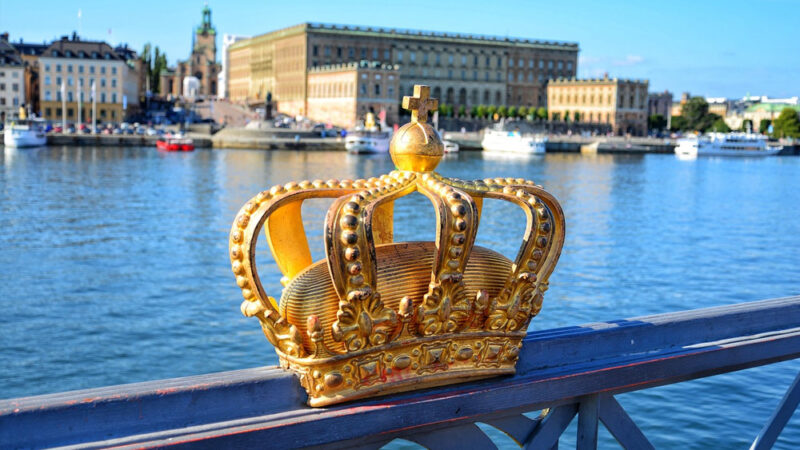
From the Coolest Country to a Geopolitical Boiling Point – with Wool Hats
 Is IKEA Still Keeping Quiet?
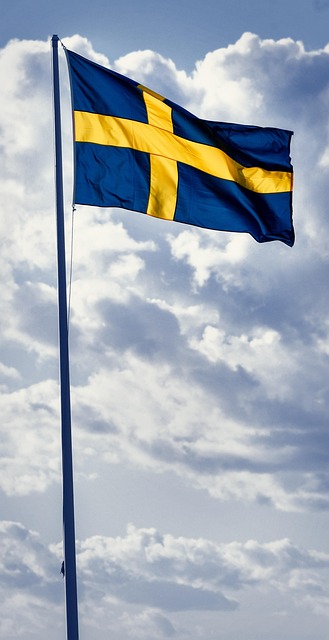
For decades, Sweden was something between a pine-paneled living room and a handbook on “how to be a country without causing trouble.”
A nation that thinks before it breathes, stays silent before responding, and where even parliamentary debates include coffee breaks and handshakes.
A country that was so neutral it hesitated to pick a side even in the shampoo-vs-conditioner debate suddenly finds itself caught in a full-blown geopolitical whirlpool.
What happened?
In short: The world lost it, and Sweden got dragged along, clutching its cup of tea and muttering “Förlåt” (sorry) about everything.
Hello, I’m Sweden, and I Have NATO Anxiety
For years, Sweden proudly sported its beloved model of “eternal neutrality plus strict global morality.”
No joining alliances, no starting wars, no interfering…
But then Putin showed up.
And how to put this delicately?
Suddenly, neutrality became code for “we don’t want to be next on the list.”
Then, like a shy kid asking to sit with the cool crowd, Sweden suddenly applied to join NATO.
Not out of love for weapons—but out of fear of getting stuck on the Scandinavian map.
And like any new recruit in the security club, it had to endure the humiliation ritual known as:
“Convince Turkey.”
Sweden vs. Erdogan—The Historical Drama No One Saw Coming
Sweden enters the room, hands over neatly organized documents, smiles.
Erdogan enters with half a smirk and says:
“No, no—until you hand over a few Kurds, call Hamas terrorists, and promise to ship us salmon all year round—no entry.”
What does Sweden do?
Negotiate with imagination.
- A bit of legislation,
- A few measured statements,
- Tons of “it’s not personal, it’s political,”
- And even some cultural gestures that no Swede fully understands why they’re happening.
All to get a small “yes” from the Sultan of Ankara.

But what actually happened is that Europe’s most regal country discovered the charms (and fears) of the Middle East.
Cold but Bubbling—The Swedish Society Starts to Wake Up
Beneath the surface, Sweden hasn’t been quiet at home for a while.
Waves of immigration, social gaps, tension between the old majority and new arrivals,
And even—hold on tight — a pointed public discourse.
Yes, yes — in Sweden.
Where the sharpest conflict used to be over oat milk.
What do we have today?
- Armed criminal gangs,
- Shootings in cities (!)
- Growing concern over “the loss of old Sweden” (whatever that means),
- And a sense of chaos that reminds Swedes there are emotions beyond “moderate satisfaction.”
And this is leading them to do something surprising:
Vote for right-wing parties.
Yes, Even in Sweden, the Right Is Rising
The Sweden Democrats party (whose name sounds like a northern version of a centrist group—but it’s actually right-right-right)
Has seen a dramatic surge in recent years.
Talk of identity, security, fears of radical Islam,
Which until a decade ago was considered total taboo in a country where the max you’d say is “I’m not sure if that’s comfortable for me…”—
Has suddenly become mainstream.
Not everyone’s thrilled, but even the staunch liberals are telling themselves:
“If I vote left, maybe they’ll steal my bike. And if right—maybe they’ll just insult me on Twitter.”
Ukraine, Russia, and Sweden—The Real Chill Is Beyond the Border
Another force shaking the board in Sweden: The war in Ukraine.
Suddenly, Swedes realize they live not far from Putin’s neighborhood.
And not just close—really close. Too close.
They’re starting to get interested in the military, buying gear, reviving reserves, upgrading the navy (yes, they have one)
And even debating conscription again—a move that in Sweden was once seen as sacrilege to individual rights.
They used to be the country with the most pianos per capita.
Today—they’re checking the stock of anti-air missiles.
What Still Feels Swedish?
- The furniture is still flat-pack,
- The blondes are still mesmerizing,
- And the cinnamon buns are still precise to the milligram of sugar.
But Sweden in 2025 is no longer the drowsy country that chose not to choose.
It’s a nation forced to pick a side, speak up, and do things that once made it blush (if that’s physically possible for skin tone 1C on the Pantone scale).
And maybe, just maybe—
Everything happening to it now isn’t a crisis.
It’s growing up.
Painful? Yes. Unsympathetic? Sure. But necessary.
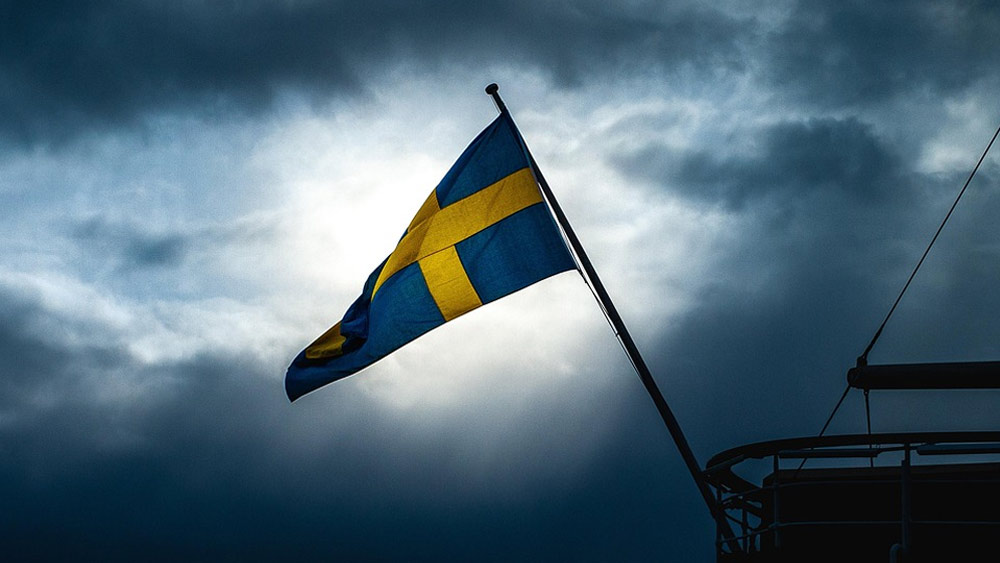
Sweden in the eye of the storm: sex crimes, immigration challenges, and a crisis of trust in the country we always believed in (or rather, the left believed in it and the right imagined what was going to come)
From Utopian Sweden to Controversial Sweden
For decades, Sweden was viewed in the Western world as a kind of social paradise: a country of equality, solidarity, women’s rights, stellar public services, and laid-back Scandinavian serenity.
But in recent years, Sweden has found itself at the heart of a charged international conversation, often—and almost always rightly—portrayed as a nation grappling with waves of crime, an immigration crisis, and especially: a sharp rise in sex offenses.
The claim that Sweden has become the “rape capital of the world” is gaining traction in populist media and social platforms, and is sometimes cynically exploited in political debates across Europe and the U.S.
But behind the headlines lies a far more complex—and definitely troubling—picture.
The Alarming Statistics—and What’s Really Behind Them?
Sweden consistently tops international tables for reported sex offenses per capita.
For example, according to Eurostat, the number of reported sex crimes in Sweden is exponentially higher than in other EU countries.
But behind the numbers are three main factors that explain the outlier status:
- Counting method—In Sweden, every instance of sexual assault is reported separately. If a woman reports serial rape, the police count each incident as an independent event. In other countries, it might be logged as one case.
- High reporting culture—The Swedish public discourse, especially since the #MeToo movement, has encouraged women (and sometimes men) to report past and present harms, even if they’re old or “gray-area.”
- Expansive legislation—Sweden’s penal code defines sexual assault very broadly.
In other words, it is precisely the Swedish awareness of women’s rights and the fight against sexual violence that contributed to the increase in the number of reports – a positive figure on the one hand, but one that makes it difficult to distinguish between an increase in the phenomenon and an increase in its detection.
Immigration and the political debate – truth, demagogy and the gray area


Since the 1990s, and mainly following wars in the Balkans, Iraq, Syria and Africa, Sweden has absorbed hundreds of thousands of immigrants and asylum seekers.
The country has adopted a generous pluralistic policy, but without sufficient infrastructure for cultural, educational and economic absorption.
In 2015 alone, over 160,000 refugees entered Sweden – most of them young people without a framework.
The suburban neighborhoods in cities such as Stockholm, Malmö and Gothenburg have had difficulty coping with the load, and the gaps between immigrants and veterans have widened.
In recent years, claims have begun to emerge that there is a link between immigration and the rate of sexual offences.
Indeed, several high-profile cases have involved suspects of immigrant origin – a fact that has been immediately fed into the campaigns of right-wing parties across Europe.
However, the link between immigration and crime is not unequivocal.
- The Swedish police have stopped publishing the origin of suspects out of a perception that this could lead to racism. This has created a sense of silence among some in the public.
- Some studies indicate a higher crime rate among immigrants from Muslim countries, but the explanations are varied: poor socio-economic status, lack of integration, war traumas, and different gender values.
The problem is, no matter what the objective data is – politics has already changed direction.
The Swedish Identity Crisis – When an Open Society Collides with Itself
The tension surrounding sex crimes, general crime, and immigration is not just legal or police – it is deeply cultural.
Sweden, perhaps the country with the broadest feminist consensus in the world, finds itself in a difficult dilemma:
How do we continue to uphold the values of equality, rights, and openness,
when they clash with the bitter reality of communities where women are afraid to go out alone?
While one side of the map emphasizes the need to fight racism and maintain a unifying discourse,
another side argues that this is a dangerous denial of a real problem –
and that the classic Swedish left has become blinded by the fear of “not coming off badly.”
Public discourse in Sweden – which until recently was restrained, solid, and drama-free – has become charged, divided, and uncompromising.
The System Strikes Back – Law, Media, and Education
In response to criticism, Swedish governments – including left-wing parties – have implemented a series of drastic reforms in recent years:
- Stricting penalties for sex offenses,
- Defining “active consent” as a condition for having legal sex,
- Increasing enforcement in high-crime neighborhoods,
- And increasing enforcement efforts in closed or culturally sensitive sectors.
Public media broadcast campaigns for equality and respect for women’s bodies,
And sex education in high schools has been expanded to include not only physiology – but also consent skills, boundaries, and gender language.
Is it working? Partially.
The public is still divided, but the sense of denial has been replaced by a real – sometimes painful – discussion about the country’s identity.
Identity in Crisis – but Not Necessarily Disintegrating
Sweden is not the “rape capital of the world,”
but it is also not immune to serious mistakes, cultural neglect, or failure to integrate different populations.
It is a country that chooses to cope, even if late.
A country that has paid – and will continue to pay – the price of openness, but also maintains a rare balance between compassion and responsibility.
The lesson for all of us is twofold:
Even a country that appears to be a social idyll is liable to be undermined.
And even when there are problems – one does not have to resort to populism.
Sweden chooses to discuss, investigate, draw conclusions.
And this – perhaps – is what will save it.
הירשמו כדי לקבל את הפוסטים האחרונים אל המייל שלכם