📜 Appendix to the Scroll of Esther

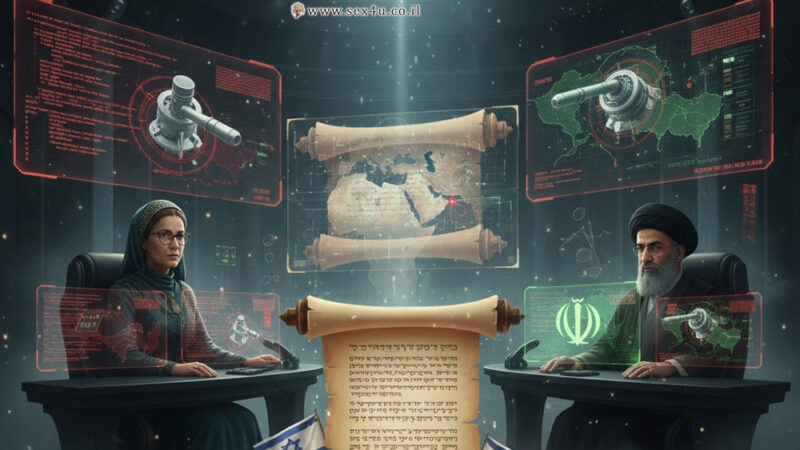
And it came to pass, after 2,426 years, that Persia returned and clothed herself in a new name, and she was called the Islamic Republic of Iran; and she said within her heart that she had not forgotten the days of Cyrus-yet not in the ways of Cyrus would she walk, but in the ways of Khomeini and his heirs, men of religion and of a vision forged in fire and in iron.


And in those days the State of Israel arose in the land of her fathers; and she strengthened herself and flourished, and built cities and planted vineyards, and established a mighty army and abundant knowledge; and she became as a thorn in the eyes of the rulers of Tehran. And they said in their tongue, aloud and in whisper: She must be removed from upon the face of the earth. And the matter became an oath upon their lips and an ordered design within their hearts.
And they said: Not by open sword alone shall we strike, but by envoys and by the envoys of envoys. And they raised up organizations beyond their borders, and armed militias, and sent forth rockets from the north and from the south; and they dug tunnels, and stored missiles, and poured out silver and gold to all who would swear hatred toward Zion. And the land was encircled with rings of fire, and every thread was drawn toward the capital city which is in Tehran.
And it was in that hour that a man arose from the Likud – Benjamin son of Zion, Netanyahu by name – and he stood at the head of the government of Israel. He was fluent of tongue and possessed of a resonant voice; and he knew how to stand upon the stages of the world and to speak in English as in his native speech. And he said, again and yet again, that the danger from the new Persia was exceedingly great; for no longer stood before us a Shushan of banquets and wine, but a Shushan of centrifuges and enriched uranium, of signed accords and hidden clauses.
And Netanyahu sat many years upon his seat; and he learned the pathways of statecraft and of struggle. At times he inclined to the right, at times he turned toward the center; yet in one matter he did not waver: that a nuclear Iran must not arise, if the matter lay within his power. And he went from house to house of kings, from the Congress in Washington unto the halls of Europe; and he presented diagrams and dossiers and satellite images. And he became a vexation in the eyes of some, and a prophet of warning in the eyes of others; yet he did not cease from speaking.
And in a distant land, beyond the great sea, another man arose – Donald Trump was his name. And the man was wealthy and bold, and he loved towers of gold and signs in great letters. And he spoke without fear, and his mouth hastened before his heart; and it was said of him that none was like him in the breaking of conventions and in proclamations at the break of dawn.
And it came to pass, when he was chosen to lead the United States, that astonishment filled the camp of his rivals and rejoicing the camp of his admirers. And he drew near unto Jerusalem, and recognized her as the capital of Israel, and transferred thither the embassy of his land. And he said unto Iran that the agreement forged by his predecessors was evil in his sight; and he tore it from before him. And sanctions were laid, and economic pressure was strengthened; and the markets of Tehran trembled, and the currency began to falter.
Yet Iran said within her heart: I shall not yield. And she continued to enrich uranium, and to test missiles of long range, and to extend her arms in every direction. And the Middle East became as a great chessboard; and each side moved its pieces, tested its borders, and sent its messages-yet did not cast down the king openly.
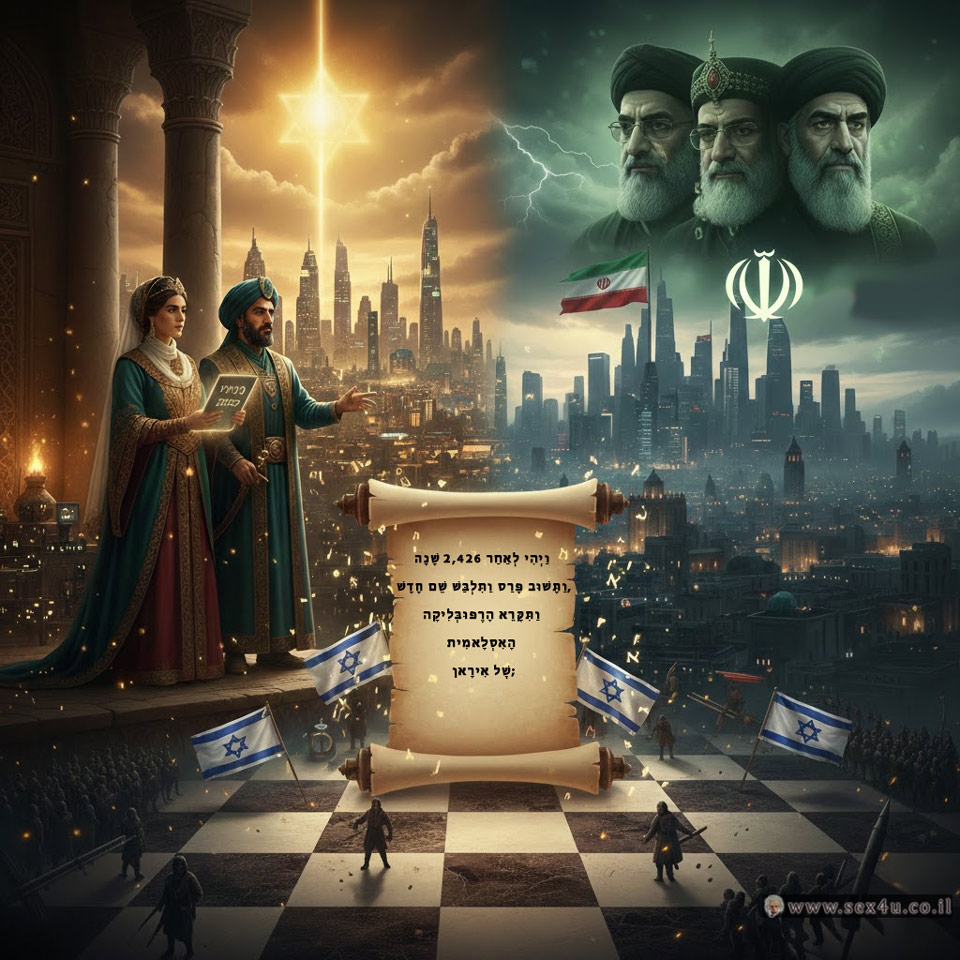
And Israel struck in secret, according to foreign reports. And rumors were heard of warehouses that exploded, and of scientists who vanished, and of systems shattered in the depth of night. And those who understood such matters said: This is not a war of tanks in open fields, but a war of minds and of shadows-of cyber and of intelligence; a war of shortened nights and weighty decisions.
And the people of Israel were divided in their judgment concerning their leaders. Some said that Netanyahu magnified the danger and kindled unnecessary fire; others said that he stood as Mordechai at the king’s gate-watchful of peril and unwilling to be silent. And the debate grew fierce, as is the way of a free people; yet the threat did not vanish.
And it came to pass in those days that the tension increased exceedingly. And there were exchanges of blows in the shadows, and explosions whose source was not made known, and reports published according to foreign sources. And then came a season which men would call the War of Twelve Days.
For the threats had multiplied, and the danger drew near unto an intolerable threshold; and Israel resolved that she would delay no longer. And she struck first, with swiftness and with stratagem; and she sent forth her hand against strategic installations, against depots of weapons, and against military infrastructures. And the operation was measured and deliberate-yet fierce and resolute; and the heavens were filled with flashes of fire, and the earth trembled beneath the feet of commanders.
And the opposing side sought to return the storm; and it launched missiles and aerial weapons, and endeavored to ignite additional fronts. Yet Israel was prepared; and she intercepted those who came against her, and returned blow for blow, until the sting was drawn from the assault. And the twelve days were few in number yet vast in consequence; and in their wake it was revealed that central systems had been broken, and capacities built over many years had been gravely impaired.
And some said that a decisive blow had been dealt unto Iran in those days-not because the danger had vanished utterly, but because the threat had been thrust backward, and weaknesses concealed behind parades and declarations had been exposed. And Tehran learned that even distance of geography is no impregnable wall; and Jerusalem learned that victory is ever temporary, and that watchfulness must never sleep.
Thus stood the heir of ancient Persia and the reborn State of the Jews-no longer a tale of palace courtyards and royal feasts, but a struggle of power, perception, and deterrence. Not a scroll sealed in celebration, but a chapter yet unwritten.
And the question hangs in the air: whether the sides shall learn the lesson of history-that empires rise and fall, yet peoples endure, or whether they shall persist upon the path of confrontation until circumstance itself compels a new chapter in the scroll not yet sealed.
And the scroll remains open; and the ink is not yet dry.
📜 Appendix to the Scroll of Esther: The Twelve-Day War
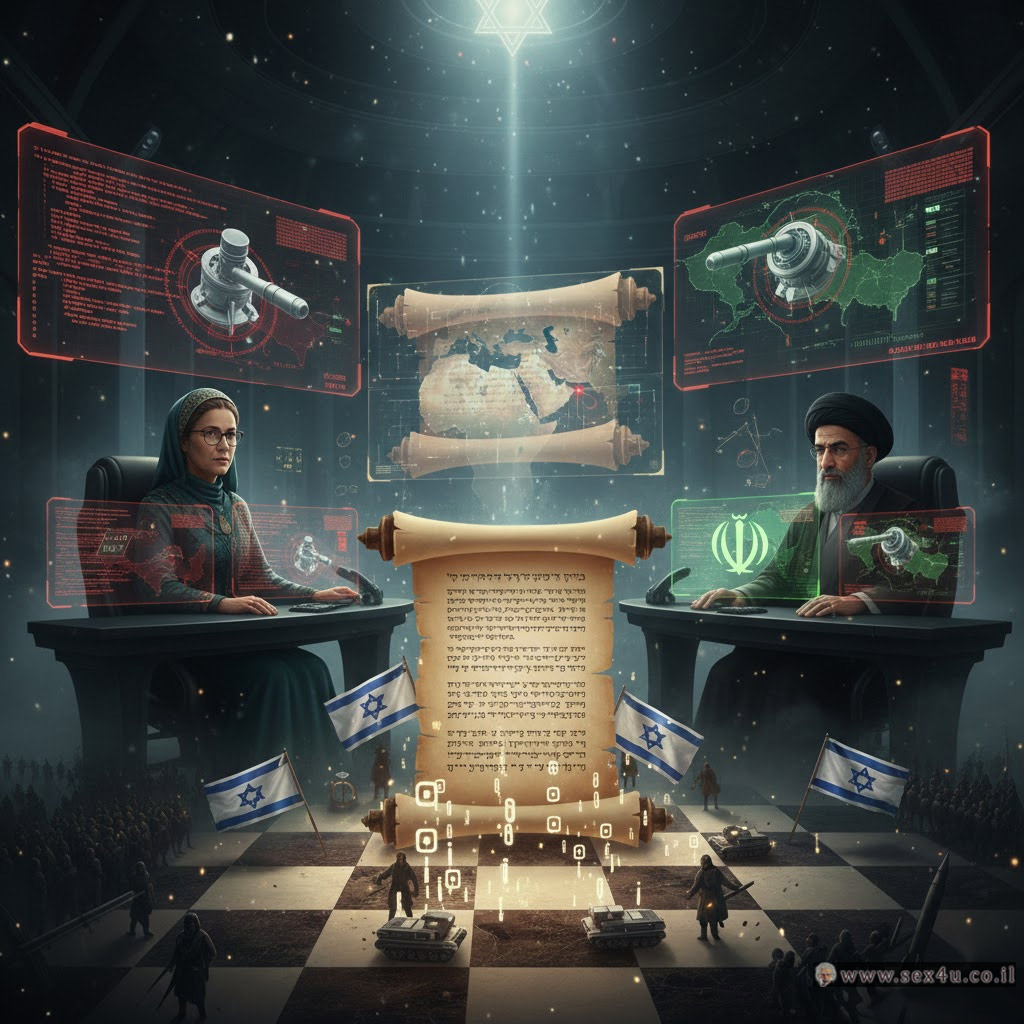
📜 Appendix to the Scroll of Esther: The Twelve-Day War
הירשמו כדי לקבל את הפוסטים האחרונים אל המייל שלכם