
Between Cyrus and Khomeini: Iran, the Jews, and Israel

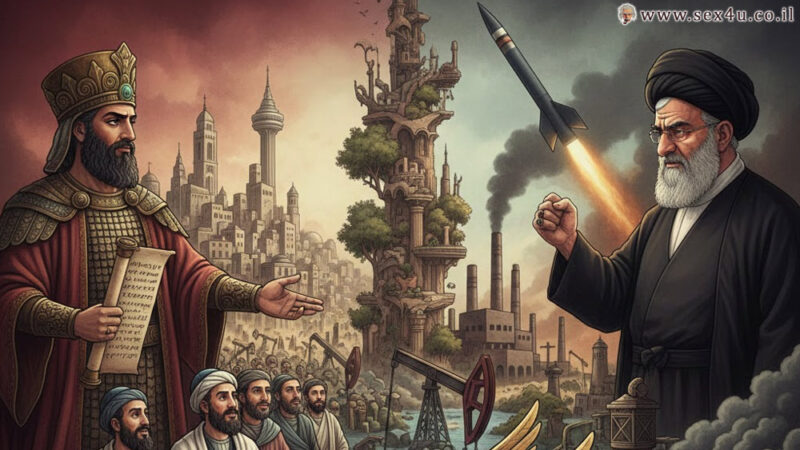
A History of Proximity, a Regime of Hatred, and a Strategic Opportunity Israel Cannot Afford to Miss
For years, the Israeli discussion about Iran has suffered from a dangerous oversimplification.
“Iran hates us.”
“The Iranians want to destroy Israel.”
“There is no one to talk to.”


Useful slogans, perhaps – but historically, culturally, and strategically inaccurate.
Iran is not “a bigger Gaza with oil.”
It is an ancient civilization, an imperial culture with deep identity, historical memory, and intellectual tradition – and, above all, a people who for nearly half a century have lived under internal occupation by an ideological regime that does not represent them.
To understand why Israel cannot – and should not – stand aside while the current protests unfold, we must return to the beginning.
Persia and the Jews: Not a Story of Hatred, but of Historical Continuity
In the compressed Western narrative, Iran is often portrayed as the “eternal enemy of the Jews.”
History – that inconvenient discipline academia loves to cite but rarely reads – tells a far more complex story.
Jews lived in Persia long before “Rome” became a brand.
This was not a tale of exile alone, but of coexistence, cultural exchange, and rooted presence – until one revolution, led by one bearded cleric, turned everything upside down.
Jewish presence in Persia was not born of displacement, but of belonging.
Cyrus the Great, founder of the Persian Empire, did not merely allow the Jews to return to their land after the Babylonian exile. He anchored his rule in the principle of respecting religions, peoples, and identities. For the Jewish people, this was a formative moment – not mercy, but recognition of collective rights.
For more than two millennia thereafter, Jewish communities existed in Persia with remarkable continuity:
- Not as chronically persecuted communities
- Not as sealed ghettos
- But as part of the social and economic fabric
The relationship was never idyllic, but it was stable.
The Persian Jew was not seen as a civilizational enemy, but as a legitimate minority.
This distinction matters.
Genocidal antisemitism – European or modern Islamist – is not native to classical Persian culture.
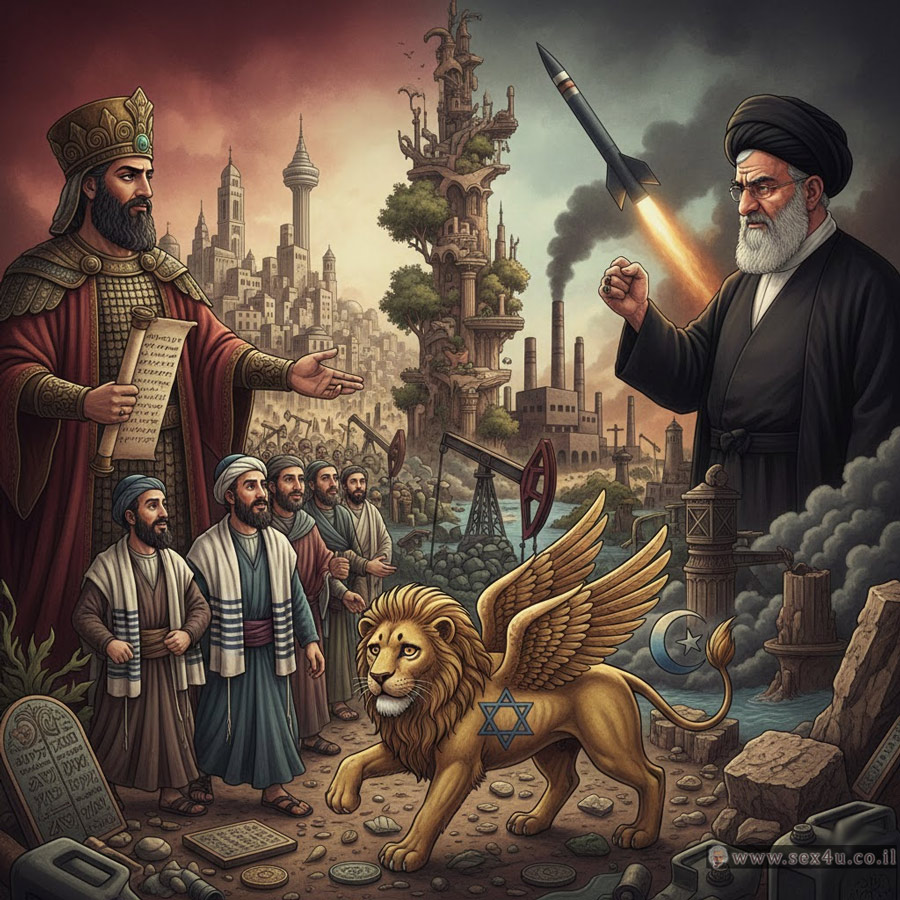
The 20th Century: Interests, Not Ideology
Even in the modern era, relations between Iran, Jews, and the State of Israel were not built on hostility.
Quite the opposite.
Under the Shah, Iran was:
- Non-Arab
- Non-Sunni
- Deeply suspicious of Arab nationalism
- Aspiring toward modernization and Western integration
Israel fit this worldview almost naturally.
Relations between the two states included:
- Intelligence cooperation
- Security ties
- Trade, agriculture, and technology
- Iranian oil flowing to Israel
- A semi-open Israeli presence in Tehran
This was not emotional friendship. It was rational alignment.
And that is precisely the point: when interests lead, hatred recedes.
1979: Not an Iranian Revolution, but an Ideological Takeover
The Islamic Revolution of 1979 was not the organic expression of Persian culture.
It was an ideological coup, carried out in the name of religion – but against the historical instincts of the nation.
To survive, the new regime required three things:
- Internal repression
- Religious legitimacy
- A permanent external enemy
Israel became the perfect choice:
- Distant
- Non-Muslim
- Western
- Successful
- And unable to respond directly inside Iran
Hatred of Israel was not born from popular rage, but from state engineering.
Since then, Israel has not merely been an enemy – it has become an identity pillar of the regime itself.
Small. Western. Jewish. Too successful.
Perfect for the role.
But this hatred belongs to the regime – not the people.
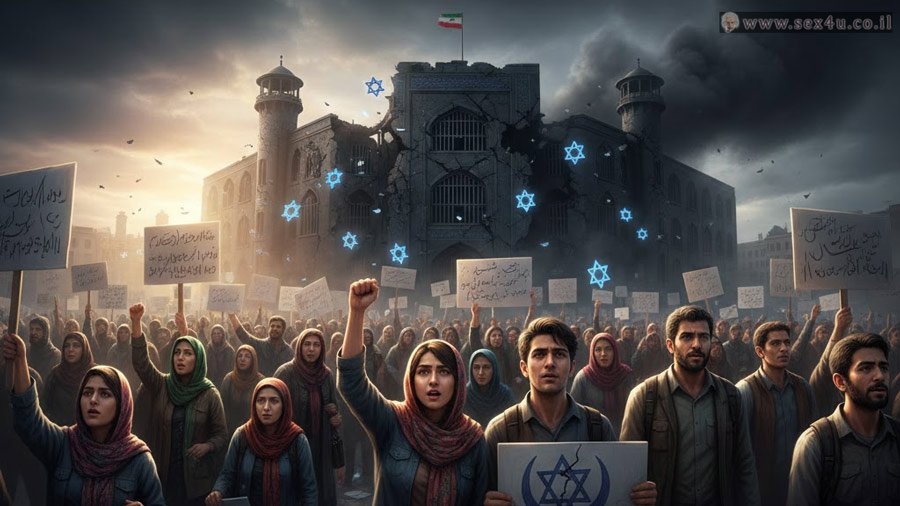
The Iranian People: Not Anti-Israeli, but Anti-Regime
This is where Western and Israeli analysis has most often failed.
Indirect polling, online discourse, diaspora testimony, and intelligence assessments point to a consistent reality:
- Young Iranians are largely indifferent to Israel
- Many are curious, even quietly sympathetic
- Most see Israel not as a “Zionist demon,” but as a small nation fighting for survival
Anti-Israel sentiment is not organic. It is produced by:
- Forced indoctrination
- Propaganda
- Fear
- Punishment
When protests erupt, anti-Israel slogans disappear.
When the regime weakens, hostility fades.
This is not anecdotal – it is strategic evidence.
The Current Protests: A Qualitative Shift
The recent protests in Iran differ fundamentally from previous waves:
- They cross social classes, not only the middle class
- They challenge power structures, not just the streets
- They articulate a civic alternative, not only anger
Most importantly, they undermine the religious legitimacy of the regime – not merely its economic performance.
When women, youth, and even former security personnel ask a single question – why are we living like this? – the regime loses its most valuable asset: fear.
Why Israel Cannot Afford Neutrality
Standing aside is not neutrality.
It is a choice.
Israel has a clear strategic interest in:
- A weakened or collapsing Iranian regime
- Reduced regional influence of Tehran
- Disruption of Hezbollah and Hamas funding pipelines
- Halting Iran’s nuclear ambitions without direct war
Israeli support need not be military – in fact, it should not be:
- Public diplomatic support for the Iranian people
- International exposure of regime crimes
- Technological assistance to bypass censorship
- Strategic coordination with the United States
And above all, a clear message:
Your struggle is not against us – and we are not against you.
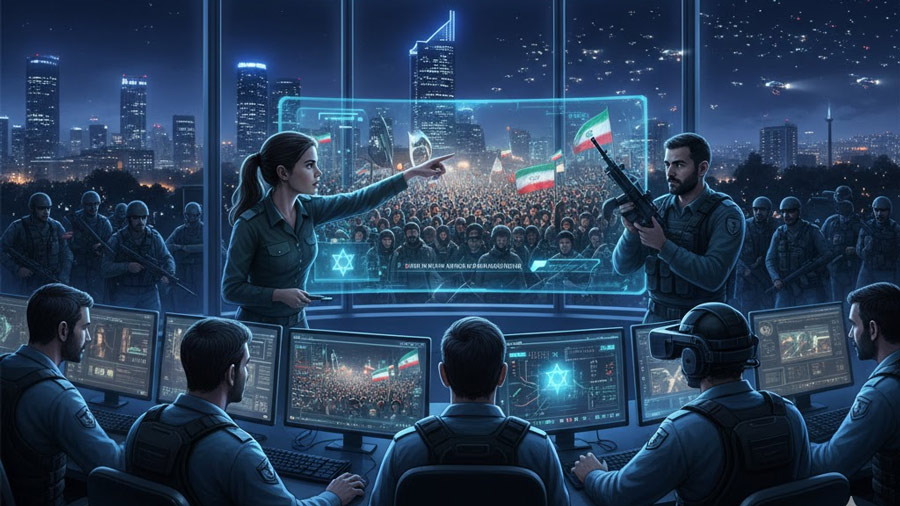
What Israel and the United States Gain from Regime Collapse
Far more than temporary calm.
- Nuclear containment – a new regime will focus on rebuilding, not bombs
- Collapse of the terror axis – Hezbollah, Hamas, the Houthis without oxygen
- A genuine regional reset – not paper agreements, but structural change
- A pragmatic Iran – not pro-Israel, but no longer obsessed with it
- A Western psychological victory – authoritarian collapse without invasion
The Day After: Why This Matters to Washington
The fall of the Islamic Republic does not guarantee immediate liberal democracy.
But it does promise:
- A return to rational statecraft
- Reduced messianic ideology
- Openness to regional arrangements
- Containment of Shiite revolutionary expansion
For the United States, this would mean:
- Victory without war
- Strengthened deterrence
- Proof that ideological dictatorships are not eternal
Not Every Enemy Is a People – and Not Every People Is an Enemy
Israel’s greatest historical mistake would be to confuse the Iranian regime with the Iranian people.
The Persian people do not hate us.
They are captive to a regime that hates itself – and exports that hatred outward.
The current protests may represent the first real opportunity in decades for deep change in Iran.
Not through invasion.
Not through bombing.
But through internal fracture.
And in the Middle East, cracks that are not reinforced – close.
The question is not whether Israel can influence events.
It is whether it chooses to be part of the moment –
or once again explain afterward why it was missed.
Why Israel Cannot Remain Silent
Because silence is a position.
And in the Middle East, silence is read as weakness – or fear.
History does not knock every day.
Sometimes, it kicks the door in.
Israel is accustomed to defensive thinking.
Iran is an opportunity to think strategically.
The Iranian people are not asking for an embrace.
They are asking the world to stop pretending their regime is “legitimate.”
And the Jewish people, with all of our historical memory, know what happens when the world stands aside while others fight for freedom.
The question is not whether the Iranian regime is evil.
The question is whether, when there is a real chance to end it,
Israel will choose to be a player – or a commentator from the stands.
Because sometimes, the most dangerous thing in the Middle East
is not a missile –
but a missed opportunity.
הירשמו כדי לקבל את הפוסטים האחרונים אל המייל שלכם