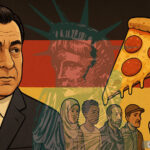
How Can National Education Survive the 21st Century?


Between Zoom and Palestine, Between Fake News and Love of Country
Welcome to an era where a ten-year-old can edit a TikTok story like a pro,
but struggles to explain why Memorial Day exists.


We live in a time when information comes from everywhere, all at once.
A child asking “What is Judaism?” might get an answer from Google, Instagram, YouTube –
or a 40-second video filmed by someone who has never set foot in Israel.
So the question is simple, and brutal:

How do you teach national identity when the smartphone is already doing the teaching?
The Challenges – Why This Is Not Simple
Too much information. Too many truths.
When there are a million versions of reality, what survives as fact?
Is the state “a light unto the nations” –
or is it a colonial project?
Depends who’s holding the microphone.
Fluid identity, shifting definitions.
When “who we are” is redefined every other Tuesday,
how do you teach national values without constantly apologizing for them?
Global culture, imported narratives.
Will English pop songs replace the national anthem?
Will TikTok decide what history is – or textbooks?
This isn’t a technical problem.
It’s a cultural one.
So How Do You Deal With It?
Reality Before Politics
Real national education doesn’t need to be government propaganda.
It shouldn’t shout.
It should reflect.
Not memory as ceremony – but memory as understanding.
Children need to know who they are and where they come from,
not to feel superior, but to feel anchored.
Identity isn’t about chanting slogans.
It’s about belonging without embarrassment.
Use Modern Tools – Without Losing Your Mind
Technology is a tool, not an enemy.
If children live on Zoom, YouTube, and TikTok – then teach there.
Short documentaries on Instagram.
Educational digital campaigns.
Podcasts telling real stories of courage, sacrifice, and complexity.
This isn’t surrender.
It’s adaptation.
Refusing to enter the digital space doesn’t protect values –
it abandons them.
Flexibility With Clear Borders
You can talk about gender fluidity without erasing family values.
You can acknowledge diverse identities without dissolving national history.
The key is restraint.
Not ideological panic.
Not cultural erasure.
Teach coexistence without teaching self-cancellation.
Teach Critical Thinking – Not Just Facts
Children must learn to question, doubt, and analyze.
But within a moral framework that respects society and statehood.
Teach them not to fear disagreement,
but to understand what stands behind it.
Critical thinking without values is just noise.
Values without thinking become slogans.

You need both.
Between Past and Future
National education in the 21st century is not nostalgia.
It’s not recycled tradition.
It’s a bridge.
Between deep history and digital reality.
Between love of country and openness to the world.
Between roots – and seeds for the future.
Teach children where they come from,
so they don’t need TikTok to tell them who they are.
And One Final Joke (Because Without Humor, No One Survives)
What do you call a kid who speaks Hebrew, understands history, respects values –
and still knows how to operate a smartphone like a professional?
The 21st-century generation.
הירשמו כדי לקבל את הפוסטים האחרונים אל המייל שלכם