Ramadan in the Middle East: Fasting, Fury, Terror Incitement, and TV That Fans the Flames

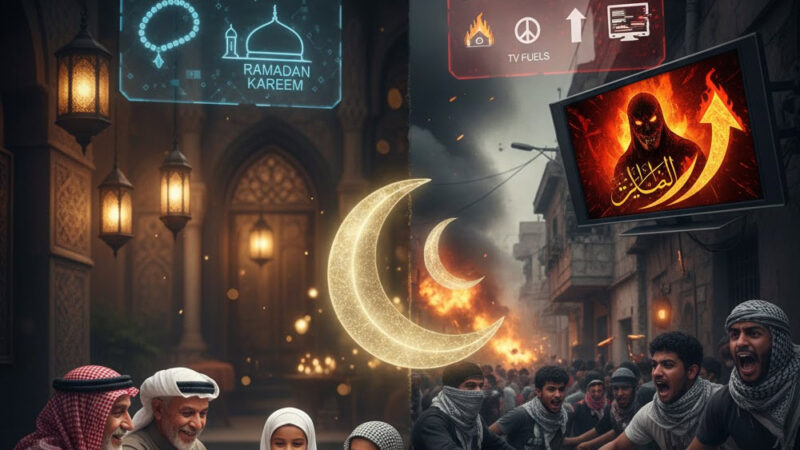
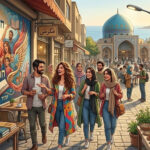
Ramadan is supposed to be a month of soul-searching, charity, spiritual introspection, and self-restraint-at least according to the classic religious definition.


In reality, in the Middle East-where both the weather and the tempers rarely lean toward moderation-Ramadan has morphed, especially in recent decades, into a political arena, a media circus, and sometimes an outright powder keg.
Let’s be clear: It’s not Ramadan as a religious observance that’s the issue. The problem lies in what fanatical and ignorant crowds, regimes, extremist movements, and propaganda channels do with it.
In a month when millions fast and pray, the incitement machines kick into high gear.
Ramadan: Faith, Identity, Incitement, and Politics
In many Middle Eastern countries, religion isn’t just a personal matter-it’s woven into national identity and often wielded as a tool of power.
Ramadan delivers three things every politician in the region dreams of: heightened religious fervor, a captive audience glued to TV screens in the evenings, and an intensified collective “us” vibe.
This is prime time for TV viewership. After breaking the fast, everyone’s at home. And when everyone’s home, the messages pumped through the screen hit twice as hard.
That’s where the trouble starts.
The Ramadan Drama Industry
If you’re not from the region, you might not know this: Ramadan is peak season for TV series in the Arab world.
Big budgets. Massive audiences. Profound cultural impact.
Most shows are family-friendly, romantic, or historical. But every year, productions with blatant political undertones sneak in.
In some cases, they portray Israel as a mythical enemy. In others, crude anti-Semitic tropes dredge up ancient conspiracy theories.
Not every country. Not every channel. But the phenomenon exists, and it’s far from marginal.
Myths, Conspiracies, and the Big Screen
Over the years, Arab TV has aired series adapting European anti-Semitic texts, including “The Protocols of the Elders of Zion.” Yep, that 19th-century forgery turned raw material for propagandists across the spectrum.
When this stuff airs in prime time, backed by dramatic music and slick production, it’s not seen as an “old fairy tale.” It’s perceived as reality.
This isn’t just political critique anymore-it’s systematic hate-mongering.
Fasting by Day, Incitement by Night?
Here’s the painful cynicism.
Ramadan preaches self-control. But on certain channels, the rhetoric heats up.
Politically spiced sermons. Extremist preachers getting airtime. Discourse blending religious identity with political hostility.
Again, let’s distinguish: Most Muslims worldwide aren’t into incitement. But in places where regimes use religion as a lever of control, the message seeps in.
Does Ramadan “Amp Up Violence”?
This is a sensitive question, approached with caution.
Statistically, there’s no blanket proof that Ramadan itself causes violence. But in areas with political or security tensions, the month amps up emotions.
Events in Jerusalem, Gaza, or the West Bank get amplified. Social media explodes. Religious talk mixes with nationalist fervor.
When extremist groups choose this month to escalate clashes, they do it for psychological reasons. Symbolism matters to them.
Modern Anti-Semitism in Religious Wrapping
There’s a difference between critiquing Israeli policy and demonizing Jews as a people.
The problem is that in parts of Middle Eastern media discourse, that line blurs.
Legitimate criticism turns into generalization. A territorial conflict is framed as an eternal holy war. History gets flattened into a simple script: good guys vs. bad guys.
When kids and teens consume this content year after year, it shapes consciousness, not just entertainment.
What About Internal Accountability?
This is the part that’s less comfy for local discourse.
Not every critique of these phenomena is “Islamophobia.” Calling out religious extremism or anti-Semitic propaganda is legitimate-even essential.
In countries with stronger civil societies, internal Muslim voices have challenged this incitement: journalists, intellectuals, and clerics demanding separation between faith and toxic politics.
These voices exist. But they don’t always get prime time.
Israel and the Fixed Narrative
In Israel, Ramadan is often seen as a tense month. Alert levels rise. Security assessments sharpen.
Does every year have to look like this? Not necessarily.
But when content on the other side of the border frames the conflict as an absolute religious war, it’s hard to expect mental calm.
The issue isn’t the fast. It’s the script.
A Little Satire, a Big Reality
There’s irony in a month meant to curb passions becoming, for some, a month of stoking them.
Mornings: Sermons on patience. Evenings: Series where the Jew is the archetype of cosmic evil.
If it weren’t tragic, it’d be black comedy.
So, What’s the Takeaway?
Ramadan itself isn’t a month of violence. It’s a deeply meaningful religious period for over a billion people.
But when regimes and extremists exploit it for political gain, and TV turns into an anti-Semitic propaganda tool, we can’t ignore it.
The critique isn’t on belief. It’s on the cynical abuse of belief.
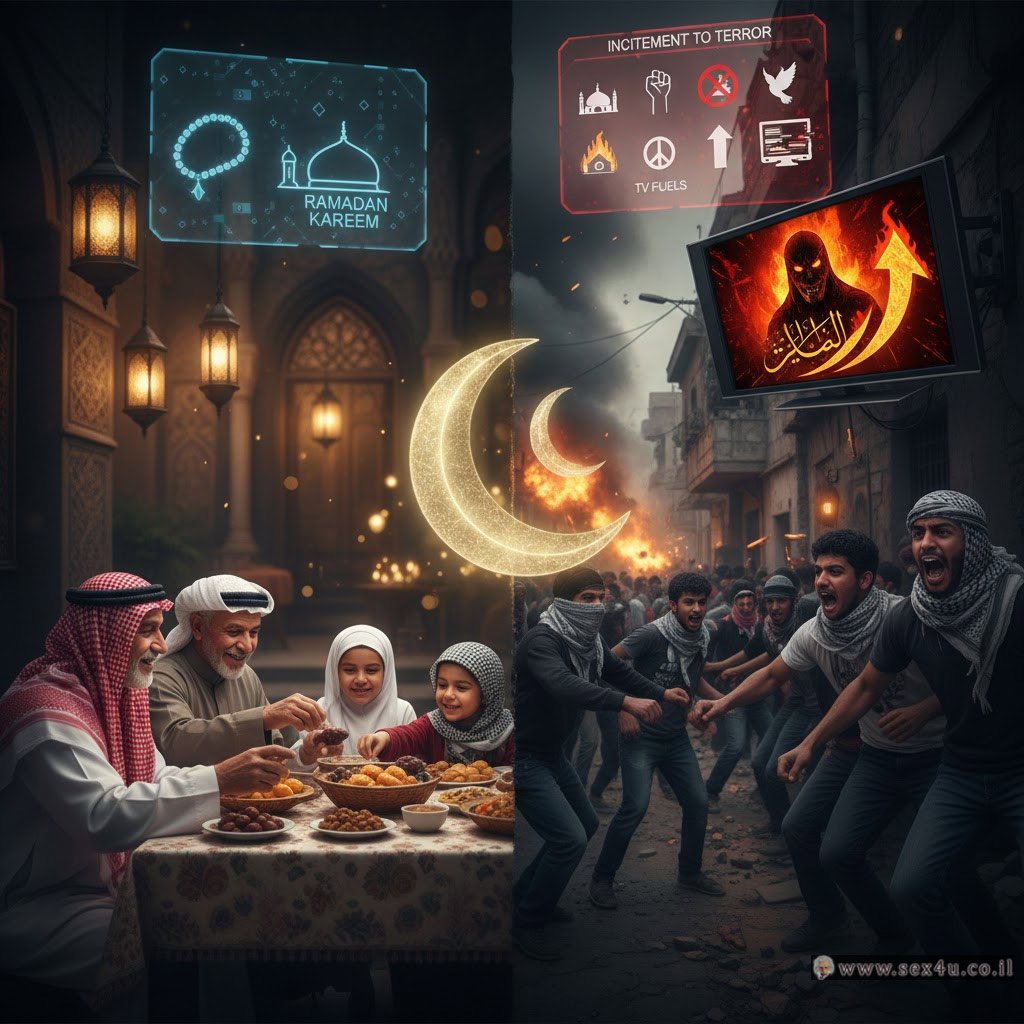
In a Middle East where fuel is cheap but words burn hot, maybe it’s time to remind: True fasting starts with halting the incitement.
And What About Israel in 2026 – A Holy Fast or a Timed Hate Campaign? Because the Media Already Smells Blood
Ah, Ramadan’s back, like Swiss clockwork-only in Israel, that clock ticks like a time bomb.
A month of inner reflection, fasting from dawn to dusk, prayers, and kindness-at least that’s what the books say.
But here? It turns into something between a riot festival and a “peace” lecture ending in stone-throwing.
And this year, in 2026, with Iran looming, settlers acting like movie vigilantes, and the Palestinian Authority on the brink, the recipe seems perfect.
Let’s break it down, cynically but not stupidly, because if we don’t laugh at the absurdity, we’re left with just the anger.
History Repeats: Ramadan as an Excuse for “Guardian of the Walls” 2.0?
Remember 2021? Riots in Sheikh Jarrah, stones from the Temple Mount, then rockets from Hamas like Independence Day fireworks-minus the joy.
Operation “Guardian of the Walls” ended with hundreds wounded and millions in damage.
Now, in 2026, security forces are beefing up: 21 battalions in the West Bank, plus a commando brigade, because “escalation fears are high.”
Cabinet moves, settler violence, Iran-it’s all cranking the tension.
Sound familiar? Like every year, when fasting starts, someone hits the “escalation” button and invites the media to film.
The question isn’t if there’ll be escalation, but when? Security officials warn? It sounds like a yearly script, but reality shows conflict (almost) always arrives.
Fasting and Fury: Psychology or Politics?
Now, let’s talk the fast itself-because if we’re doing satire, let’s go all in. A whole day without food, water, or smokes. Blood sugar drops, tempers rise, and suddenly every little thing’s a drama.
General studies show hunger can lead to aggression-“hangry,” they call it, blending hungry and angry.
But in Israel, it’s not just lunch rage; it translates to stone terror, clan shootings in Hebron.
What about zero tolerance for gunfire at Arab weddings? There, bullets are part of the welcome, and illegal weapons flow like water.
The irony: This religion, Islam, whose followers claim it champions “peace,” turns its holiest month into a violence catalyst. Hamas tries to ignite Jerusalem via Gaza and Turkey, with a broad escalation plan.
Iran in the background, weapons spilling into streets, and the Temple Mount always at the center…
The Lost Tranquility: Myth or Hypocrisy?
“The religion of peace,” they call it, but in Israel it sounds like an oxymoron-like “Peace Now” without the peace. Every year, alerts in Jerusalem, reinforcements in the West Bank, because the ongoing war and Temple Mount tensions could ignite.
If Ramadan’s a month of tolerance, why does it become a month of terror? Maybe because someone’s using it as an excuse-Hamas to agitate, media for ratings, Arab politicians to justify their existence.
And we haven’t even touched internal crime in Arab society-clan shootings, leaking weapons, lax enforcement.
It’s not Ramadan that’s dangerous; it’s the untreated norms. Like in Arab weddings, where shooting is “tradition,” but at the Temple Mount, suddenly it’s terror. Hypocrisy? Absolutely.
Because in Israel, peace isn’t a state-it’s a dream you wake from with newspaper headlines. Shalom aleichem, or salaam alaikum – depending on who’s ruling the street.
הירשמו כדי לקבל את הפוסטים האחרונים אל המייל שלכם