
Sword, Scripture, and a Guaranteed Paradise

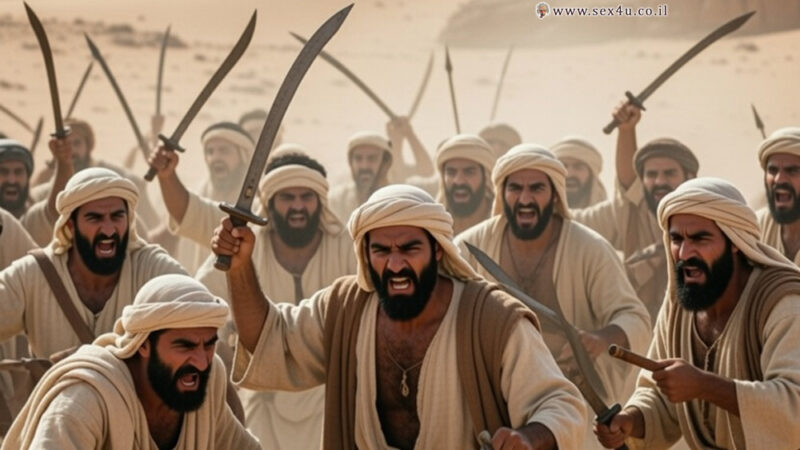
The Violent Roots of Early Islam – and Why They Refuse to Retire
Some myths simply refuse to die. One of the most persistent is the claim that Islam began as a peaceful, spiritual, almost New Age faith – and was later “hijacked” by extremists, misunderstood by the West, or radicalized by a particularly cruel social-media algorithm.


Reality, as usual, is less Instagram-friendly.
Islam is not “inherently violent” – that slogan is lazy and inaccurate. But it is also not a peace movement that was later corrupted. Violence in Islam is not a late-stage bug. It is a built-in feature. Not the only one, not always the dominant one – but undeniably present in version 1.0.
To understand why violence keeps resurfacing, we need to go back to the beginning. Not to ISIS. Not to al-Qaeda. Not even to the Muslim Brotherhood. We need to go back to the 7th century, to the desert, and to a prophet who was not only a spiritual guide – but also a war leader, a judge, and a tribal ruler with a sword.
Muhammad: Prophet, Politician, and Field Commander
The West’s first mistake is trying to fit Muhammad into a Christian mold: prophet, preacher, spiritual reformer. That template simply does not work.
Muhammad was something else entirely – a rare fusion of religion and state, faith and military power, heaven and battlefield.
In Mecca, Muhammad preaches patience, endurance, and divine judgment.
In Medina, Muhammad legislates, commands armies, orders executions, conducts raids, and manages tribal warfare.
This is not hidden. It is not controversial. It is documented – in the Sira, the Hadith, and classical Islamic biographies themselves.
Once Islam shifts from a persecuted movement to a sovereign political entity, violence does not disappear. It becomes institutionalized.
Jihad: Not a Metaphor, Not a Poetry Exercise
Western discourse loves to explain that “jihad means an inner struggle.” That is technically true – and deeply misleading.
It is like saying “the army is mostly about leadership skills.”
From the very beginning, jihad included armed struggle: raids, battles, territorial expansion, distribution of war spoils, enslavement of captives, and spiritual rewards for fighters.
The real innovation was not violence itself – humanity had plenty of that already – but its sanctification.
Dying in battle becomes a guaranteed shortcut to paradise.
The enemy is labeled a disbeliever, making his blood lighter.
War becomes not just an interest, but a command.
This does not mean every Muslim must fight.
But it does mean violence is wrapped in deep religious legitimacy – not as a deviation, but as a valid and sometimes noble path.
Fast Conquests, Slow Questions
Within less than a century, Islam expands from the Arabian Peninsula into vast territories: Byzantine lands, the Persian Empire, North Africa, and Spain.
This was not achieved through dialogue circles.
These conquests involved violence, forced taxation, second-class status for non-Muslims, and occasional massacres. Not always. Not everywhere. But often enough to establish a pattern rather than an exception.
And here lies the long-term problem:
A religion whose historical success is tightly bound to the sword struggles to put that sword down when the world changes.
Why Didn’t It Fade with Time?
Other religions went through restraining processes – usually not voluntarily, and often after catastrophic failures: military defeats, enforced secularism, internal revolutions, and relentless criticism.
Islam largely did not.
Why?
- No successful reformation – there is no Muslim Martin Luther who survived.
- The Quran is considered perfect and eternal – no software updates allowed.
- Muhammad is a total role model – not only as a preacher, but as a warrior.
- Political failure is perceived as religious humiliation – which fuels radicalization rather than moderation.
As a result, whenever the Muslim world feels defeated, humiliated, or left behind, there is always a ready-made shelf of verses, stories, and precedents that justify a return to “authentic” violence.
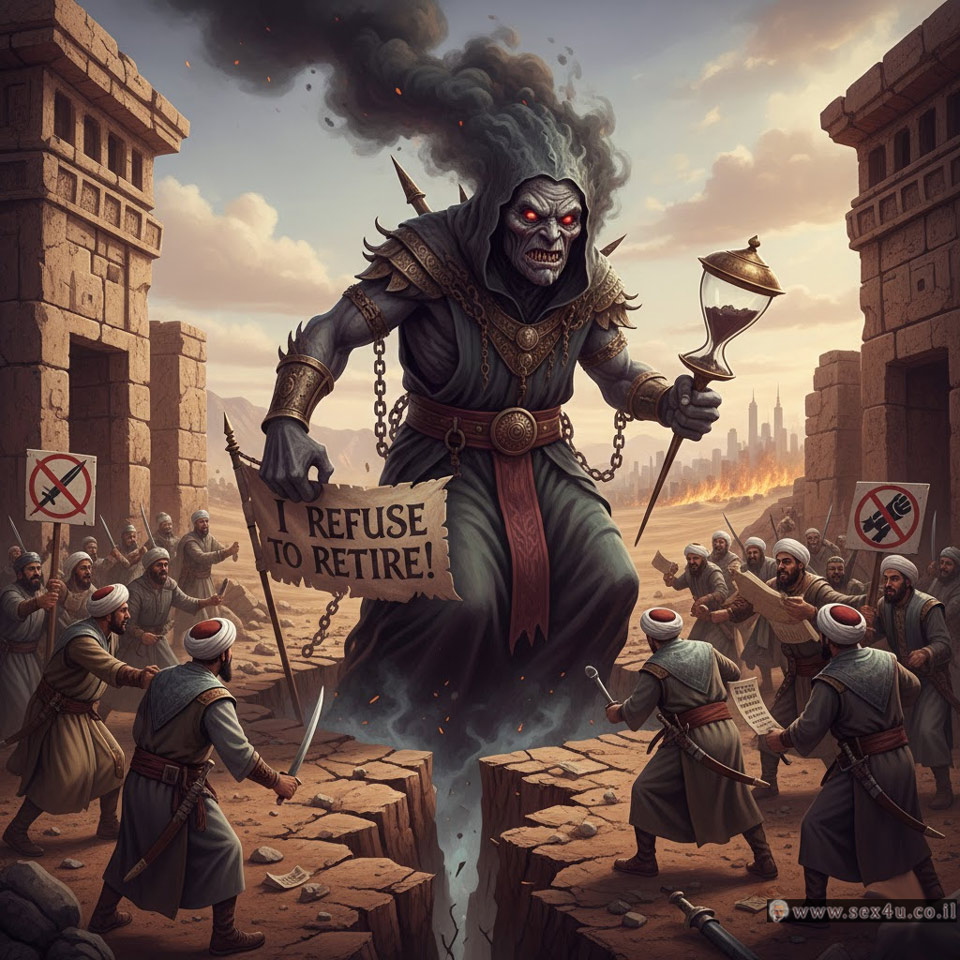
Text vs. Reality: Not Every Muslim, Always the Same Text
Let’s be honest.
Most Muslims are not violent. Most want stability, family, income, and a quiet life without ideological drama.
But the texts remain the same.
The stories remain the same.
And the justifications are always available.
This is the difference between dangerous people and a dangerous framework.
Islam does not automatically produce violence – but it allows it to re-emerge, repeatedly, wrapped in holiness.
The Non-Ending Ending
Violence in Islam is neither a modern malfunction nor merely a product of poverty or Western colonialism. It is part of the religion’s historical DNA, shaped in its formative years.
Can it change? Possibly.
Is it changing now? Not really.
Will the West dare to look at this without fear of offending? Still unlikely.
And so, every time someone says, “It’s not Islam, it’s the extremists,” history quietly clears its throat, opens the books of the 7th century, and replies:
“We’ve been here before.
Same texts.
Same sword.
Same promise of paradise.”
Nothing new.
Just rebranded.
הירשמו כדי לקבל את הפוסטים האחרונים אל המייל שלכם