
The Book of Esther, Ancient Persia, and the Shadow of Modern Iran

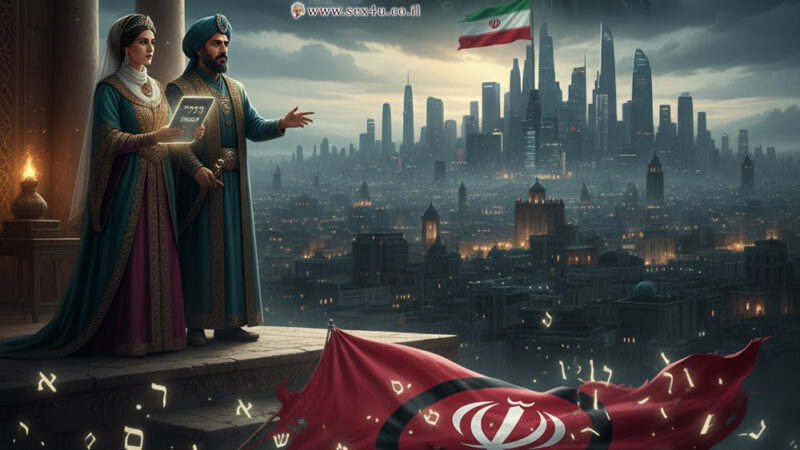
History has a peculiar sense of irony.


The Jewish people were saved from annihilation in ancient Persia.
Roughly 2,400 years later, the regime ruling the same geographic space – the Islamic Republic of Iran – openly declares the elimination of the Jewish state as an ideological objective.
History does not repeat itself in costume.
But it does rhyme in uncomfortable ways.
Read without noise-makers and sugary wine, the Book of Esther feels less like a children’s carnival tale and more like a political manual about power, ideology, and survival inside a hostile empire.
A Biblical Text Without Miracles – And With Plenty of Politics
Esther is unique among biblical books: the name of God never appears.
No sea splits.
No prophet warns.
No divine thunder interrupts events.
Instead, we get an empire.
A bureaucracy.
Royal decrees sealed with a signet ring.
Everything unfolds through human institutions.
This is not a story about angels.
It is a story about power.
And that is precisely why it feels disturbingly modern.
Haman – Ideology Framed as a Security Problem
Haman does not merely nurse a personal grudge. He systematizes it.
“There is a certain people scattered and dispersed among the peoples… whose laws are different.”
That is not emotional outburst. It is strategic framing.
He recasts the Jews as a political threat inside the empire.
A non-integrated minority.
A destabilizing element.
The sequence is familiar:
Delegitimization → Dehumanization → Elimination.
The Book of Esther exposes this mechanism with almost clinical clarity.
When a modern regime speaks openly about erasing another state from the map, when eliminationist rhetoric becomes normalized political language, the historical echo is hard to ignore.
Not as a simplistic equation.
But as a warning.
Ahasuerus – Immense Power, Minimal Backbone
King Ahasuerus rules 127 provinces.
Yet he is governed by whoever last whispers in his ear.
He does not originate the genocidal decree.
He signs it.
He is not an ideological fanatic.
He is a ruler who values stability and comfort over moral clarity.
This figure may be even more relevant than Haman.
Extremist ideologies rarely operate alone. They require passivity around them – hesitation, indifference, a desire not to complicate diplomatic relationships.
The Persian Empire in Esther is not inherently genocidal.
It is permissive.
History shows that passive permission can be nearly as dangerous as active hatred.
Esther – Strategy Over Slogans
Esther does not stage a public uprising.
She studies the system.
She identifies leverage points.
She waits for timing.
Her intervention is precise, calibrated, political.
She does not overthrow the empire.
She alters its decision-making from within.
There is no romantic miracle here.
There is strategic intelligence.
And that may be the most contemporary lesson of all: when existential threats emerge through state mechanisms, the response requires political clarity as much as courage.
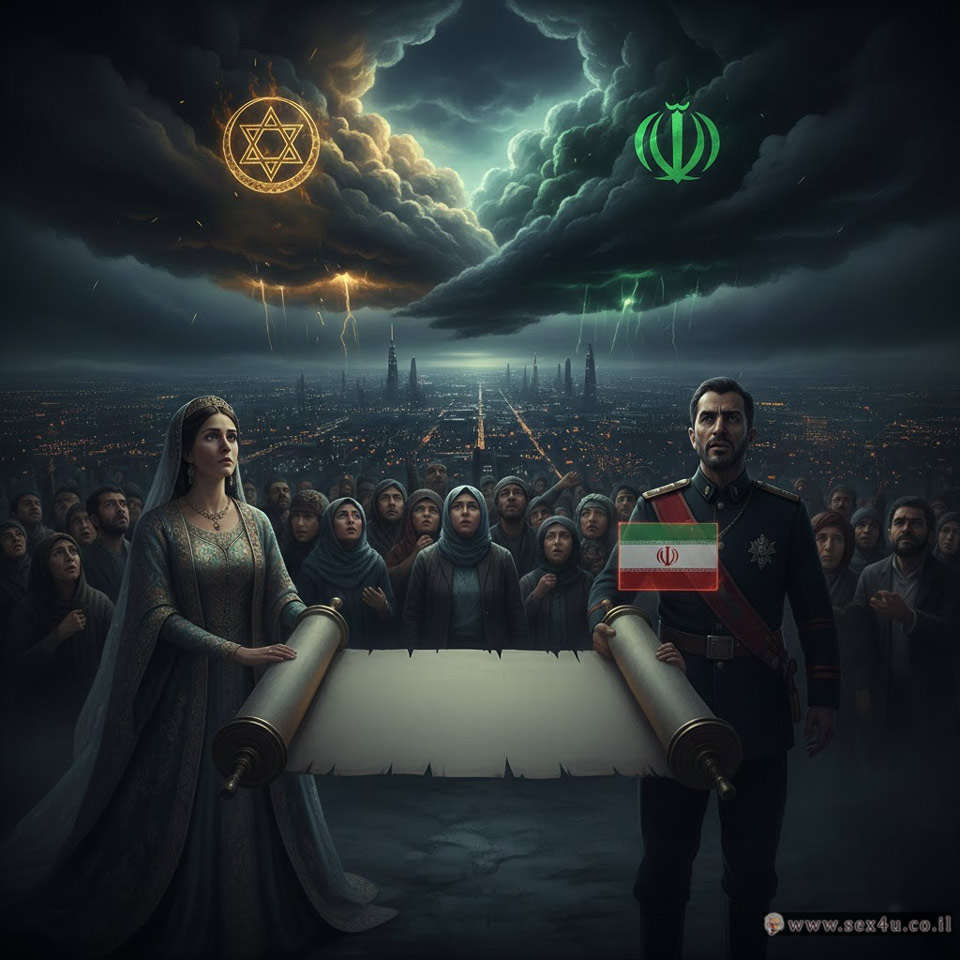
“V’Nahafoch Hu” – Reversal Through Self-Assertion
The core of the story is not merely survival.
It is reversal.
The decree against the Jews is not erased. Persian law does not allow it.
Instead, a counter-decree empowers them to defend themselves.
There is no divine cavalry descending at the last minute.
There is organization.
Mobilization.
Self-defense.
It is not a mystical triumph.
It is a sober one.
And that resonates in a world where security cannot be outsourced and threats are rarely symbolic.
Ancient Persia and Modern Iran – Parallels Without Simplification
Historical analogies demand caution.
Ancient Persia was not a theocratic revolutionary regime.
Modern Iran is not a multi-ethnic imperial monarchy.
But one parallel remains impossible to dismiss:
When a governing ideology institutionalizes hostility toward Jews – or toward the Jewish state – history enters the room.
Not as hysteria.
As memory.
The Book of Esther reminds us that existential threats often begin as rhetoric, are formalized as policy, and only later become material.
The Threat Is Not Mystical – It Is Bureaucratic
There are no demons in Esther.
There are decrees.
Budgets.
Administrative decisions.
The danger is not supernatural.
It is procedural.
Modern threats do not always arrive as marching armies.
They begin in conferences, parliamentary resolutions, funding channels, and doctrinal statements.
Esther teaches that the battlefield of ideas precedes the battlefield of weapons.
Not Panic – Clarity
The text does not advocate paranoia.
It advocates responsibility.
It does not instruct hatred of an entire civilization.
It warns about how ideologies operate within power structures.
It also reminds us that history is not fatalistic.
Persia was not monolithic.
Power shifted.
Decisions changed.
History is shaped by choices.
Beyond the Carnival
Strip away the costumes, and the Book of Esther is not primarily about celebration. It is about vigilance.
It reminds us that rhetoric matters.
That policy follows language.
That indifference enables extremism.
It also reminds us that survival is rarely accidental.
It requires awareness.
Coordination.
Leadership willing to act before danger becomes irreversible.
The question is not whether we are living inside a new scroll.
The question is whether we learned how to read the old one.

הירשמו כדי לקבל את הפוסטים האחרונים אל המייל שלכם