
What Are They Really Selling Us in Court?

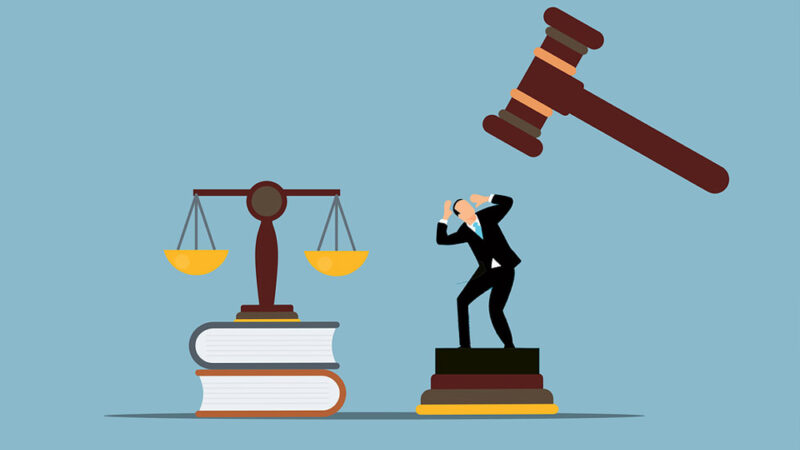
How the Clerk Became the Lawmaker – and the Citizen Became the Spectator
The small citizen and the big law


Once upon a time, we were taught a simple civic fairy tale.
The parliament legislates.
The government governs.
And judges? Judges interpret the law.
Not write it.
Not redesign society with a quill pen and a Hogwarts wand.
Just interpret.
Then we grew up.
We started reading court rulings.
And we learned the most important lesson of Israeli democracy:
When the parliament fails to do its job – the court will gladly do it for them.
And while it’s at it, it might also redesign the economy, rewrite national identity, cancel elections retroactively, and drink your soda straight from the fridge.
So let’s ask the obvious question:
What exactly are they trying to sell us in court?
Truth be told, it’s a very elegant package.
It includes:
- Human rights (but only the fashionable ones)
- Dynamic interpretation of the law (translation: we’ll write whatever feels right today)
- Checks and balances (where we are the judge, the scale, the brake, and the goalkeeper)
- A republic of experts (if you didn’t understand the ruling, you’re simply not enlightened enough)
And that’s just the starter set.
You’ll also receive:
- Limited edition Basic Laws
(Drafted at 3 a.m. in an empty parliament, but now holier than the Ten Commandments) - Seasonal sensitivity bonuses
(Ramadan-friendly rulings, less enthusiasm on Jerusalem Day) - Court decisions powerful enough to nullify laws passed by a clear democratic majority
Because who needs 64 elected representatives when you have moral intuition and universal authority?

So how did the clerk become the lawmaker?
The clerk didn’t just become a lawmaker.
He became a social engineer.
An amateur sociologist.
A part-time political commentator.
And very often – the nation’s therapist.
This didn’t happen overnight.
It happened gently, politely, with very reasonable explanations:
- “We’re just interpreting the law”
- “This decision is unreasonable”
- “We must place the government under legal supervision”
- “We’ll decide who is fit to govern – even if voters think otherwise”
And suddenly, without noticing, we woke up in a system where the bureaucrat we thought was a referee turned out to be a prophet.
A moral leader.
Sometimes even a modern Sanhedrin – minus elections, minus accountability, minus public consent.
Juristocracy: the autoimmune disease of democracy
When the legal system takes over everything, democracy develops a strange condition:
The voter no longer knows who to vote for in order to change reality.
You voted for a policy?
The court cancels it.
You demanded legislative reform?
It “harms the imaginary constitutional fabric.”
You asked to address illegal migration?
“Fundamental rights, my friend. Fundamental rights.”
(Which, conveniently, don’t have to be written anywhere. They can always be discovered between the lines – or under the judge’s pillow at night.)
The result?
- The public is frustrated
- The parliament is humiliated
- The government is neutralized
- And the court flourishes – issuing rulings that feel more like consciousness workshops than legal judgments
So why do we keep playing along?
Because on the surface, everything looks legal.
Everything comes with footnotes.
Everything is wrapped in noble phrases like “rule of law,” “minority protection,” and “systemic sanity.”
But beneath the polished language lies a very simple reality:
We are governed by a small, unelected, self-perpetuating legal elite –
one that cannot be voted out, cannot be replaced, and does not face the public every four years.
That is not democracy.
That is technocracy wearing a justice costume.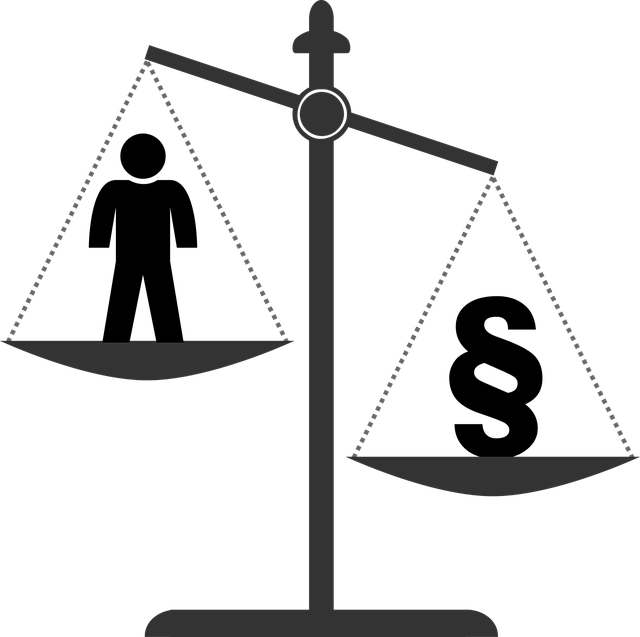
And what do we do about it?
- We remind judges what their role is: interpret the law – not reeducate the nation
- We return power to elected lawmakers, even if they didn’t attend Harvard
- We understand that the rule of law does not mean the rule of judges –
but governance according to laws passed by parliament, even if European embassies disapprove - And above all – we stop pretending that a clerk is a prophet
He may know the law.
But he was never meant to write it according to his gut feelings.
Final note: We don’t hate judges – we just remember they’re not gods
A strong judiciary matters.
The rule of law is essential.
But when law is written, interpreted, expanded, and enforced by a group that was never elected, will never be replaced, and answers to no one –
that is not the rule of law.
That is the rule of the clerk.
And nobody voted for him.
So the next time someone tells you,
“The Supreme Court’s decision is final,”
ask them:
Final like a legal ruling –
or final like an old can of shoe polish?
Because something here smells a little… off.
And until then – hang in there.
And remember: “Reasonableness” is a flexible concept.
Just like the price of coffee at the airport.
הירשמו כדי לקבל את הפוסטים האחרונים אל המייל שלכם