When Will We Stop Calling It “Radical Islam” and Admit the Obvious – It’s Just “Islam”


Some words are emotional sedatives.
“Radical” is one of them.


Say “radical Islam” and it sounds like a malfunction. A glitch. A fringe deviation that somehow wandered off the main road of a peaceful faith.
Like saying a knife-wielding thief is merely “overenthusiastic about property redistribution.”
But after twenty-five years of suicide bombings, intifadas, ISIS, al-Qaeda, Hamas, Hezbollah, Boko Haram, the Taliban, lone-wolf attacks, mass-casualty attacks, and whatever brand name terror adopts next – maybe it’s time to ask the impolite question:
What if it’s not “radical”? What if it’s simply… Islam?
Not all of it.
Not every Muslim.
Not every believer.
But yes – Islam as it appears in its texts, its law, its history, and its political practice.
And that’s precisely the part we’re not allowed to discuss.
“It’s Not Islam – It’s the Interpretation”
The favorite line of TV commentators, university panels, and European diplomats wrapped in scarves and moral certainty.
The problem?
Every religion is its interpretation.
There is no floating, Platonic “pure Islam” hovering above reality.
There is the Qur’an. The Hadith. Sharia law. Legal schools.
And fourteen centuries of implementation.
And when, across roughly eighty Muslim-majority states:
- apostasy is criminalized,
- homosexuality is illegal,
- women are second-class citizens,
- blasphemy is punishable,
- and religious law overrides civil law,
this is no longer an “extreme fringe.”
It’s a broad, recurring pattern.
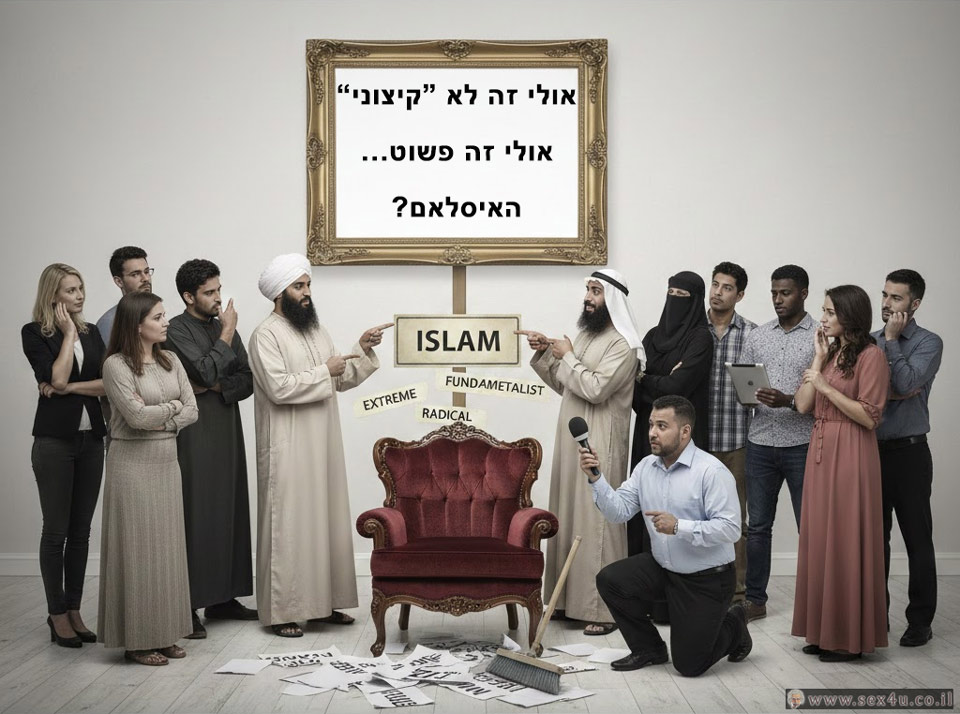
“Extreme” implies exception.
When it’s global and consistent – it’s a system.
The Violence Didn’t Come from TikTok
Western analysis loves safe explanations:
- poverty
- colonial trauma
- discrimination
- lack of opportunity
- bad weather
There is only one thing perpetually missing from the table: ideology.
The attackers themselves are not confused:
They quote scripture.
They invoke jihad.
They promise paradise.
They don’t claim economic frustration – they claim religious duty.
And when people from different countries, cultures, and education levels arrive at the same violent conclusions from the same texts,
maybe the issue isn’t “context.”
Maybe it’s content.
A Religion – or a Political Doctrine?
Christianity underwent reformation.
Judaism underwent secularization.
Islam? It stayed in the 7th century – with better apps.
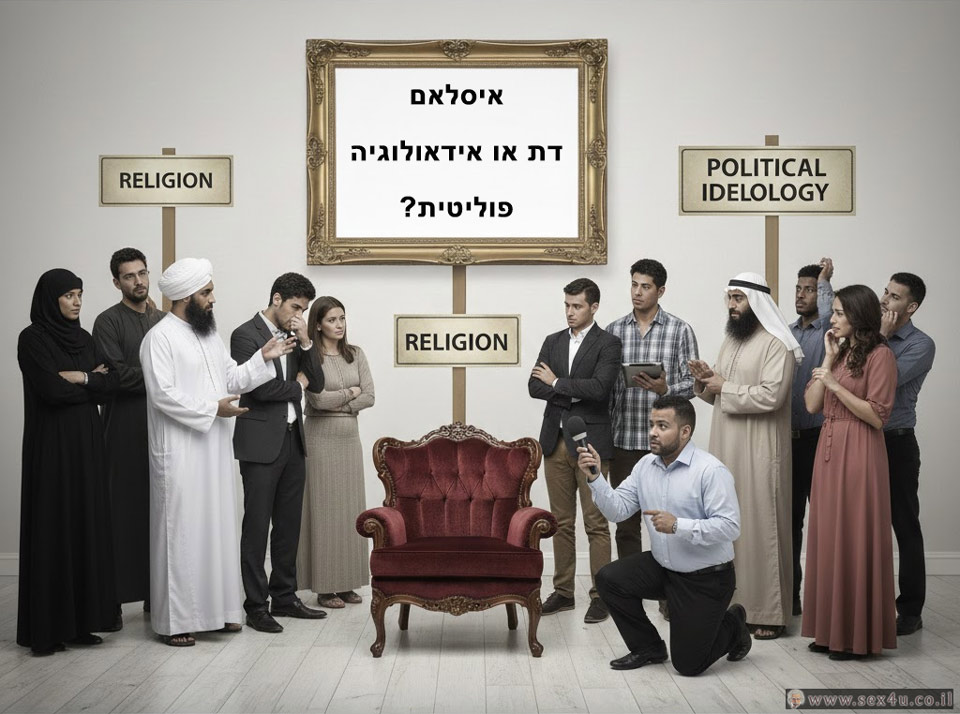
Islam is not merely a faith; it is a governing ideology:
- religion and state are inseparable,
- divine law outranks human law,
- believers outrank non-believers,
- the religious collective supersedes the nation-state.
Which is why:
When Muslims pray en masse in European streets, it’s not about a shortage of mosques.
It’s a statement.
A claim of presence.
A soft assertion of dominance.
Not tanks.
Prayer rugs.
“But the Majority Is Moderate!”
Another Western mantra.
In Islamic terms, “moderate” often means:
Not blowing yourself up today.
Polling across the Muslim world consistently shows majority support for:
- implementing Sharia law,
- corporal punishment,
- restrictions on free speech,
- and discrimination against non-Muslims.
That doesn’t mean every Muslim wants to murder Jews or Christians.
It does mean the ideas that enable violence enjoy widespread legitimacy.
And in culture, ideas always precede action.
Why Do We Keep Lying to Ourselves?
Because the truth is uncomfortable.
Because it demands boundaries.
Because it requires saying “no.”
Because it punctures the fantasy of cost-free multiculturalism.
And the West hates costs.
It prefers slogans.
So it calls it “radical.”
Then “extremist.”
Then “isolated.”
Then “unexpected.”
Until the next attack.
What Should Be Done?
Not hatred.
Not persecution.
Not blanket suspicion of individuals.
But yes – ending the whitewashing.
Yes – serious discussion of texts, law, and doctrine.
Yes – demanding adaptation to the values of host societies.
And yes – recognizing that not every culture wants to integrate. Some want to dominate.

It’s Not “Radical Islam” – It’s Islam Without a Filter
Just as communism wasn’t a “Stalinist deviation,”
and Nazism wasn’t merely “Hitler gone wild,”
this too is not a fringe malfunction.
When an ideology contains:
supremacy,
conquest,
and subjugation of the other,
the problem isn’t the edge.
The problem is the core.
And perhaps – just perhaps – it’s time to call things by their names.
Not to hate.
But to stop being surprised.
Because nothing is more dangerous than a violent ideology
everyone insists on treating as a translation error.
And meanwhile, as always –
reality isn’t waiting for academic approval.
הירשמו כדי לקבל את הפוסטים האחרונים אל המייל שלכם