
Affirmative Action

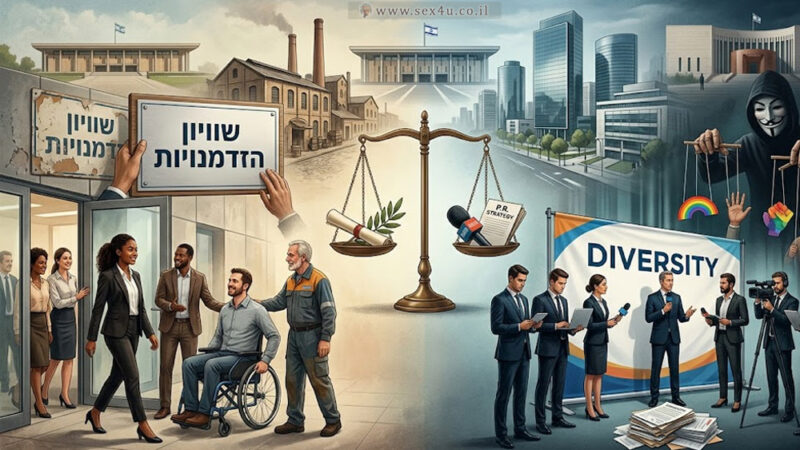
Historical Justice – or a Well-Branded Redistribution of Unfairness?
There was a time when you said “discrimination,”
and everyone understood: this is bad.


Something to fight.
Something to reject.
Something fundamentally incompatible with fairness, equality, and basic logic.
Then came the enlightened era.
And it said: hold on.
Maybe discrimination isn’t always bad.
Maybe, under the right conditions, it’s actually… good.
And thus, one of the most elegant phrases in modern public discourse was born:
“Affirmative Action.”
Or, in plain English:
We’ll discriminate against you – but morally.
The Logic: Clean, Elegant… and Convenient
The argument arrives polished, almost cinematic.
You can practically hear the TED Talk soundtrack behind it.
There was discrimination.
Certain groups suffered.
A historical injustice occurred.
Therefore, to correct that injustice –
we introduce reverse discrimination.
We prefer one candidate over another,
not because they’re better,
but because they belong to the “right” group.
And this, we are assured,
is not just moral – it’s necessary.
Because without it,
true equality is impossible.
Sounds beautiful.
Right up until you pause and ask:
Wait… isn’t this still discrimination?
Discrimination with Good Intentions Is Still Discrimination
There’s something almost Israeli about the whole concept.
Take a real problem.
Apply a creative solution.
Halfway through, realize it’s essentially the same problem – just rebranded.
Because at its core, affirmative action says something very simple:
If you’re in the wrong group –
step aside.
It doesn’t matter how hard you worked.
How much you sacrificed.
How qualified you are.
Someone else “needs it more.”
And no, it’s not personal.
It’s systemic.
The system has decided that, for now,
you matter less.
Congratulations.
You’ve just experienced social justice.
Israel: The Startup Nation of Moral Workarounds
Let’s not pretend.
In Israel, ideas don’t stay theoretical for long.
They become systems.
Mechanisms.
Sometimes, entire bureaucracies.
Affirmative action here quickly translates into:
Quotas.
Preferences.
Reserved positions.
All wrapped in the soft language of modern virtue:
“Inclusion.”
“Diversity.”
“Representation.”
And in practice?
It often feels less like a fair marketplace
and more like a regulated one –
with ideological oversight.
Then comes the candidate.
Worked hard.
Studied.
Delivered.
But fails the most important criterion:
Wrong category.
And suddenly, the conversation becomes… less comfortable.
When Theory Meets Reality
In theory, this is about correcting history.
In reality? It gets complicated.
Because affirmative action doesn’t operate in a vacuum.
It meets human nature.
Egos.
Interests.
Politics.
And what happens then?
It expands.
Another group seeks recognition.
Another sector demands representation.
Another subcategory emerges.
At some point,
the game is no longer about equality –
it’s about allocation.
Who gets more.
And that’s a slippery slope.
Because if everyone is entitled to preference –
who is left without?
Exactly.
The one who managed on their own.
Equality of Opportunity – or Equality of Outcome?
This is where the real debate lives.
Is the goal for everyone to start from the same line –
or to finish at the same line?
Affirmative action doesn’t just level the playing field.
It adjusts the scoreboard.
It says:
It’s not enough to give equal opportunity.
We must ensure the result looks “right.”
Meaning:
Not just fair play,
but corrected outcomes.
At that point,
we’re no longer talking about competition.
We’re talking about engineering.
And What About Excellence?
An uncomfortable question.
Which is precisely why it’s often avoided.
What happens to excellence
when non-professional criteria enter the equation?
When admission to a job,
a university,
or a public position
is not based purely on merit?
The official answer:
There is no contradiction.
The real answer:
There is tension.
Because when you’re forced to choose between the best candidate
and the “right” candidate,
you’re no longer choosing excellence.
You’re choosing a message.
And messages, as it turns out,
have a cost.
Sometimes in money.
Sometimes in quality.
Often in both.
The Psychology No One Talks About
There’s another layer here – quieter, but no less important.
What does it do to someone who gets accepted because of affirmative action?
Do they feel they earned it?
Or does a quiet question mark linger in the background?
And what about the one who didn’t get in?
Do they accept it as fair?
Or carry silent resentment?
The result?
More suspicion.
Less trust.
Greater division.
Almost the exact opposite of the intended goal.
When It Becomes Political – Because Of Course It Does
In Israel, nothing stays theoretical for long.
Affirmative action becomes a political tool.
Who gets preference?
Who decides?
Based on what criteria?
And the answers – let’s put it mildly –
are not always professional.
Because wherever there is power to distribute advantages,
there is an incentive to use it.
And the conversation shifts.
From “justice”
to “control.”
At that point, we’re no longer fixing history.
We’re managing it.
The World Is Starting to Ask Questions
And no, this isn’t just an Israeli phenomenon.
Across the Western world,
the concept is beginning to crack.
More voices are asking:
Does affirmative action actually achieve its goals?
Or does it create new problems?
Courts.
Universities.
Corporations.
All are reassessing the balance.
Because when the solution generates new injustice –
it may be time to rethink the solution.
So What’s the Alternative?
This is the part people like the least.
Because pointing out problems is easy.
Solving them is harder.
Yes, there are gaps.
Yes, there are historical injustices.
Yes, not everyone starts from the same place.
The question is how to address that.
Through education?
Through infrastructure?
Through real opportunity?
Or through shortcuts –
artificial preferences that look good on paper?
Because shortcuts, as always,
tend to perform better in theory
than in reality.
Justice – or the Feeling of Justice?
Affirmative action is seductive.
It offers a sense of correction.
Of morality.
Of progress.
But beneath it all,
one simple question remains:
Are we actually correcting injustice –
or merely relocating it from one side of the field to the other?
Because in the end,
discrimination is still discrimination.
Even when it comes with good intentions.
Even when it arrives wrapped in a polished presentation.
And Israeli society,
which has seen its share of “creative solutions,”
knows one thing for certain:
Not everything that sounds like justice
actually is.
And sometimes,
the bravest move
is not to invent new forms of discrimination,
but to eliminate the old ones – completely.
No shortcuts.
No rebranding.
No stories.
הירשמו כדי לקבל את הפוסטים האחרונים אל המייל שלכם
Discover more from Intelligent is sexy
הירשמו כדי לקבל את הפוסטים האחרונים אל המייל שלכם