The Slow Decline of NATO in the 21st Century

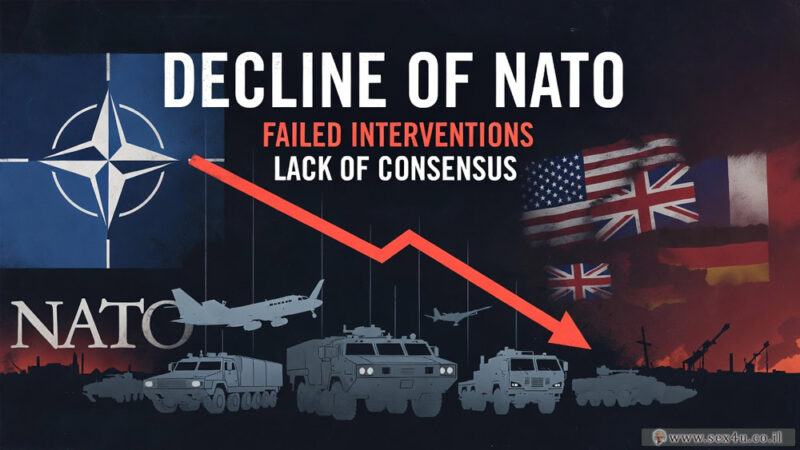
How the West’s Most Powerful Military Alliance Became a Strategic Paradox
There was a time when the mere mention of NATO carried the weight of overwhelming military power. Tanks, aircraft carriers, nuclear arsenals, and the combined industrial strength of the Western world stood behind one simple principle: an attack on one member would be treated as an attack on all.


For decades, that principle helped keep the peace in Europe.
Today, the alliance still exists. It still holds summits, deploys troops, and issues confident communiqués. On paper, it remains the most powerful military coalition in human history.
And yet, beneath the official statements and polished press conferences, something fundamental has changed.
NATO in the 21st century increasingly resembles a paradox: a massive military alliance that often struggles to act like one.
Born Out of Fear
NATO was created in 1949, in the early days of the Cold War. Western Europe had just emerged from the devastation of World War II, and the Soviet Union stood across the continent with millions of troops and a rapidly expanding sphere of influence.
The logic behind the alliance was brutally simple.
If the Soviet Union attacked Western Europe, it would face not just France or West Germany, but the combined military power of the United States and its allies.
Deterrence worked.
Throughout the Cold War, NATO’s existence served as a powerful warning to Moscow that a conventional invasion of Western Europe would trigger a global catastrophe.
But history has a strange sense of irony.
The enemy NATO was designed to contain disappeared.
The alliance remained.
The Strategic Identity Crisis
When the Soviet Union collapsed in 1991, NATO faced a dilemma that many large institutions eventually encounter: what happens when the problem you were created to solve suddenly vanishes?
The alliance had been built for a specific geopolitical reality. Without the Soviet threat, NATO had to reinvent itself.
New missions appeared.
Peacekeeping operations in the Balkans.
Stabilization efforts in Afghanistan.
Intervention in Libya.
Each operation was presented as a necessary step toward maintaining international security. Yet many analysts quietly wondered whether NATO was adapting to a new world – or simply searching for a justification to exist.
The question has never fully disappeared.
Afghanistan: The Moment of Truth
The war in Afghanistan became NATO’s most ambitious mission after the attacks of September 11, 2001.
For the first time in its history, the alliance invoked Article 5, the mutual defense clause. European countries joined the United States in what was supposed to be a unified military effort against terrorism.
In theory, NATO operated as a single coalition.
In practice, it looked more like a patchwork.
Different member states imposed different rules on their troops. Some limited combat operations. Others restricted deployments to certain regions. A few allowed their forces to participate primarily in defensive roles.
The result was a complex military structure in which every contingent followed slightly different political instructions.
From a strategic perspective, coordination often became painfully slow.
When the United States withdrew from Afghanistan in 2021, the alliance learned a difficult lesson: NATO could participate in large-scale operations, but it was still heavily dependent on American leadership, logistics, and firepower.
Without Washington, the alliance struggled to function as a truly independent military force.
The Transatlantic Imbalance
For decades, American presidents have complained about the same problem: European allies rely heavily on U.S. military protection while investing relatively little in their own defense.
The issue became particularly visible during the presidency of Donald Trump, who openly criticized European members for failing to meet NATO’s target of spending 2 percent of GDP on defense.
While Trump’s rhetoric was controversial, the underlying numbers were difficult to ignore.
For years, many European states remained well below the spending target.
In practical terms, the arrangement looked like this:
The United States maintained global military capabilities.
Europe enjoyed the benefits of security while prioritizing domestic spending.
The imbalance did not destroy NATO. But it created a structural tension that continues to shape the alliance today.
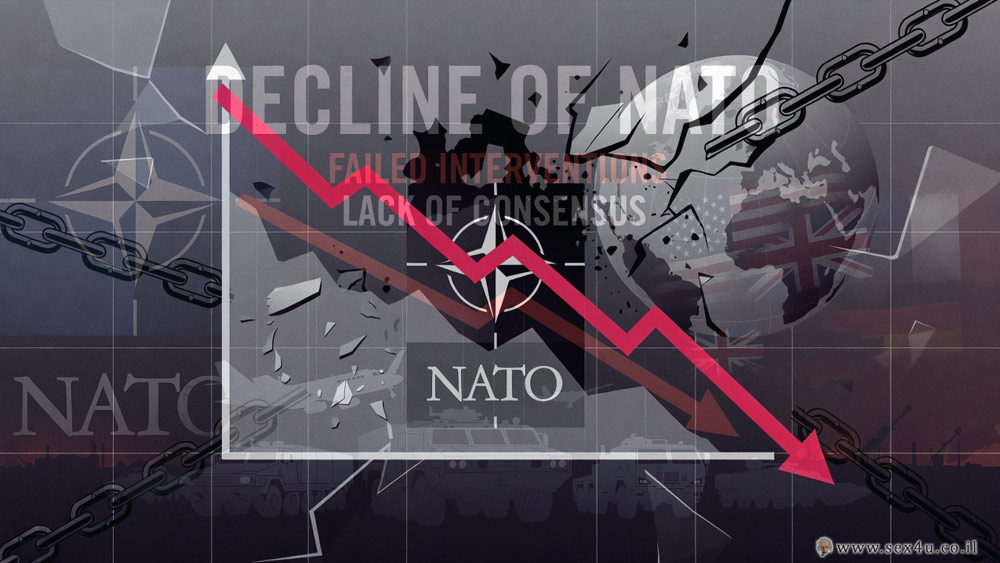
Then Came Putin
If one leader unintentionally revived NATO’s strategic relevance, it was Vladimir Putin.
Russia’s invasion of Ukraine in 2022 shocked Europe. Large-scale war returned to the continent in a form many policymakers believed belonged to the past: armored divisions, artillery barrages, and prolonged attritional fighting.
Suddenly, NATO’s original purpose no longer seemed hypothetical.
Defense budgets began rising across Europe.
Countries that had long hesitated about membership reconsidered their positions.
Military planning once again focused on territorial defense.
Ironically, Putin’s attempt to weaken Western influence ended up strengthening NATO’s political cohesion – at least temporarily.
Yet even this renewed unity revealed deeper structural weaknesses.
Bigger, But Not Necessarily Stronger
On paper, NATO today is larger than ever.
It has more members, larger combined budgets, and greater technological resources than any other military alliance.
But modern warfare depends on more than budgets.
It requires industrial capacity, rapid decision-making, and the political will to sustain long conflicts.
The war in Ukraine exposed uncomfortable realities. European countries discovered that their stockpiles of ammunition were far smaller than expected. Defense industries struggled to increase production quickly enough to support prolonged high-intensity warfare.
In some cases, Russia – despite having a smaller economy – managed to produce certain types of ammunition faster than NATO members.
That realization was deeply unsettling.
The Bureaucracy Problem
One of NATO’s least discussed challenges is bureaucratic complexity.
The alliance consists of dozens of democratic states. Each one has its own parliament, political parties, legal constraints, and public opinion pressures.
Major strategic decisions require consensus.
Consensus takes time.
In the middle of a fast-moving crisis, the need for political coordination across multiple governments can slow down the alliance’s response.
Meanwhile, geopolitical rivals operating under more centralized political systems can often act more quickly.
This does not mean NATO is weak.
It means NATO is complicated.
Internal Differences
NATO is not a unified state. It is a coalition of countries with different histories, priorities, and threat perceptions.
Eastern European members tend to view Russia as the primary strategic danger.
Southern European states are often more focused on migration and instability in the Mediterranean.
Western European governments balance defense priorities with economic and social policies.
These differences do not make cooperation impossible. But they do make long-term strategic consensus harder to maintain.
Even leaders within the alliance have occasionally voiced frustration. French President Emmanuel Macron once described NATO as experiencing “brain death,” a phrase that captured the sense of strategic drift felt by some European policymakers.
Is NATO Really Declining?
The answer depends on how decline is defined.
In terms of military resources, NATO remains extraordinarily powerful. Its combined defense spending dwarfs that of most potential rivals.
However, power is not measured solely in weapons or budgets.
It also depends on political unity, industrial readiness, and strategic clarity.
And in those areas, the alliance faces real challenges.
The Changing West
The Western societies that created NATO have changed dramatically since 1949.
During the Cold War, fear of Soviet expansion helped maintain a relatively unified strategic outlook.
Today, Western democracies are more politically polarized. Domestic debates over economic policy, cultural issues, and national identity increasingly shape foreign policy decisions.
When societies become internally divided, sustaining long-term military commitments becomes more complicated.
The alliance inevitably reflects the political environment of its members.
The Strategic Paradox
Here lies the irony of NATO in the 21st century.
It may be less confident, less cohesive, and more bureaucratic than during the Cold War. Yet it still represents the most formidable military coalition on the planet.
Its rivals know this.
And that knowledge alone continues to provide a powerful form of deterrence.
NATO may no longer be the unquestioned titan it once was. But it is far from irrelevant.
The Cynical Conclusion
NATO today is a curious hybrid.
Part military alliance.
Part political forum.
Part historical institution trying to adapt to a rapidly changing world.
At times it resembles a heavily armored tank powered by a parliamentary committee.
Yet despite its internal contradictions, the alliance persists.
Until a new global security structure emerges – or the Western world decides to abandon collective defense entirely – NATO will likely continue to exist in this uneasy balance between strength and uncertainty.
A powerful alliance.
An imperfect one.
And perhaps the only one the West still knows how to maintain.
הירשמו כדי לקבל את הפוסטים האחרונים אל המייל שלכם