
What Will Run Out First – The Regime in Tehran or Its Missile Stockpiles?

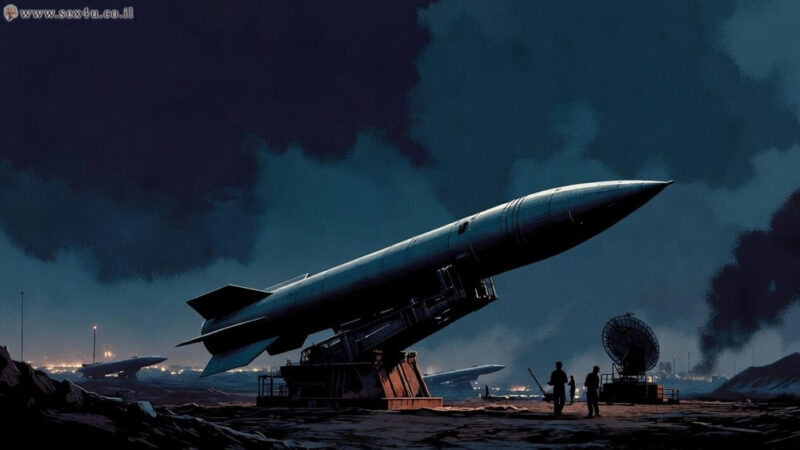
The Middle East’s Eternal Dilemma, 2026 Edition
There are big questions that define eras.
What came first – the chicken or the egg.
Will democracy survive social media.
And then there’s the updated Israeli question for March 2026:


What will run out first – the leadership of the Islamic Republic of Iran, or its missile stockpiles?
This isn’t just a military question. It’s philosophical, economic, and—inevitably in this region—darkly comedic. Because if the Iranian regime has proven anything over the past decades, it’s this: it can produce two things in seemingly unlimited quantities—
missiles, and enemies.
Iran 2026 – A Missile Power with a Management Problem
The Islamic Republic does not lack resources.
It lacks priorities.
On one side: massive investment in missiles, drones, proxy militias, and every possible tool that allows it to wage war without formally owning it.
On the other: a struggling economy, crumbling infrastructure, and a population that has spent the last decade asking increasingly uncomfortable questions.
The regime isn’t stupid. It simply operates on a different logic:
if you lack legitimacy at home, manufacture deterrence abroad.
Israel vs. Iran – A War That Is Finally “Official,” More or Less
As of March 2026, we are no longer in the polite fiction of “shadow conflict.”
We are in what passes, in the Middle East, as a “full-scale war”—
which is to say: it’s complicated, loud, continuous, and still somehow deniable.
Israel operates systematically:
- Targeting infrastructure
- Disrupting strategic projects
- Degrading missile supply chains
- Methodically eroding command structures
- Hitting elements of the Revolutionary Guard and Basij
Iran responds in kind, and then some:
- Direct fire, alongside proxy-based attacks
- Ongoing attempts at infiltration (or at least the promise of them)
- Regional pressure campaigns that occasionally resemble “spray and pray” geopolitics
- And a steady stream of psychological warfare, misinformation, and social media theatrics that would be impressive—if they weren’t so transparent
Meanwhile, both sides are playing the same game:
everyone is firing, but no one wants to turn on the lights and call it by its name.
So What’s More Finite – Missiles or Leadership?
Option 1: The Missiles Run Out First
On paper, this sounds reasonable. Even Iran has limits:
- Production costs money
- Sanctions complicate access to components
- Supply chains are fragile
But here’s the twist:
Iran doesn’t need endless missiles. It needs enough missiles.
Deterrence is not measured in inventory. It’s measured in perception.
If you can maintain the illusion of credible threat, your stockpile doesn’t have to be infinite—just sufficient.
In other words: even fewer missiles can still look like a lot of danger.
Option 2: The Leadership Runs Out First
This is where things get interesting.
The Iranian regime is layered:
- Religious leadership
- The Revolutionary Guard
- Internal control mechanisms
But like any centralized system, it has a critical weakness:
it depends on specific people.
And once those people start disappearing—politically, operationally, or otherwise—things begin to crack:
- Decision-making slows or fractures
- Internal trust erodes
- Power struggles emerge
Put simply:
you can manufacture a missile. Manufacturing a stable leadership structure is considerably harder.
The Economy – The Real Enemy of the Missile Program
The real story isn’t military. It’s economic.
Iran operates on a simple model:
- Invest in security
- Neglect the civilian population
That model has an expiration date.
As economic pressure builds:
- Funding projects becomes harder
- Paying the machinery of control becomes harder
- Maintaining internal stability becomes harder
This is precisely where Israel doesn’t need to fire more missiles.
It only needs to keep pressing on the structural weak points.
Europe and NATO – Spectators with Excellent Vocabulary
While all of this unfolds, Europe and NATO are doing what they do best:
expressing concern, issuing statements, and drafting strongly worded documents.
The issue isn’t ignorance.
They understand the situation perfectly well.
The issue is cost.
They understand—and prefer not to pay.
The result is a geopolitical absurdity:
- Israel and the United States are engaged in active conflict
- Iran fights through proxies and deniability
- Europe fights through paperwork
The Iranian Public – The Variable No One Controls
And then there’s the wildcard: the people.
Not a sudden revolution. Not yet.
But a slow accumulation of pressure:
- Rising cost of living
- Lack of personal freedoms
- Systemic corruption
The regime faces a fundamental constraint:
you cannot indefinitely suppress a frustrated population without consequences.
Missiles are useful against external enemies.
They are less effective against internal discontent—at least without escalating the cost dramatically.
So What Runs Out First?
If we’re forced to place a bet—and this is not a diplomatic answer:
the leadership runs out first.
Not necessarily in a literal sense, but in a functional one:
- Loss of control
- Internal erosion
- Fragmentation of power centers
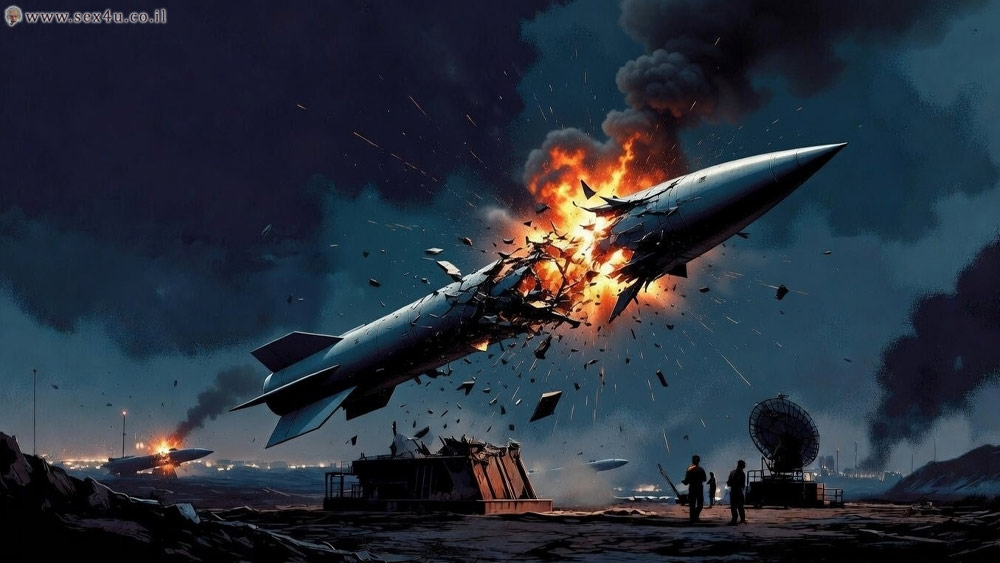
Missiles? You can always build more.
A stable governing system? That’s a far rarer commodity in this region.
The Bottom Line – How Regimes Actually End
Regimes don’t collapse overnight.
They wear out.
One miscalculation, one pressure point, one internal fracture at a time—until the system simply stops functioning.
Iran in 2026 is not collapsing.
But it is no longer invulnerable. And the trajectory is becoming visible.
The real question is not how many missiles remain.
It is how long the system can sustain itself under simultaneous pressure from every direction.
Final Summary – Hardware vs. Software
Let’s simplify it:
- Missiles are hardware
- The regime is software
And in the Middle East, software tends to crash long before the hardware runs out.
So what ends first?
Most likely – stability.
And the uncomfortable truth?
That is far more dangerous than any missile.
הירשמו כדי לקבל את הפוסטים האחרונים אל המייל שלכם