Autonomous Cars – The Beginning of Order on the Roads or Collective Suicide?

There comes a moment when humanity gets tired of itself.
Tired of mistakes, ego, and drivers who cut you off like they’re on a divine mission.
So we came up with a brilliant idea:
remove the human from the wheel.


Because if there’s one thing humans have consistently proven, it’s that we’re excellent at many things—just not at driving.
And so, in the mid-2020s, we find ourselves running a historic experiment:
replacing millions of impatient, distracted, overconfident drivers with an algorithm.
What could possibly go wrong?
The Human – The Original Bug
Let’s start with the obvious truth:
most accidents are not caused by machines. They’re caused by people.
- Fatigue
- Distraction
- Ego
- Momentary stupidity
The road isn’t just infrastructure—it’s a behavioral lab.
Every drive is a mix of survival instinct and mild religious faith.
So when someone says autonomous cars will save lives—they’re not wrong.
The real question is: how many will they take along the way?
The Algorithm – Your New Driver
An autonomous car doesn’t get angry.
It doesn’t overtake out of spite.
It doesn’t text while driving.
But it has one small issue:
it doesn’t understand the world—it calculates it.
And that difference matters.
Because a road is not a math problem.
It’s organized chaos:
- A taxi driver deciding to turn without signaling
- A motorcyclist convinced he’s invisible
- A pedestrian who thinks a crosswalk grants diplomatic immunity
The algorithm has to predict all of this—in real time, without error.
Good luck with that.
The Promise – A World Without Human Error?
The theory is beautiful:
- Fewer accidents
- Smoother traffic
- Less congestion
- Fewer fatalities
Cars communicating with each other, maintaining distance, behaving rationally.
It sounds like a dream.
Or a very expensive insurance commercial.
But there’s one small condition for this to work:
everyone has to be autonomous.
The Problem – Humans Are Still Here
The most dangerous phase isn’t the future. It’s the transition.
That awkward moment where:
- Half the road is autonomous
- Half the road is human
That’s not innovation. That’s friction.
Because the autonomous car plays by the rules.
The human driver plays by mood.
The algorithm assumes:
“If someone signals, they will turn.”
The human thinks:
“I’ll signal after I’ve already turned.”
And that’s where things start to break.
Responsibility – Who’s to Blame When It Fails?
A simple question with no simple answer:
If an autonomous car crashes—who’s responsible?
- The “driver” who wasn’t driving?
- The manufacturer?
- The programmer?
- The algorithm itself?
Welcome to a world where responsibility becomes abstract.
And in certain legal systems, that abstraction quickly turns into an industry.
Glitches, Hacks, and Other Nightmares
An autonomous car is essentially a computer on wheels.
And we know how computers behave:
- They freeze
- They crash
- They get hacked
Now scale that up:
A small bug → a large accident
A bored hacker → nationwide traffic chaos
This is no longer about “bad drivers.”
It’s about unstable code moving at 100 km/h.
The Economics – Who Actually Wins?
Behind every technological revolution, there’s money. A lot of it.
Winners:
- Car manufacturers
- Tech companies
- Eventually, insurance companies (after they adjust)
Losers:
- Professional drivers
- Certain repair industries
- Anyone who doesn’t adapt
Because once driving becomes automated,
the driver becomes optional.
Israel – The Ultimate Stress Test
If autonomous cars can survive Israeli roads, they can survive anywhere.
Why?
- Inconsistent infrastructure
- Aggressive driving culture
- Chronic impatience
This isn’t traffic—it’s close-quarters combat.
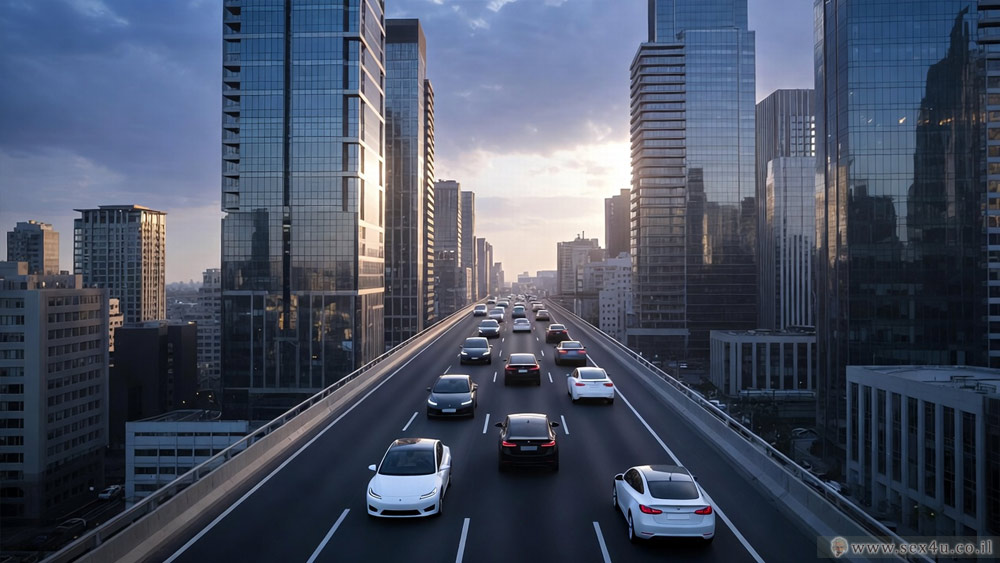
If an algorithm can handle rush hour on a major highway,
it’s ready for anything.
So What Is This – Order or Suicide?
The honest answer: both.
Long term:
- More order
- Fewer accidents
- Higher efficiency
Short term:
- Chaos
- Errors
- Painful adaptation
The Real Question – Who Holds the Wheel?
Autonomous cars won’t ask for permission.
They’ll just arrive.
Slowly at first. Then all at once.
And the real issue isn’t whether they’re better.
It’s whether we’re ready to give up control.
Because that’s the real story:
not technology—but ego.
Humans are willing to admit they’re bad drivers.
They’re just not willing to let go of the wheel.
Final Summary – Because There’s No Gentle Way to Say It
Let’s simplify:
- Humans drive badly
- Algorithms drive differently
- The road stays the same
So is this the beginning of order?
Yes.
Is it collective suicide?
Also yes.
Just one with a sleek interface, over-the-air updates,
and the comforting illusion that the car knows what it’s doing
as it quietly makes decisions on your behalf.
Enjoy the ride.
הירשמו כדי לקבל את הפוסטים האחרונים אל המייל שלכם
Discover more from Intelligent is sexy
הירשמו כדי לקבל את הפוסטים האחרונים אל המייל שלכם