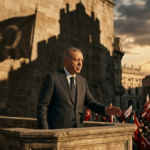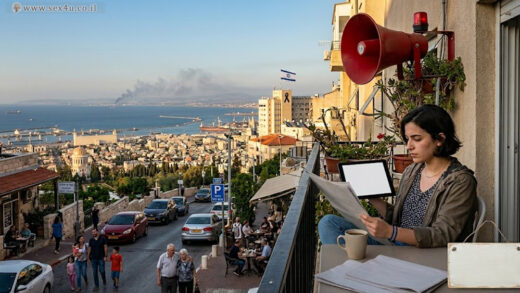
Erdoğan and the Long Shadow of History

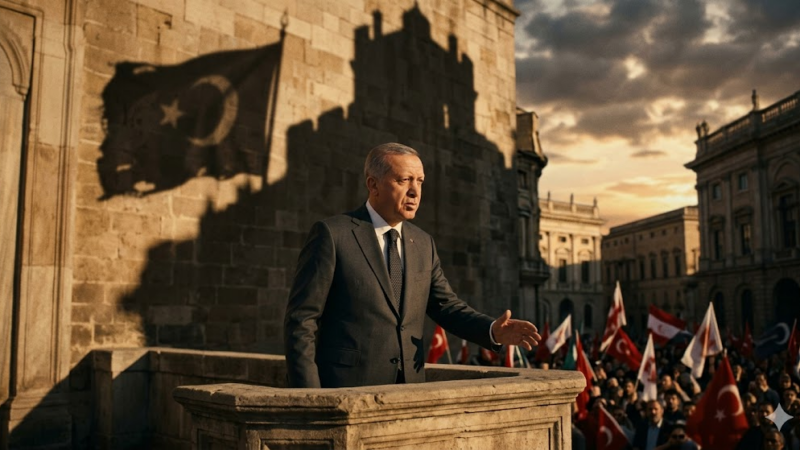
When Democracy Becomes a Tool of the Ruler
For many years, comparing contemporary political leaders to Adolf Hitler has been treated as the ultimate cliché of public debate.


In most cases, rightly so.
Such comparisons are often lazy, emotional, and historically inaccurate.
Yet when examining the transformation of Turkey under President Recep Tayyip Erdoğan, it becomes increasingly difficult to ignore certain similarities in method to the playbooks used by authoritarian leaders throughout history.
This is not a comparison of genocide.
It is not a comparison of war crimes.
It is a comparison of processes.
Of political techniques.
Of the gradual conversion of democratic institutions into instruments serving the ambitions of a single leader.
From Secular Turkey to Islamist Turkey
When Mustafa Kemal Atatürk established modern Turkey, his vision was unmistakable:
A secular state.
A modern state.
A Western-oriented republic.
A nation where religion and government would remain separate.
For more than two decades, Erdoğan has moved Turkey in the opposite direction.
Under his leadership, religion has become a central political instrument.
The education system has undergone a steady process of Islamization.
Religious institutions have gained influence.
Secular values that once formed the foundation of the Turkish Republic have gradually been pushed aside.
The message is increasingly clear:
The new Turkey no longer looks primarily toward Europe.
It looks toward political Islam.
The Systematic Weakening of Democratic Institutions
Democracy is not merely a ballot box.
History is filled with leaders who reached power through elections before dismantling the very systems that enabled their rise.
The real question is what happens after victory.
Over the past decade, Erdoğan has overseen a series of measures that critics argue have significantly weakened Turkey’s institutional checks and balances.
Thousands of judges, military officers, academics, and civil servants have been dismissed, detained, or prosecuted.
Media outlets have been shut down.
Journalists have found themselves behind bars.
Political opponents have faced legal pressure.
Opposition leaders have repeatedly been portrayed as enemies of the nation.
When independent institutions become targets rather than safeguards, it becomes increasingly difficult to describe a political system as a liberal democracy in the Western sense of the term.
The Cult of the Leader
One of the most recognizable features of authoritarian systems is the elevation of the leader into a near-sacred figure.
In Hitler’s Germany, there was the Führer.
In Erdoğan’s Turkey, a more sophisticated but nonetheless significant personality cult has emerged.
The state, the ruling party, and the leader himself have become increasingly intertwined.
Criticism of Erdoğan is often framed as criticism of Turkey itself.
Political rivals are no longer simply opponents.
They are portrayed as traitors.
Foreign agents.
Threats to the nation.
Historians know this pattern well.
It has rarely ended well.
Religion as a Political Weapon
Perhaps the most dangerous element lies here.
Hitler mobilized extreme nationalism.
Erdoğan has harnessed a potent mixture of nationalism and political Islam.
It is an exceptionally powerful combination.
When political opponents are portrayed not merely as rivals but as enemies of faith, public discourse becomes more radical.
Compromise becomes more difficult.
Criticism becomes sacrilege.
And the leader evolves into someone presented as representing not merely the will of the people, but a higher moral or religious mission.
For any society, that is a dangerous slope.
A Challenge to the West
For decades, Turkey was viewed as part of the Western strategic framework.
A member of NATO.
A strategic ally.
A bridge between East and West.
Under Erdoğan, that bridge has developed visible cracks.
Turkey’s foreign policy has increasingly diverged from traditional Western priorities.
Anti-Western rhetoric has become a recurring feature of domestic politics.
Hostility toward Israel often serves domestic political purposes.
At the same time, Ankara’s ambition to position itself as a leading voice of the Muslim world has become more explicit.
The concern is not that Turkey will become Nazi Germany.
The concern is that Turkey could evolve into a major regional power with a strong military, a significant economy, and an increasingly Islamist ideological orientation.
That possibility is drawing growing attention in Western capitals.
Meanwhile, in Israel
While independent institutions in Turkey continue to face mounting pressure, political debates in Israel often appear disconnected from that reality.
In Israel, every parliamentary defeat is frequently described by someone as “the end of democracy.”
In Turkey, journalists have faced genuine fears of imprisonment.
In Israel, nearly every legal dispute is labeled by one side or another as “dictatorship.”
In Turkey, critics argue that unprecedented power has become concentrated in the presidency.
Amid the constant political turbulence, Benjamin Netanyahu remains a political giant whose opponents have spent years attempting to remove him through campaigns, investigations, media exposés, and relentless political warfare.
One may admire him.
One may oppose him.
But the distinction between Israel and Turkey remains significant:
In Israel, political conflict still unfolds within a vibrant and highly competitive democratic system.
In Erdoğan’s Turkey, an increasing number of citizens are asking whether the system can still be meaningfully described as democratic at all.
The Bottom Line
Erdoğan is not Hitler.
That comparison is too simplistic.
History never repeats itself in exactly the same form.
But those who refuse to recognize similarities between certain authoritarian methods of the past and developments visible in Turkey today risk ignoring important warning signs.
The concentration of power.
The erosion of free expression.
The weakening of judicial independence.
The targeting of political opponents.
The use of religion and nationalism as instruments of political control.
These are not hallmarks of a healthy democracy.
They are warning signals.
And history teaches a recurring lesson:
Warning signals have a habit of becoming full-blown crises precisely when the world decides it would rather look away.
Published in the sharp, satirical spirit of sex4u.co.il – where politics, culture, and uncomfortable truths occasionally share the same bed.
הירשמו כדי לקבל את הפוסטים האחרונים אל המייל שלכם
Discover more from Intelligent is sexy
הירשמו כדי לקבל את הפוסטים האחרונים אל המייל שלכם