The Arab-Christian Oxymoron: Identity, Conquest, and Historical Memory

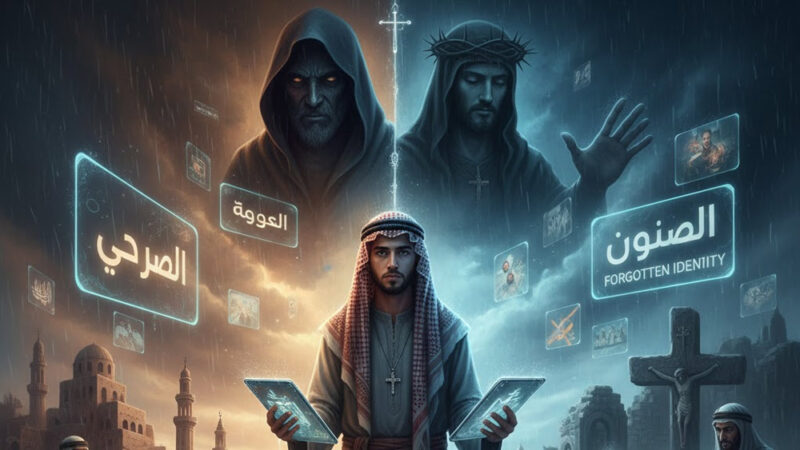
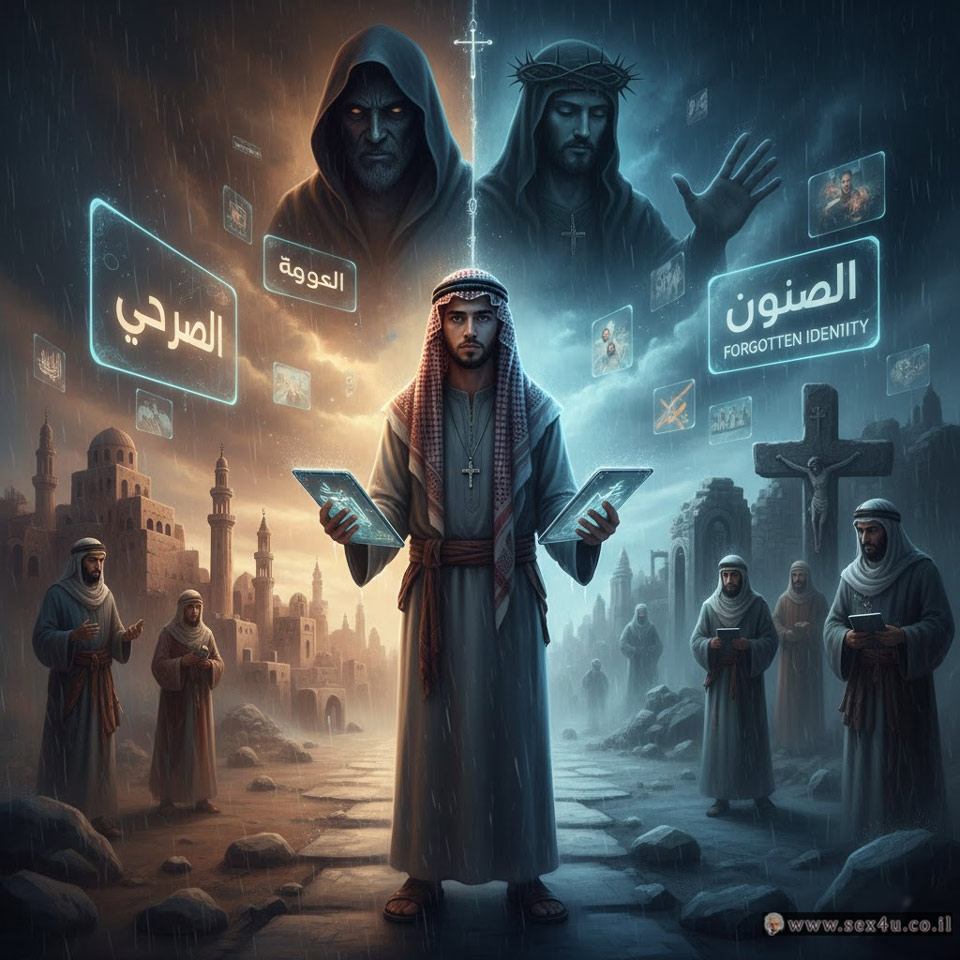
Arab Christians – or Christians who forgot who they are after 1,400 years of Stockholm Syndrome?
Today we’re going to talk about something that always provokes in me a melancholy cynical chuckle: “Arab Christians.” Yes, those people who pray to Jesus, drink wine in church, yet call themselves “Arabs.” It’s like hearing someone say “kosher pork” or “diet burger.” A perfect oxymoron.


On the surface, an innocent phrase.
In reality, an entire history lesson compressed into three words.
When people say “Arab Christian,” most imagine a simple combination of religion and nationality. But scrape the surface even slightly, and a far more complex story emerges – one far older than the politics of the 20th century.
The real question is not who they are.
The real question is what the word “Arab” even means.
Let’s ask it plainly, without political correctness and without apology: Are those we call “Arab Christians” truly Arabs? Or is this merely the result of a particularly brutal Arab conquest that crushed their original identity over centuries, until they themselves drank the Kool-Aid and began to believe they were part of the tribe?
Before the Arabs Arrived – the Levant Was a Far More Diverse Place
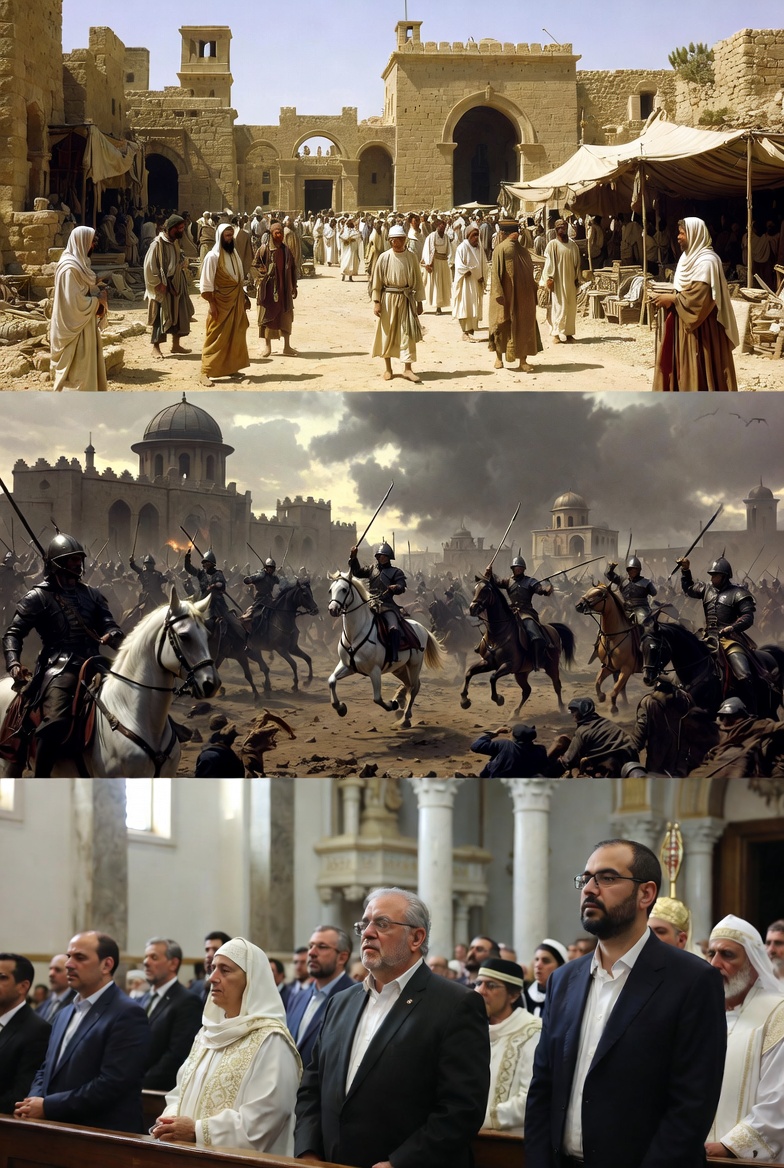
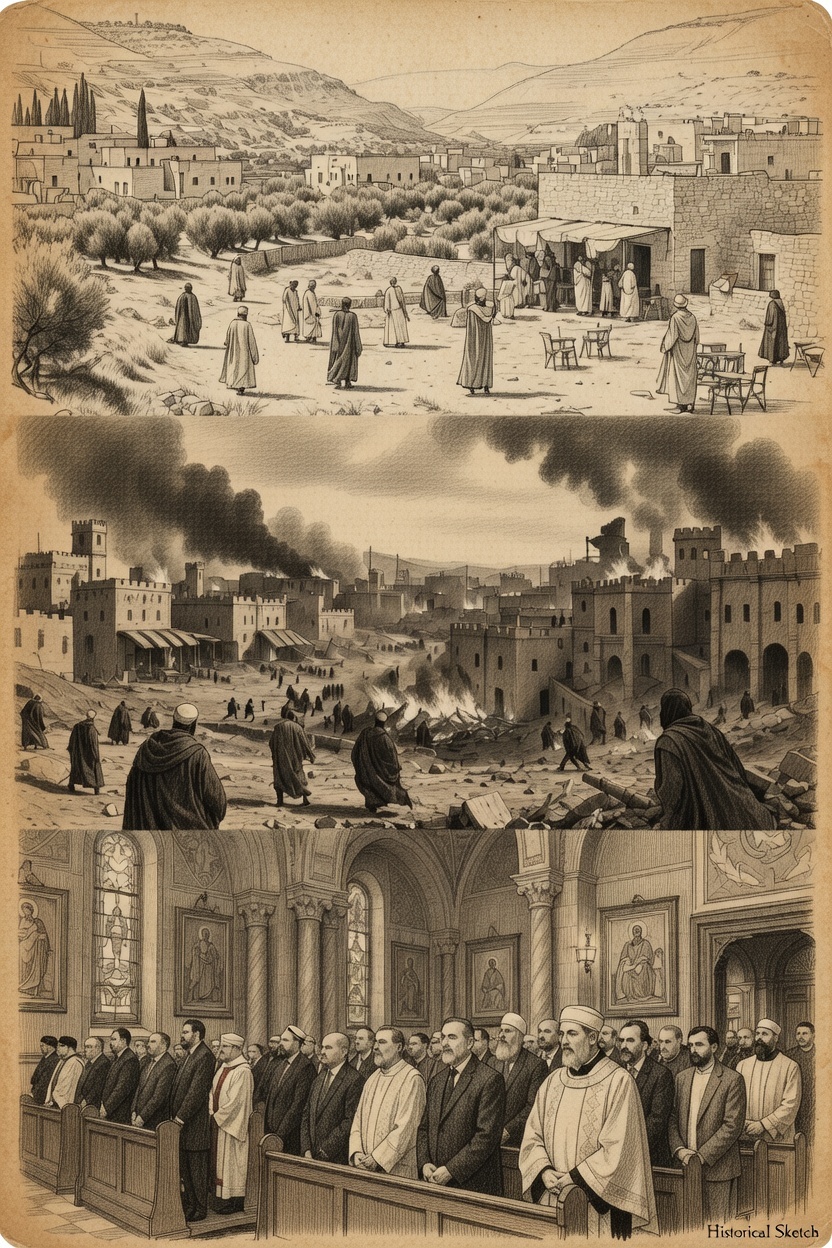 Come back with me to around 600 CE. The Levant – today’s Syria, Lebanon, Israel/Palestine, Jordan – was a vibrant region. Arameans, Phoenicians, Greeks, Jews, Samaritans, Nabateans, and several smaller peoples lived here, speaking Aramaic, Greek, and Latin. Christianity was already the official religion under the Byzantine Empire, and the churches were full. The Maronites in Lebanon spoke Syriac Aramaic, the Copts in Egypt spoke Coptic, the Assyrians in Mesopotamia the same. No one spoke Arabic, because the Arabs were still in the Arabian Peninsula, occupied with tribal wars, pagan worship, poetry, and camel competitions.
Then, in 634 CE, the first caliphs – Umar, Abu Bakr, and their circle – arrived. They conquered everything at breathtaking speed. Not because they were superhuman military geniuses (though that’s the story they tell themselves), but because the Byzantines and Persians had exhausted each other in mutual warfare. The conquest was violent: cities were taken, heavy taxes imposed, women raped, and Christians were turned into “dhimmis” – second-class citizens. They paid the jizya (protection tax, mafia-style), were forbidden to build new churches, could not testify against Muslims in court, and had to bow their heads when a Muslim passed by.
Arabization – How to Turn an Entire People “Arab” Without Them Noticing
Military conquest was only the beginning. The next stage was deliberate cultural and linguistic Arabization. Arabic became the language of government, trade, and law. Anyone who wanted to advance in life – better jobs, tax exemptions, broader social opportunities – converted to Islam and assimilated. Christians who remained faithful preserved their religious identity but gradually lost their original language and culture.
By the 10th century, most of the Levant spoke Arabic. Names changed: John became Jirjis, Mary remained Mary but with an Arabic accent. Churches endured, but liturgy slowly shifted to Arabic. Imagine China conquering Israel tomorrow, and in 500 years everyone speaks Mandarin yet still celebrates Passover – and calls themselves “Chinese Jews.” Funny, isn’t it? That’s precisely what happened.
And the most cynical part: the process was not voluntary. It was relentless pressure – economic, social, often violent. Think of it as a toxic relationship: first he hits you, then you get used to it, and eventually you defend him to everyone, insisting how wonderful he is.
Real-Life Examples – Who Really Rejects Being “Arab”
Today, several Christian communities outright reject the Arab narrative:
- The Maronites in Lebanon: Most claim descent from the Phoenicians. They spoke Aramaic until the 19th century, and their church still uses it in rituals. During Lebanon’s civil war, they fought against “Arab identity” and against the PLO, even forming militias to avoid becoming a trampled minority under Muslim rule.
-
The Assyrians: They absolutely do not call themselves Arabs. “We are Assyrians,” full stop. The same with the Copts in Egypt – they are Copts, not “Arab Christians.”
-
Some “Palestinian” Christians: A few are beginning to awaken. Some claim descent from the earliest Christians in the Holy Land, not Arabs from the Hejaz. Genetic studies (yes, they exist) show Levantine Christians are genetically closer to Jews and Samaritans than to Arabs from the Arabian Peninsula.
Yet most still call themselves “Arab Christians.” Why? Because 20th-century Pan-Arabism (Nasser, the Ba’ath, Michel Aflaq – yes, the Ba’ath founder was Christian!) swept them up too. They fight alongside Muslims against Israel because “we are all Arabs.” Classic Stockholm Syndrome.
Why Does This Even Matter in 2026?
Let’s be honest: most of us are not deeply invested in Arab politics. But it matters because it reveals how artificial “Arab” identity is in the Levant. True Arabs – those from the Arabian Peninsula – are proud of their heritage. In the Levant? It’s as if someone stole your house, lived in it for 1,400 years, then told you, “What’s the problem? We’re family.”
And the ultimate cynicism: those “Arab Christians” who support the Palestinian cause against Israel are effectively backing the very people who oppressed their ancestors for centuries. It’s like a Jew voting for Nazis because “we’re all Europeans”…
Does Language Make a People?
If tomorrow all Israelis switched to speaking French, would we become French?
Probably not.
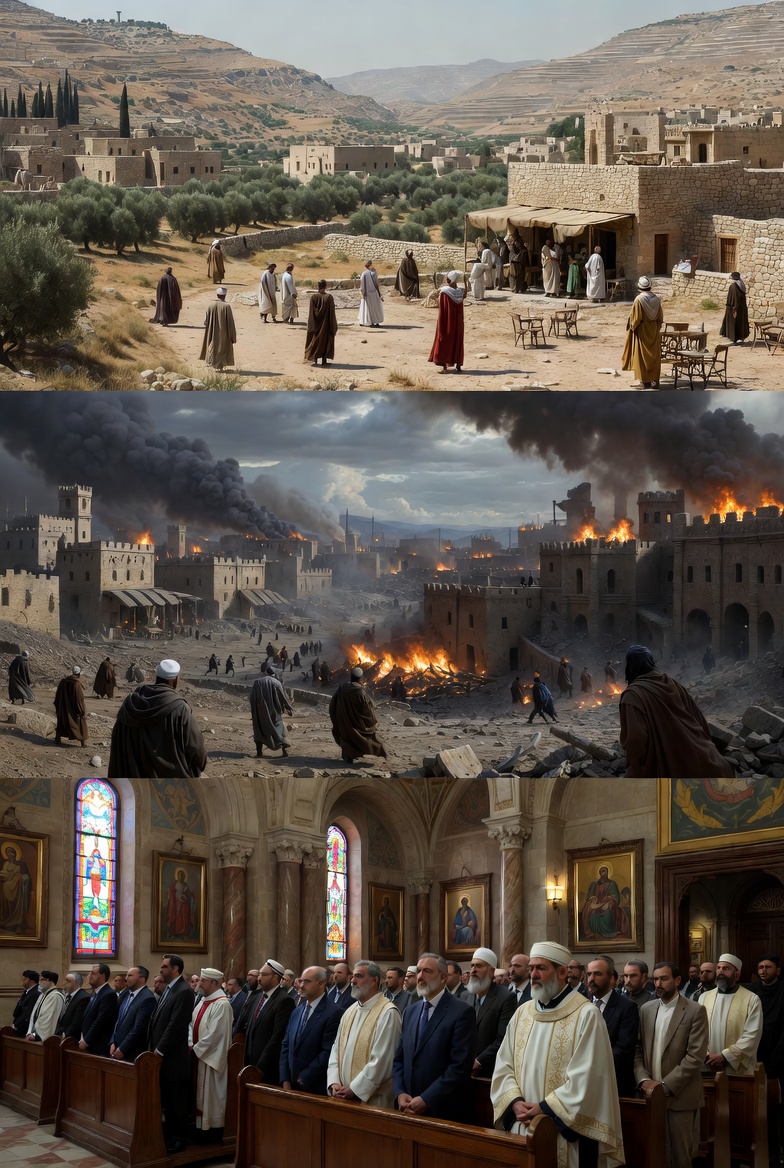
Yet in the medieval Levant, Arabic became the language of power, culture, trade, and intellect. Those who wanted to integrate adopted it – often it was the only way to survive or simply to escape, as we see in Christian towns in Israel slowly emptying over the years due to Muslim persecution: Nazareth, Bethlehem, and so on.
Thus ancient Christian communities with Aramean or Byzantine roots became Arabic-speaking.
Over time, language also became a national framework.
But does that erase the earlier layers?
That is already a complex philosophical and psychological question.
Arabization Is Not Necessarily Ethnic Origin
The term “Arab” has evolved.
Originally it denoted tribes from the Arabian Peninsula.
Later – speakers of Arabic.
In the 20th century – a political nation within Arab nationalism.
Thus a person can be:
Ethnically Aramean
Religiously Christian
Linguistically Arab
Nationally “Palestinian” or Lebanese.
Identity in the Levant is not linear. It is layered.
Yet modern discourse loves simple boxes.
Arab Nationalism and the Christians
The historical paradox is that Levantine Christians played a central role in shaping modern Arab nationalism in the 19th and 20th centuries. Christian intellectuals from Beirut, Damascus, and Cairo were among the architects of secular “Arabness” – precisely to create a shared identity that was not religious (Stockholm Syndrome, did we mention?).
In a sense, then, the “Arab Christian” is not exactly an oxymoron – he is part of the very DNA of the modern Arab idea.
But this does not resolve the deeper historical question: Is Arabness origin, culture, or a political project?
Between Memory and Invention
Modern identity is not solely the product of ancient conquest.
It is also the product of education, state borders, media, and 20th-century politics.
People are not prisoners of the 7th century.
They live in the 21st.
Arabic-speaking Christians today may see themselves as Arabs out of cultural and national choice – not historical brainwashing.
Whether that identity is “original” is almost meaningless.
Very few modern identities are original in the ancient sense.
Will we live to see the same awakening in the new Muslim continent called “Europia”?
Time to Wake Up, Cry, or at Least Laugh
“Arab Christians” is a historical oxymoron. They are not Arabs – they are descendants of the ancient peoples of the Levant who were conquered, Arabized, and pushed into a corner. Some are starting to realize it. Others still live the illusion.
Perhaps it’s time to remind them: You don’t have to be “Arab” to be Christian. You can be Aramean, Phoenician, or simply Levantine – and stop playing the conquerors’ game.
What do you think? Comments welcome – no censorship, as always.
הירשמו כדי לקבל את הפוסטים האחרונים אל המייל שלכם