
Politicians and Promises: A Toxic Relationship

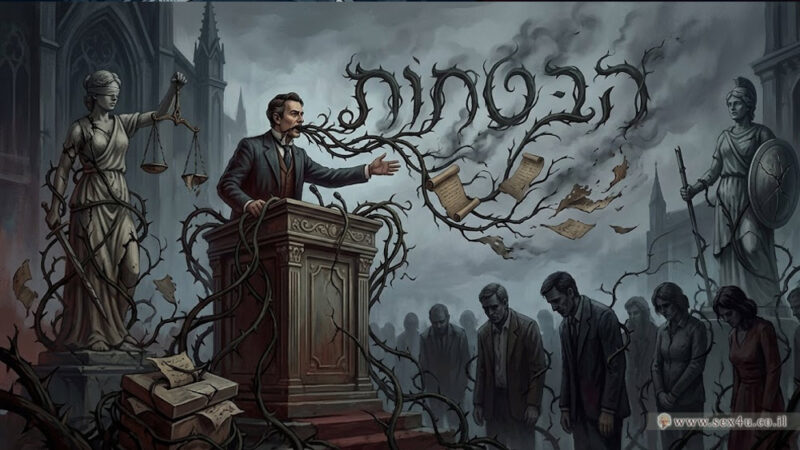
A Love Story with a Restraining Order
Some relationships come with a known ending.
They begin with butterflies, escalate into grand declarations…
and end with you staring at the TV, wondering how you fell for it again.


Yes – this is democracy’s most dysfunctional romance:
the citizen and the politician.
The Courtship Phase: “I’m not like the others, I swear”
Elections feel like a first date after a messy divorce.
You’re skeptical – but still willing to believe.
The politician promises:
- Absolute security
- Lower cost of living
- A functioning healthcare system
- And, for good measure, parking in Tel Aviv
He also promises speed.
Fast. Very fast. Practically tomorrow.
Research consistently shows that politicians don’t stop promising after elections – it’s not campaign rhetoric, it’s a permanent feature of their language.
In other words: not a lapse in judgment – a personality trait.
The Honeymoon: “Give him a chance”
He wins.
You grant him the traditional 100 days of grace.
And then reality introduces itself:
- There’s a coalition
- There’s an opposition
- There’s a Supreme Court
- And there’s… reality
Promises become “complex.”
Commitments turn into “processes.”
“Immediate” quietly morphs into “within the term – perhaps.”
And yet, you stay.
Because you’re not naïve… right?
The Disillusionment: “It’s not you, it’s the system”
This is where the gaslighting begins.
The politician explains:
- He wanted to deliver
- But wasn’t allowed
- And, in any case, he’s less guilty than the previous guy
And you?
You’re already part of the script.
Studies reveal something deeply uncomfortable:
people rarely punish politicians for broken promises – especially if they belong to “their camp.”
Translated:
we know we’re being lied to –
we just prefer it when it’s our side doing the lying.
The Addiction Phase: “This time it’s real”
Here comes the twist.
Despite everything –
you show up for another election.
Why?
Because like any toxic relationship:
- Memory is selective
- Hope is stubborn
- And fear of the alternative is very real
As one brutally honest line floating around the internet puts it:
“Empty promises are more palatable than no promises.”
In plain terms:
we’d rather be sold a dream
than told the truth.
The Israeli Reality: A Subscription Model
In Israel, this isn’t even a relationship anymore –
it’s a subscription.
Elections every couple of years,
same faces,
same promises,
same disappointments.
The political system has become a playground of:
- Fragile coalitions
- Backroom deals
- Media spin at TikTok speed
Even during real crises – security or economic –
the public senses a growing gap between promises and outcomes.
And it’s not uniquely Israeli.
Across much of the Western world, trust in politicians is scraping historic lows,
with majorities convinced they’re simply not telling the truth.
Why Does It Work?
Because politics isn’t a contract –
it’s a narrative.
And narratives run on:
- Fear
- Identity
- Hope
A politician doesn’t sell you performance.
He sells you a feeling of direction.
And that direction?
It doesn’t have to materialize.
It just has to sound convincing.
So Who’s to Blame?
Here’s the uncomfortable answer:
We are.
Because as long as:
- We vote tribally
- Forgive “our side’s” lies
- Get excited by promises instead of results
Nothing will change.
The politician isn’t foolish.
He simply understands demand.
Endless Love
The relationship between politicians and promises won’t end in divorce.
Because it’s not a flaw – it’s a system.
Promises are the currency of politics.
Truth?
Just decorative.
And in the end, like every toxic relationship,
you stay because you want to believe
that this time will be different.
Just don’t act surprised
when it ends
exactly the same way.
הירשמו כדי לקבל את הפוסטים האחרונים אל המייל שלכם
Discover more from Intelligent is sexy
הירשמו כדי לקבל את הפוסטים האחרונים אל המייל שלכם