
“His Hand Against Everyone, Everyone’s Hand Against Him”

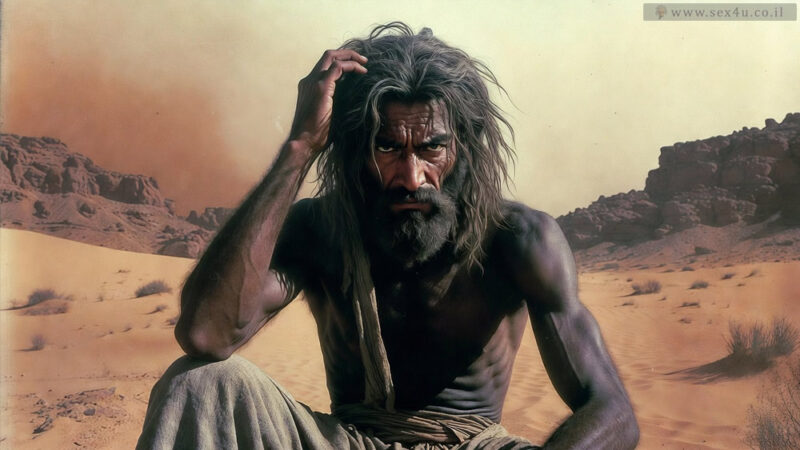
Was the Biblical Description of Ishmael a Prediction of Middle Eastern History?
Few verses in the Hebrew Bible have sparked as much debate, symbolism, and political interpretation as a single short description found in the Book of Genesis.


In Book of Genesis (16:12), the unborn son of Hagar is described with a striking phrase:
“He will be a wild man; his hand will be against everyone, and everyone’s hand against him.”
The child in question is Ishmael – traditionally considered the ancestor of many Arab tribes.
For thousands of years, theologians treated this verse as a symbolic description of nomadic independence. A poetic line about desert life, tribal rivalry, and survival in harsh conditions.
But history has a strange habit of making ancient texts look uncomfortably relevant.
When people today quote the phrase “his hand against everyone, and everyone’s hand against him,” they are often asking a provocative question:
Was this merely a metaphor for desert tribes?
Or was it a surprisingly accurate preview of the political dynamics that would shape large parts of the Middle East?
Let’s examine the question with a mix of historical perspective, cultural analysis, and a healthy dose of humor – because without humor, Middle Eastern politics becomes unbearable very quickly.
The Original Context: A Desert Culture
To understand the verse, one must start with geography.
The world of Abraham and his descendants was not a world of stable nation-states. It was a world of tribes, caravans, and shifting alliances across the deserts of the Near East.
In such an environment, independence was not merely a personality trait. It was a survival strategy.
Tribal groups competed for water sources, grazing land, and trade routes. Cooperation existed, but rivalry was the norm.
The biblical description of Ishmael as a “wild man” (often translated as a “wild donkey of a man”) was likely meant to capture the spirit of untamed desert life.
Free. Fierce. Difficult to control.
In other words, the ancient equivalent of someone who refuses to join the HOA and insists on parking camels wherever he wants.
From Tribal Rivalries to Regional Politics
Fast forward a few thousand years, and the descendants of those desert tribes inhabit a vast region stretching from North Africa to the Persian Gulf.
At first glance, the story appears to contradict the biblical description. The rise of Rashidun Caliphate and later Islamic empires created some of the largest and most sophisticated states in pre-modern history.
Under the banner of Islam, Arab armies conquered enormous territories and established political systems that were far more organized than anything described in Genesis.
Yet beneath the imperial structures, the tribal mindset never completely disappeared.
Political alliances often remained fragile. Leadership disputes frequently turned violent. Dynasties rose and fell with dramatic speed.
The desert memory was still there, just wearing nicer robes.
The Modern Middle East: Cooperation, Rivalry, and Chaos
The 20th and 21st centuries introduced a new layer of complexity.
European colonial borders created modern states across the Arab world. But those borders did not always reflect historical tribal or sectarian realities.
The result?
A region where political tensions often resemble a multi-player chess game played with exploding pieces.
Consider a few examples.
Regional competition between Saudi Arabia and Qatar.
Rivalry between Egypt and various Islamist movements.
Power struggles involving Muslim Brotherhood networks across multiple countries.
Add to that ideological battles between secular nationalism, political Islam, tribal authority, and modern state institutions.
The result sometimes looks suspiciously like the biblical phrase: everyone’s hand against everyone else.
Internal Conflict: The Family Feud That Never Ends
One of the most striking features of modern Middle Eastern politics is that many conflicts occur within the Arab and Muslim worlds rather than between them and external powers.
Civil wars in Syria, Yemen, and Libya illustrate how internal divisions can become extraordinarily destructive.
Tribal loyalties, sectarian identities, and ideological rivalries all compete for influence.
Sometimes it feels less like geopolitics and more like an extended family argument that has escalated into artillery fire.
If Ishmael’s descendants were predicted to live in constant tension with others, history certainly provides enough material for that interpretation.
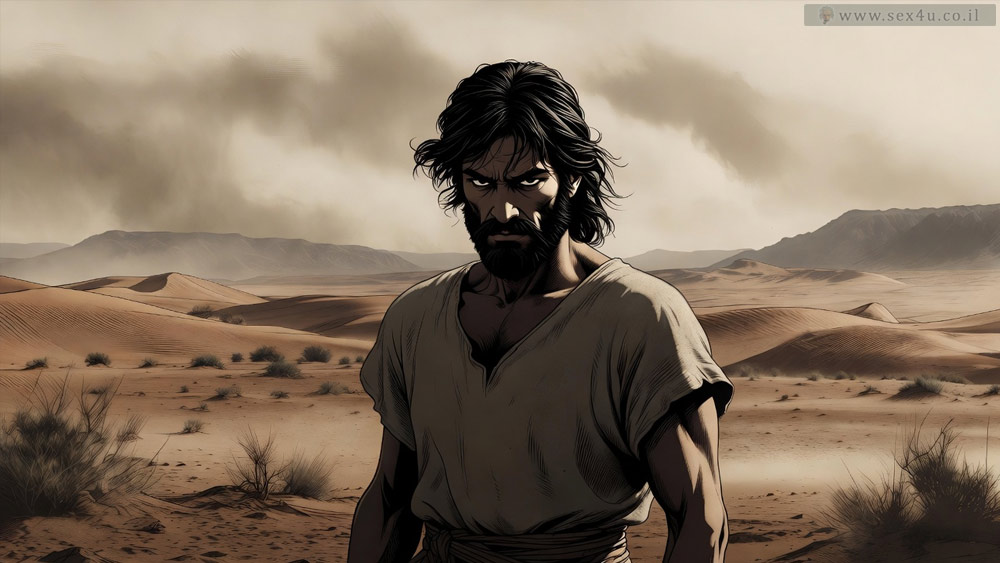
But Wait – Everyone’s Hand Against Him Too
The verse does not only describe Ishmael as someone whose hand is against others.
It also states that everyone’s hand will be against him.
And here lies an equally important part of the story.
Throughout modern history, the Middle East has been a playground for external powers.
Empires, superpowers, and regional actors have all intervened in the region.
Among them:
United Kingdom
France
United States
Russia
Each brought its own strategic interests, alliances, and occasional disasters.
If the first half of the verse describes internal conflict, the second half could easily describe the long history of foreign involvement.
In other words, the Middle East sometimes looks like a geopolitical traffic intersection where everyone insists on driving at the same time.
The Culture of Independence
Another interpretation of the verse focuses less on conflict and more on independence.
Arab culture historically valued autonomy, tribal honor, and resistance to external control.
Even powerful empires often struggled to impose centralized authority across the entire region.
This cultural tendency has produced both admirable resilience and political instability.
On the positive side, societies that value independence can resist tyranny and foreign domination.
On the negative side, they sometimes resist coordination, compromise, and long-term institutional stability.
It’s the political equivalent of a group project where every participant insists on being the leader.
The Cynical Interpretation
Observers with a darker sense of humor occasionally summarize Middle Eastern politics in a single sentence:
Everyone fights everyone – and then blames someone else.
While that statement exaggerates reality, it captures the frustration felt by many outside observers trying to understand the region.
Alliances shift.
Enemies become partners.
Partners become enemies.
And analysts spend entire careers attempting to explain why.
A Word of Caution
Before drawing sweeping conclusions, it is important to remember that biblical verses are not historical predictions in the modern sense.
The description of Ishmael was written in a specific cultural and literary context.
Applying it directly to contemporary politics risks oversimplifying a complex region that includes hundreds of millions of people, dozens of cultures, and enormous diversity.
Not every Arab society fits the stereotype of perpetual conflict.
In fact, many countries have built functioning states, thriving economies, and stable institutions.
Reality, as usual, is more complicated than prophecy.
The Ironic Conclusion
Still, the verse from Genesis remains fascinating.
Whether intended as poetry, anthropology, or prophecy, it captures a timeless observation about human societies: independence can be both strength and burden.
The descendants of Ishmael – real or symbolic – have produced remarkable civilizations, powerful empires, and vibrant cultures.
They have also experienced cycles of rivalry that seem almost biblical in their intensity.
Was the verse in Genesis a literal prediction?
Probably not.
Was it an uncannily sharp description of the dynamics of tribal politics?
Possibly.
Either way, thousands of years later, the phrase “his hand against everyone, and everyone’s hand against him” still echoes through discussions of Middle Eastern history.
Which proves one thing beyond doubt.
Ancient writers sometimes had an extraordinary talent for describing human nature.
And human nature, unfortunately, rarely updates its software.
הירשמו כדי לקבל את הפוסטים האחרונים אל המייל שלכם
Discover more from Intelligent is sexy
הירשמו כדי לקבל את הפוסטים האחרונים אל המייל שלכם