
Why Every Reform in Israel Starts with a Slogan and Ends in Shouting


In a Country Where Even Changing a Light Bulb Requires a Committee of Inquiry
In Israel, the word “reform” sounds like something grand, brave, and historic.


A strange combination of the Declaration of Independence, root canal treatment, and a special episode of satire television.
The moment someone announces, “We are launching a reform,” the public immediately divides into three groups:
- Those convinced it will save the country
- Those convinced it will destroy democracy
- Those who just want to know whether it affects parking near their building
Usually, the third group is the most rational.
Because in Israel, reforms almost always begin with a beautiful slogan:
“Governability,”
“Social justice,”
“Lowering the cost of living,”
“Historic correction,”
“Returning the state to the people.”
And they end exactly the same way:
three screaming TV panels, four Supreme Court petitions, seven strategic leaks to the media, and one cousin who stops speaking to you because of an argument at Friday dinner.
Welcome to Israeli democracy – the only place on Earth where even a plastic bag regulation can feel like civil war.
Step One: Choose a Slogan Big Enough So Nobody Asks Questions
Every successful Israeli reform begins with branding.
Not content.
Branding.
Nobody goes to the public and says:
“We have a complicated 240-page policy document with legal and economic implications.”
No.
They come out with:
“Returning power to the people!”
Or:
“Fixing a historic injustice!”
Or the eternal classic:
“The people demand justice!”
Which people?
What justice?
What exactly is being fixed?
Quiet. Don’t ruin the campaign.
In Israel, if you explain something in more than two sentences, you have already lost Twitter.
Modern politics is measured less by policy and more by how good it looks on a protest sign.

Step Two: Nobody Reads the Reform, but Everyone Has an Opinion About It
This stage is essential.
Because real reforms include clauses, regulations, exceptions, and consequences.
But the public does not consume clauses.
It consumes headlines.
And so we reach a beautiful national tradition:
People are ready to fight in the streets over a document they have never read, against people who have also never read it, while being interviewed by a journalist who also never read it, alongside a commentator who definitely never read it.
This is not democracy.
It is a book club where nobody opened the book.
The debate no longer becomes:
“What is correct?”
It becomes:
“Who are the good guys and who are the villains?”
Much simpler.
And politically, much more profitable.
Step Three: The Media Arrives, and From This Point On There Are No Facts – Only Drama
The moment the media smells reform, it reacts like a shark smelling blood.
Suddenly everything is “dramatic.”
“Battle for the future of the state.”
“Unprecedented move.”
“Fear of democratic collapse.”
Even if the issue is new cheese import regulations.
Because in Israel there is no such thing as a technical adjustment.
There is only an existential war for the soul of the nation.
The news no longer asks what the reform actually does.
It asks:
Who will scream about it first?
If they can bring an angry professor, a worried retired general, and a famous actor with an emotional Instagram post – even better.
Facts are nice.
Panic gets ratings.
 Step Four: The Supreme Court, the Attorney General, and Your Uncle Who Suddenly Became a Constitutional Scholar

At this stage, every Israeli reform stops being technical and becomes theological.
It is no longer an argument about legislation.
It is a cosmic battle between light and darkness.
The Attorney General becomes either a prophet or a villain, depending on who is speaking.
The Supreme Court is either the final guardian of civilization or the local branch of bureaucratic empire.
And your uncle – the one who barely understands how to use Netflix – suddenly explains constitutional checks and balances to you in great detail.
At Friday dinner.
Loudly.
While holding hummus.
And that, my friends, is the moment you realize the reform has truly succeeded:
it destroyed another family.
In Israel, Reform Is Not a Process – It Is a National Sport
We do not actually love solutions.
We love arguments about solutions.
If tomorrow someone solved the cost of living crisis, half the country would enter an identity crisis.
“What do you mean there is nothing left to complain about?”
The reform itself is less important than the battle around it.
The protest.
The post.
The tweet.
The TV panel.
The dramatic speech ending with:
“I am fighting for the future of our children!”
Sir, this is a reform about parking permits.
Please calm down.
But nobody can.
Because in Israel everything is historic.
Every decision is a “defining moment.”
Every vote is a “point of no return.”
And somehow, despite all these points of no return, we always return to exactly the same traffic jam on the Ayalon Highway.
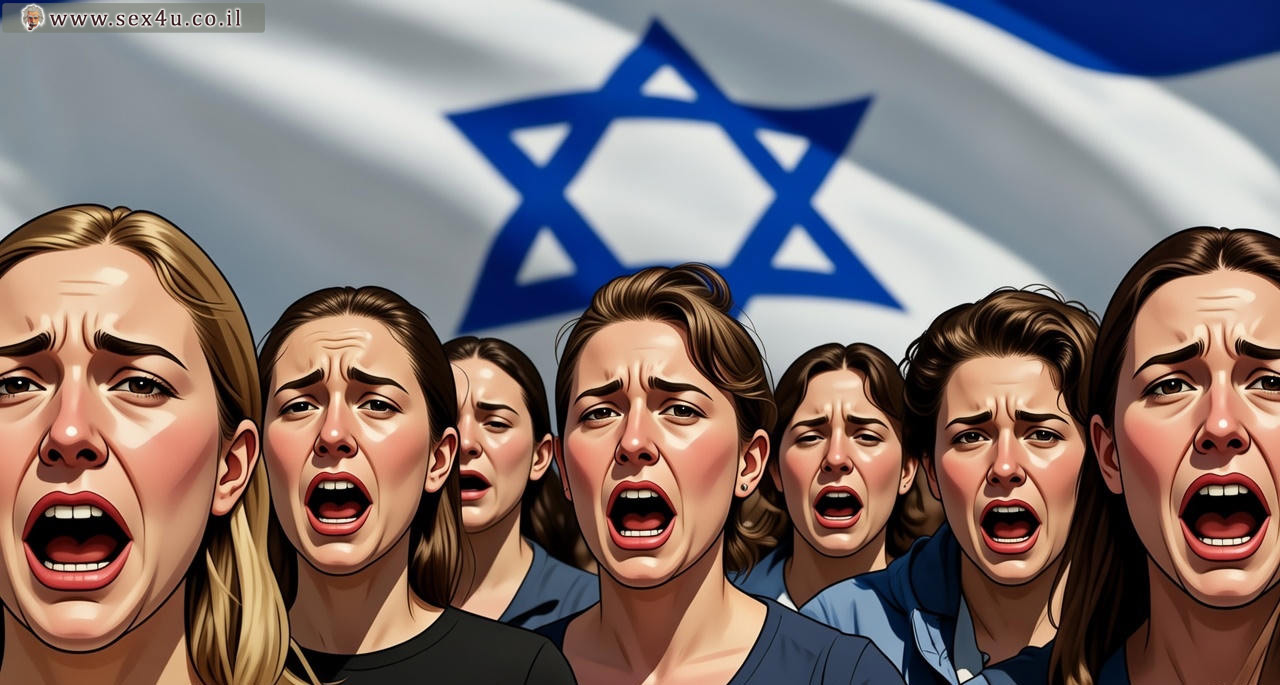
Why Does It Always End in Shouting?
Because shouting is our national conflict resolution mechanism.
Instead of a structured process – shouting.
Instead of trust – suspicion.
Instead of dialogue – television panels.
We are a nation that genuinely believes that if you say something louder, it automatically becomes more correct.
It starts in parliament,
continues in television studios,
and ends in the building WhatsApp group.
Maybe it is because in this country everything feels urgent.
Everything is existential.
Everything is now.
And when every issue is presented as a threat to national survival, there is no room left for nuance.
Only trenches.
The Simple Truth: Most Reforms Fail Not Because of the Idea – But Because of Trust
Israelis do not necessarily oppose change.
They simply do not trust the people proposing it.
And when public trust is low, even a good idea sounds like a scam.
If a minister says, “This is for the public good,” the public immediately starts looking for the hidden camera.
And honestly, for good reason.
Too many times we were sold a “reform” and received another committee, another tax, and another report nobody will read.
So people no longer ask:
“Is this correct?”
They ask:
“Who profits from this?”
That is actually a very healthy question.
But when it becomes the only question, nothing moves anymore.
Final Conclusion: In Israel There Are No Reforms – Only New Seasons of the Same Show
In the end, almost every Israeli reform looks exactly the same.
A new slogan,
the same commentators,
the same protests,
the same television panel with the same person saying,
“I just want to finish one sentence.”
And the public?
The public is exhausted.
It is not looking for revolution.
It is looking for one person, just once, to fix something without turning it into a biblical war.
But perhaps that is too much to ask.
In a country where even opening a new checkout line at the supermarket requires coalition negotiations, real reform may have to wait.
Until then, we continue as usual:
start with a slogan,
end with shouting,
and call it democracy.
הירשמו כדי לקבל את הפוסטים האחרונים אל המייל שלכם
Discover more from Intelligent is sexy
הירשמו כדי לקבל את הפוסטים האחרונים אל המייל שלכם